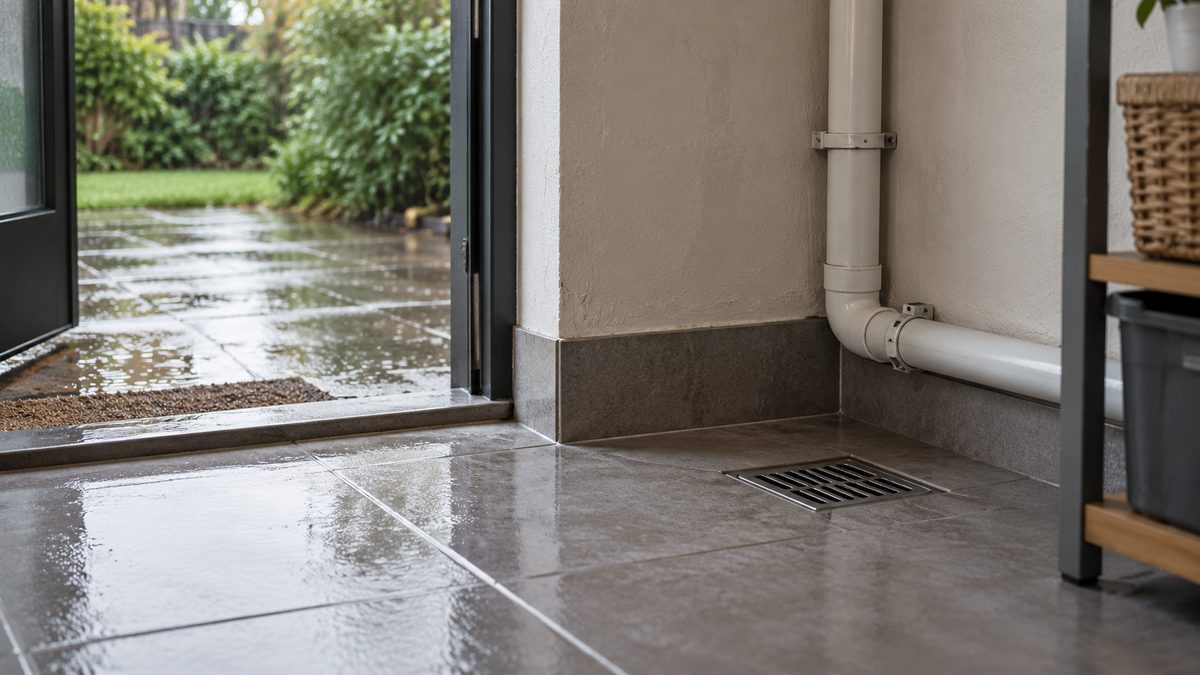
Mice can swim short distances. They can also tread water for a while, which means a puddle, shallow channel or wet drain area is not a dependable mouse barrier. That ability does not mean every bathroom sighting began in the sewer. For most homes, checking ordinary gaps and sheltered routes is more useful than guessing how long a mouse could stay afloat.
Swimming ability has practical limits
A mouse is a small land mammal, not an aquatic animal. Swimming is possible, but distance and survival depend on temperature, current, exhaustion and whether it can climb out. Precise claims about hours in water are poor planning tools for a household. Do not use water to test an animal or attempt to control mice by drowning them.
Rats are stronger swimmers and are better known for travelling through drainage systems. A young rat can also be mistaken for a mouse. If identification is uncertain, note the animal’s shape and the surrounding signs from a distance. Our rat and mouse identification guide explains the differences without requiring you to approach or handle one.
Drains, toilets and flood routes compared
| Location | What the concern means | Useful response |
|---|---|---|
| Toilet bowl | Drainage entry is more associated with rats | Keep away and arrange pest and drainage assessment |
| Gap around a waste pipe | Dry space around the pipe may provide access | Repair the surrounding opening without blocking the pipe |
| Broken external drain cover | An accessible opening needs inspection | Have a suitable cover secured and damage assessed |
| Flooded garden or shed | Rodents may seek dry higher shelter | Inspect safely after access is restored |
| Wet utility room | Leaks, shelter and service gaps may overlap | Fix the leak and check adjacent entry routes |
A bathroom mouse may have used a dry gap
Bathrooms contain several ordinary access opportunities: spaces beneath bath panels, boxed-in pipes, floor penetrations and service ducts. An animal can emerge beside a toilet without coming through its water trap. Check the route around the pipe and where it enters the wall or floor. A damp room may reveal activity that began elsewhere in the building.
A mouse can fit through a gap about 1/4 inch (0.6 cm) across. Inspect accessible joints with a torch, but do not remove fixed panels near wiring or reach into concealed cavities. Shared service spaces in flats may require the landlord or building manager to arrange inspection. Repairing only the visible room can leave the underlying route open.
Toilet entry is more a rat issue
Rats can use sewers and damaged drains, and entry through toilet plumbing can occur. It is not the explanation to assume for every indoor rodent. Repeated activity near a drain, a damaged cover or a confirmed rat sighting justifies investigation. Our guide to rats in toilets and drains covers those routes in more detail.
If a rodent is visible in a toilet, keep children and pets away and contact a pest controller. Do not reach into the bowl, add poison or pour cleaning chemicals onto the animal. Ask whether a drainage specialist is needed to inspect defects. The appropriate repair depends on the plumbing arrangement and the confirmed route.
Keep drain covers intact without blocking flow
Check external covers and accessible grates for damage, loose fittings or missing sections. Have unsuitable or broken covers replaced with fittings designed for that drain. Look around pipe penetrations as well as inside the drainage route: an open annular gap can offer access even where the pipe itself is sound.
Do not push loose mesh, cloth or expanding foam into a working drain. Improvised barriers can collect debris and cause a blockage. A plumber or drainage specialist should assess guards or valves, including water flow, cleaning access and maintenance. Keep air bricks and other required ventilation open while repairing the building fabric around them.
Flooding can push rodents towards higher ground
Waterlogged burrows and disturbed outdoor shelter can move rodents towards dry sheds, garages and houses. This can happen during heavy rain in any season, including autumn. Inspect raised storage, dry corners and gaps at doors once the area is safe to enter. A sighting after rain does not by itself identify the exact entry point.
Do not wade into floodwater or approach wet electrical equipment to look for mice. Let the responsible services assess unsafe areas first. When access is restored, remove accessible food, secure waste and check displaced materials before storing them indoors. Flood cleanup may expose old nesting evidence as well as fresh activity, so record what you find.
Use dry, durable prevention
After any live animals have been addressed, repair structural gaps with suitable retained metal materials and sealant. Clean rodent contamination using wet methods rather than dry sweeping or vacuuming; follow CDC cleanup guidance. Extensive contamination or damaged insulation needs professional assessment, especially after a flood has affected several parts of the building.
Keep food in closed containers, reduce sheltered clutter and monitor repaired areas for fresh signs. Scents and ultrasonic devices cannot fix a broken drain, and ultrasonic sound does not pass through walls. Use any repellent only as a supporting measure. If activity continues, arrange an inspection that considers both the drainage system and ordinary dry access routes.