Cars get most of the attention, but two-wheelers have the same problem — and in Indian cities, where millions of bikes and scooters sleep in open lanes and building compounds, it's extremely common. The first sign is usually a bike that won't start.
Why rats go for two-wheelers
A rat's front teeth never stop growing, so it gnaws on whatever is soft and available. Wiring insulation qualifies. A bike parked all night near drains or garbage is right in a rat's path, and the sheltered space under a scooter's panels is a good place to hide.
Where the damage usually happens
- Near the battery — the main wiring harness runs from here.
- Around the handlebar and headlight — exposed wiring runs.
- Under the seat on scooters — sheltered, and often holds food wrappers.
Signs to watch for
- The bike won't start, or lights and horn stop working.
- Droppings on the seat, footboard or near the battery.
- Nibbled plastic or shredded material under the panels.
Protecting a parked bike
- Choose the spot — away from drains, garbage and food stalls.
- Empty the under-seat storage — no snacks, no wrappers.
- Check the wiring weekly — early bites are cheap to fix.
- Protect the parking area — a covered or enclosed spot is far easier to guard than an open lane.
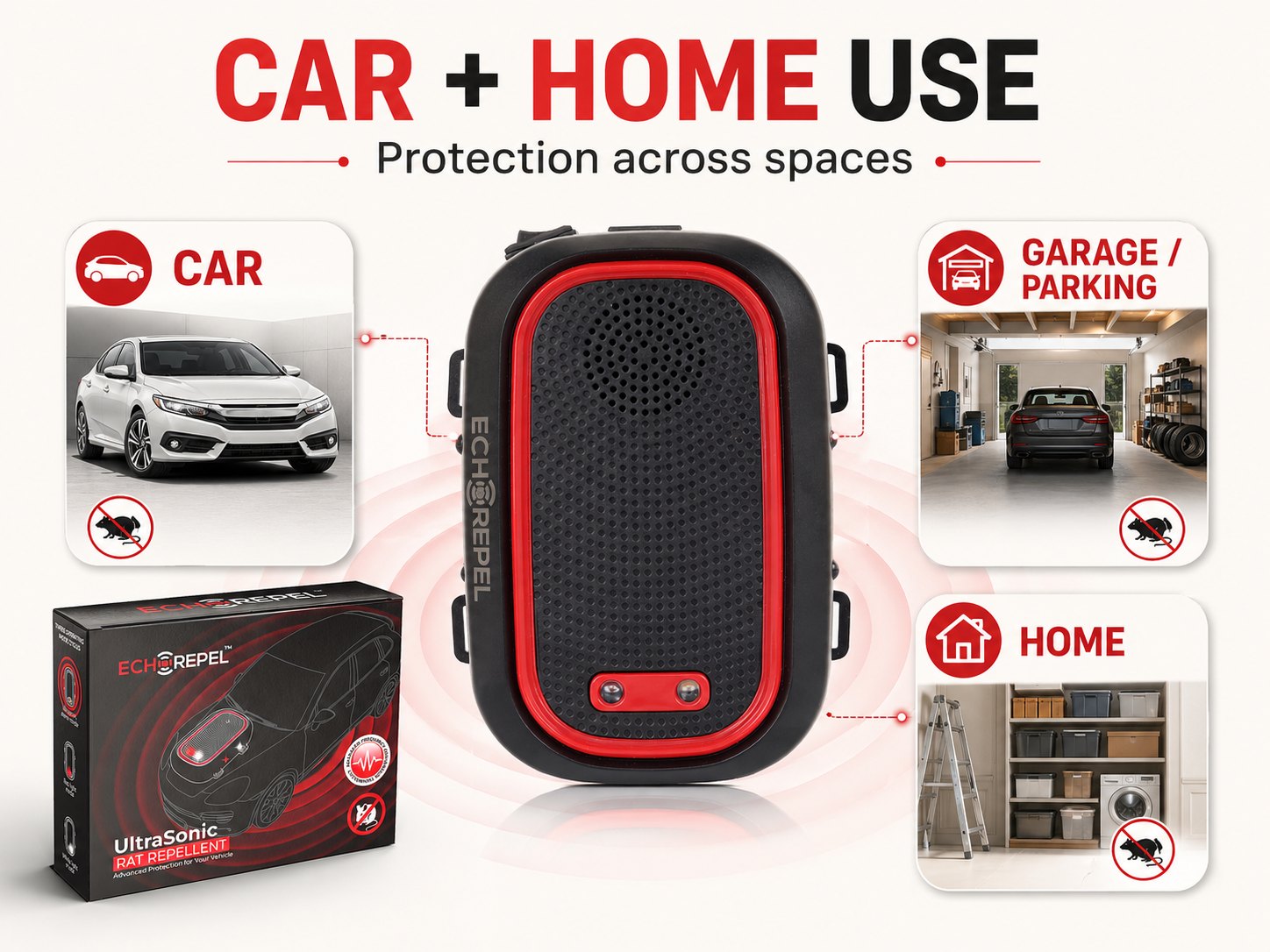
A bike doesn't have room for a device under a bonnet, so protect the place it sleeps instead. The EchoRepel Ultrasonic Rat Repellent works in garages and covered parking bays, and runs on AA batteries where there's no socket nearby. For car owners, see can rats damage car wiring.