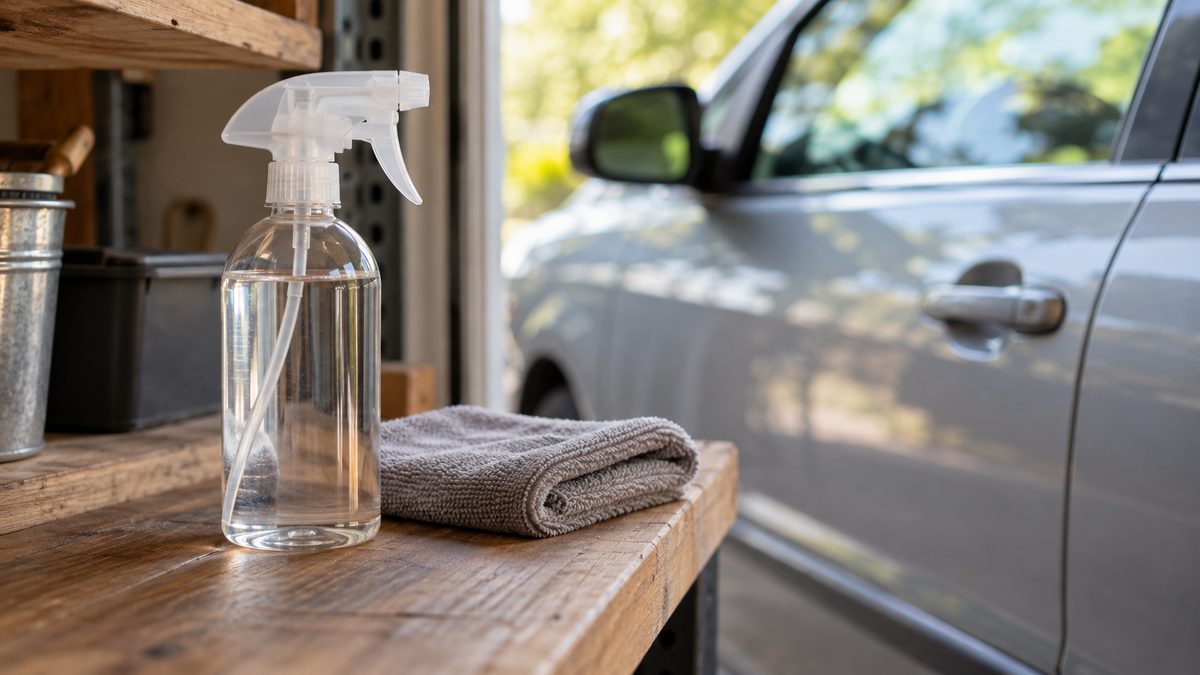
A car rat spray can be useful as a temporary deterrent, provided the formula is meant for vehicle use and you follow its label. It does not close an entry route or repair a chewed wire. Think of it as a coating that needs checking, alongside the everyday job of keeping the parking area less attractive to rats.
Start with the reason you reached for the bottle. Fresh droppings on the engine cover call for an inspection. A warning light, damaged hose or exposed conductor calls for a mechanic before another drive. Spraying over the evidence can make the bay smell different while leaving the underlying problem untouched.
How smell and taste deterrents work
Some sprays use strong scents intended to discourage rats from approaching a treated surface. Others leave an unpleasant taste intended to discourage chewing. A formula may combine both effects. Neither means a rat cannot enter the engine bay, and a taste coating offers little protection to an untreated part nearby.
The amount left on the surface matters more than how strongly you can smell it from outside the bonnet. Heat, dust, airflow and moisture change that coating. A rat also weighs an unpleasant cue against a sheltered nest or nearby food. Results therefore vary between cars parked in the same society.
Plan for repeat application
Expect maintenance over days rather than assuming one application lasts a season. There is no reliable universal interval: use the duration, drying time and repeat-use instructions on the bottle. Rain reaching the bay, an engine wash or cleaning a treated part can remove material and bring the next permitted application forward.
Keep a small record of application dates, rain and fresh signs. Check the bay in daylight before starting the car, without touching hot or moving parts. If a label promises a longer interval, still inspect regularly. Do not increase the amount or frequency beyond its instructions because you found another dropping.
Where to spray, and what to avoid
Switch off the engine, let it cool fully and work in good ventilation. Wear the gloves specified on the label. Identify the permitted surfaces first, often accessible protective covers rather than every component under the bonnet. Apply the directed quantity and allow the stated drying time before closing up or driving.
Keep spray away from hot exhaust components, belts, pulleys, fans and air intakes. Avoid electrical connectors, fuse boxes and exposed wiring unless the label expressly allows that application. Do not coat braking parts. Keep it off painted surfaces, rubber and trim unless compatibility is stated; follow any patch-test requirement.
Avoid breathing mist or directing it towards another person. Keep children and pets away while applying and drying, and store the bottle securely afterwards. Never mix it with another cleaner, oil or pesticide. If you cannot reach the intended area without dismantling parts, ask a workshop to assess the job.
Compare the maintenance involved
| Method | Duration and limits | Effort |
|---|---|---|
| Spray | Temporary coating; often checked and renewed over days, per label | Repeat application after permitted intervals or washing |
| Protective tape | Stays on the covered section until worn or damaged | Careful fitting and inspection; other sections remain exposed |
| Mesh | Barrier lasts while securely fitted and intact | Workshop installation and airflow checks; covers selected openings |
| Ultrasonic deterrent | Operates while powered; effectiveness varies with placement | Secure mounting, power checks and activity monitoring |
Ask the workshop which routes it can protect without restricting airflow or drainage. Mesh at a cabin intake cannot cover every path into an engine bay. Tape only covers the section wrapped. Our car rat repellent buying guide explains how to choose protection around the signs you find.
Make the parking spot less rewarding
Remove snack packets from the cabin, close nearby rubbish bins and ask society staff about overflowing waste or pet food left overnight. Avoid storing cardboard around the wheels. When practical, choose a cleaner bay away from an active rubbish pile. Inspect a car that sits for days before moving it.
A continuously powered deterrent avoids the need to renew a scent coating, but still needs correct placement and monitoring. Ultrasound cannot protect a closed cavity through metal. Keep the grille facing an open route, and secure any device away from heat, water and moving parts. No method removes the need to check fresh activity.
If signs continue, review the entry route and surroundings with a professional instead of adding more spray. Read how to deal with rats in an engine bay for the wider prevention plan. Photograph new chewing and get it inspected promptly; a stronger smell does not establish that the car is safe to drive.