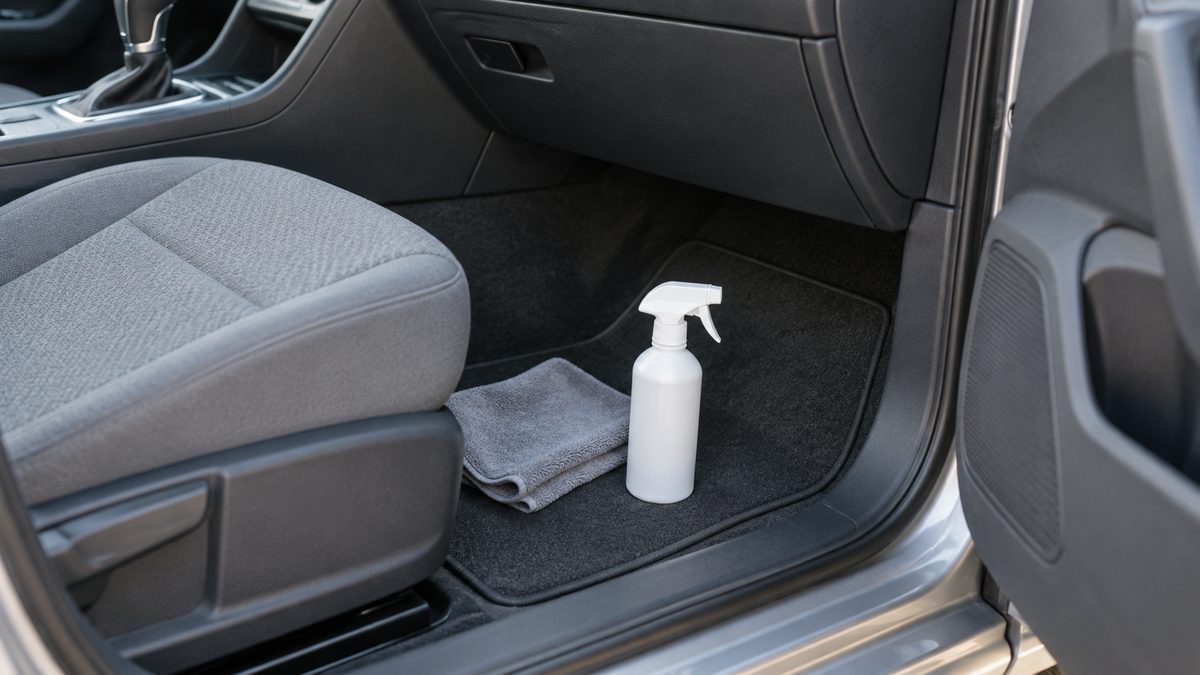
Remove the source of rat odour before using any deodoriser: inspect the car for waste, nesting material or a carcass, then arrange safe cleaning and any needed filter replacement. A smell from the vents can also have a non-rodent cause, so location and timing matter.
Step 1: Identify what you're smelling
| Smell | Likely cause | Where to look first |
|---|---|---|
| Musky or ammonia-like | Rat urine and droppings, usually a nest nearby | Cabin air-filter housing, engine bay |
| Sweet, rotten, getting stronger, flies | A dead rat | Engine bay, filter housing, behind the dashboard |
| Damp, mouldy, only when the AC starts | Moisture in the AC system, not always rats | Ask a workshop to check the AC drain and evaporator |
Step 2: Find the source
Check these in order:
- Cabin air-filter housing: usually behind the glovebox. The top suspect when the smell comes through the AC.
- Engine bay: around the air-intake area, the cowl below the windscreen, and the top of the engine.
- Under the seats and in the boot: including the spare-wheel well.
A dead rat behind the dashboard or deep in the bay may need a mechanic to reach. Tell them what you smell and when, so they know where to look.
Step 3: Clean it safely
Wear rubber gloves and a mask, and open the doors for a while before you start. Don't vacuum or sweep dry droppings: spray them with disinfectant first, wait a few minutes, then wipe up and bag everything. For a dead rat, pick it up with a gloved hand inside a plastic bag, turn the bag inside out around it, seal it, and put it in a second bag before throwing it away. Disinfect the spot afterwards.
Rat droppings and urine can carry disease, so don't skip the precautions. If anyone feels unwell after the clean-up, see a doctor and mention the contact with rodent waste.
Step 4: Replace the cabin air filter
If rats have been anywhere near it, the filter is contaminated. A new one costs little and removes a big part of the smell. Check the housing for nesting material while it is open.
Step 5: Air it out
Run the AC on fresh-air mode (not recirculate) with the windows open for a while. An enzyme-based cleaner on affected upholstery and mats helps break down urine rather than just covering it. A bowl of baking soda or a bag of activated charcoal left in the closed car overnight can absorb what is left.
If the smell is still there
A lingering smell through the vents can mean contamination deeper in the AC ducts. Many workshops offer AC duct cleaning and disinfection, which reaches parts you cannot. Ask them to check the evaporator area too.
What not to do
- Don't mask it with strong perfume or air fresheners; the source stays.
- Don't mix cleaners. Never mix bleach with ammonia-based or acidic cleaners; the fumes are dangerous, especially in a closed car.
- Don't use rat poison in the car. It is a common cause of the dead-rat smell in the first place. See why rat killer in the engine bay backfires.
Step 6: Stop it coming back
For how to get rid of rat smell in car, the EchoRepel Car Rat Repellent is a supporting option using ultrasonic sound that rats and mice want to avoid. It is poison-free. For how to get rid of rat smell in car, use the device only as instructed and assess new signs rather than assuming protection.
Give the workshop a useful smell history
Note whether the smell starts when you open the door, switch on the fan or change between fresh air and recirculation. Record whether it is stronger after the car has warmed up. Tell the technician about recent droppings, nesting material or poison used nearby, without treating the smell alone as a diagnosis.
These details can guide an inspection of the cowl, filter housing, blower area or cabin. They do not justify spraying cleaner through every vent. If trim or ductwork must be removed, ask who will handle contamination and who will inspect the vehicle components before reassembly.
Clean the material, not just the air
An absorbent mat, foam panel or seat lining may hold contamination after its surface looks clean. Check whether the material can be treated safely or needs replacement. Use cleaners only where their labels and the vehicle's material-care instructions permit them, and test an inconspicuous area where appropriate.
Do not soak wiring, electronic modules or the dashboard with disinfectant. Avoid pressure washing a hidden cavity to flush material out, because that can spread contamination and damage components. A heavily contaminated blower or inaccessible carcass is a professional removal job.
Check the repair before covering the odour
After source removal and drying, reassess the car without a strong air freshener. Confirm that the filter housing is correctly closed and no new waste has appeared. A recurring smell may mean another contaminated area was missed, water remains trapped or rodents have returned.
If ventilation is needed with the engine running, do it outdoors, never in an enclosed garage. For exposure during cleaning, follow current official rodent-clean-up guidance and seek medical advice if anyone becomes ill. Do not interpret a faded smell as proof that contaminated material has been removed or that damaged wiring is safe.
For how to get rid of rat smell in car, related questions include how to clean mouse droppings, car rat mesh cabin filter.
Frequently asked questions
Should I spray disinfectant into every air vent?
No. That may fail to reach the source and can damage materials or equipment. Ask a workshop to identify the contaminated area and a suitable cleaning method.
Does a new cabin filter prove the ductwork is clean?
No. It replaces one component. Persistent odour needs a check for remaining material, moisture or another cause rather than repeated filter changes alone.
Can I run the engine in the garage to air out the cabin?
Never run an engine in an enclosed garage. Ventilation work requiring the engine should take place outdoors with safe operating conditions and appropriate professional advice.
Should I replace the whole ventilation system?
Not on smell alone. Ask for inspection findings identifying contaminated or damaged parts, the proposed cleaning method and which components need replacement.