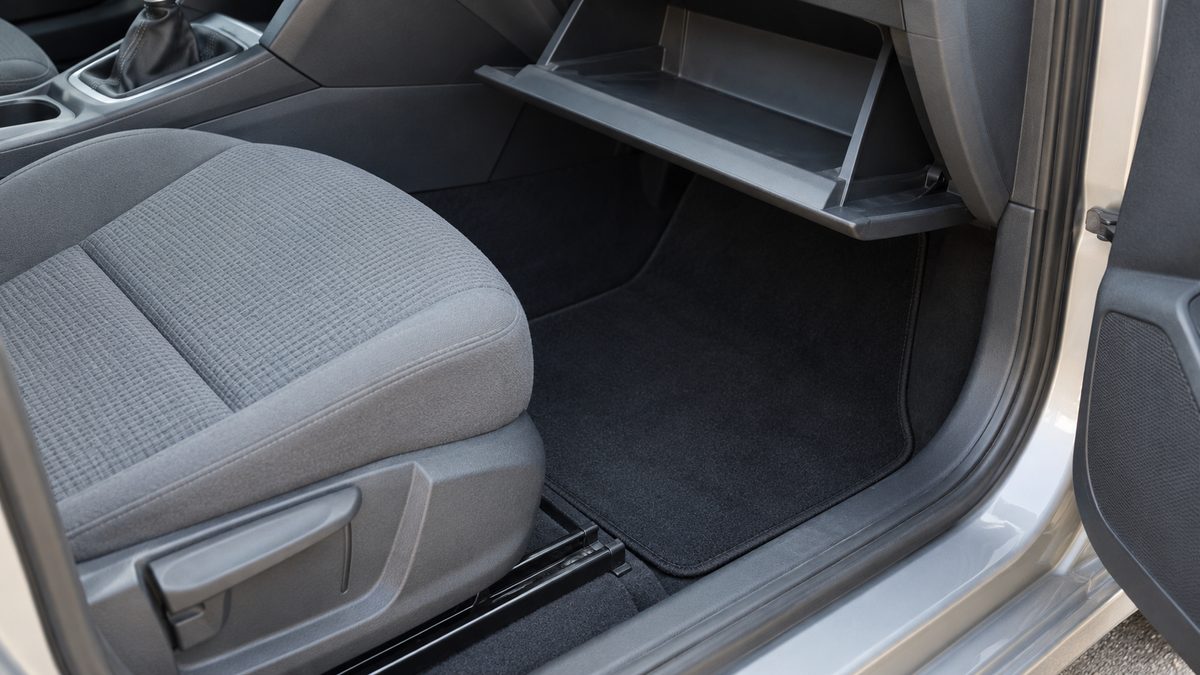
If mice have entered the car cabin, stop using affected seats or storage areas until you have checked for contamination and damage. Inspect the footwells, seat edges and glovebox without brushing or vacuuming suspect waste. Hidden nesting, chewed wiring or contamination inside ventilation needs a workshop or specialist cleaner.
The cabin can offer crumbs, soft nesting material and quiet hiding places even when the vehicle looks tidy from outside. A mouse seen on a floor mat is evidence of a visit, but it does not reveal the entry point or every place it has reached. Check systematically rather than cleaning only the visible spot.
Start with an undisturbed look through the open doors
Park safely outdoors where practical, switch the vehicle off and keep children and pets away. Ventilate according to current public-health guidance before handling suspect contamination. Use a torch from outside the doors to examine accessible areas. Do not switch on the blower to clear a smell or blow loose debris out of a vent.
Photograph signs before moving items. Note whether debris sits beneath a snack bag, inside a closed compartment or along a seat rail. These locations help distinguish a food source from a possible travel route. A musty smell alone can have other causes, including damp carpet, so it needs investigation rather than an immediate diagnosis of mice.
Check the cabin in zones you can describe to a cleaner
| Zone | What to look for | Handling limit |
|---|---|---|
| Footwells and mats | Droppings, food fragments and shredded carpet edges | Do not shake contaminated mats |
| Seat bases and rails | Loose foam, fabric damage and concealed material | Do not reach into unseen spaces or disturb wiring |
| Glovebox and console | Chewed paper, packet damage and nesting debris | Follow the handbook before removing any panel |
| Boot and spare-wheel area | Stored food, fabric bundles and damp waste | Lift only accessible panels intended for owner access |
| Vent outlets and filter area | Material at openings or odour linked to airflow | Leave inaccessible ducting to a workshop |
Seat-mounted airbags, electrical connectors and occupancy sensors make dismantling seats unsuitable as a casual cleaning job. A technician should inspect damage near these systems. Do not pull a wire to see if it is loose or remove a seat because foam has appeared underneath it.
Separate removable belongings from built-in trim
Food packets showing chewing or contamination should be discarded. Keep suspect fabric bags and blankets apart from clean household washing until you have checked suitable public-health cleaning advice. Do not carry them through the house uncovered or shake them over a bin. Hard personal items may need compatible cleaning, with particular care around electronics.
Children's restraints need special handling. Their harnesses, padding and fittings have specific cleaning requirements, and harsh chemicals can damage them. Consult the restraint maker or an approved adviser before reuse if contamination or chewing is suspected. Convenience is not a reason to improvise washing of safety equipment.
Wet cleaning has limits inside a vehicle
Dry vacuuming, brushing and compressed air can disturb contaminated particles. For limited hard-surface contamination, follow current official advice on ventilation, gloves, wet disinfection and contact time. Check that the cleaning product is compatible with the vehicle surface. Never mix chemicals, spray into electrical fittings or saturate carpet over hidden wiring.
Porous seat foam, headlining and deep carpet contamination may require specialist assessment or replacement. An ordinary interior valet is not automatically equipped for rodent waste. Explain the problem before booking and ask what the service covers. The mouse-dropping cleaning guide gives general background; contact a doctor if illness follows possible exposure.
Include the air intake when the smell returns with the fan
A cabin can look clear while nesting material remains near the filter or blower. If the smell appears when ventilation starts, leave the blower off and ask for inspection. Follow the handbook for any owner-accessible filter check, but do not remove dashboard trim or pull debris from deep ducting.
The article on a possible mouse nest in the car heater explains related clues. Burning odours, smoke, warning lamps or damaged cables need prompt workshop advice. Do not assume that an electrical smell is simply old nesting material warming up.
Remove the reason for a second visit
Empty snack wrappers, spilled grain, pet treats and food tucked into door pockets. Include the boot and any bags kept permanently in the vehicle. Store ordinary spare cloths and emergency supplies in clean, inspectable containers where appropriate, without obstructing required access or leaving loose objects around driving controls.
Ask a technician to assess suspected entry routes rather than blocking drains or ventilation openings with stuffing. Any protective mesh must suit the vehicle and preserve airflow and drainage. Cabin filter mesh considerations covers questions to raise before modifying an intake.
Inspect the parking area as well as the seats. Nearby bins, animal feed and dense cover can support repeat visits. Record the cleaned condition and check the same cabin corners before subsequent journeys. For a broader plan, read dealing with mice in your car. Clean trim is only one part of prevention; the route into the vehicle and the surroundings both need attention.