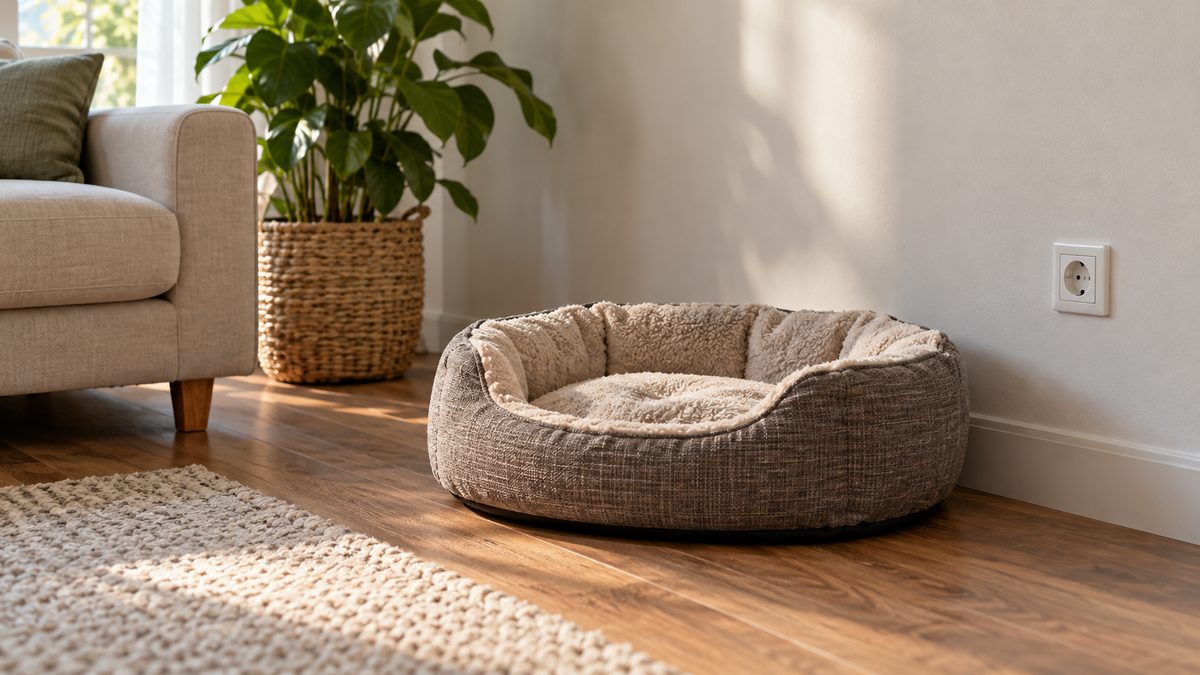
It is the first thing any pet owner wants to know before plugging one in, and it is a fair question. The short answer: ultrasonic rat repellents are generally considered safe for cats and dogs, with one group of pets that needs real care. This guide covers how the sound works, how different pets react, where to place a device in a home with animals, and how it compares with poison and traps, which carry far bigger risks for pets.
How the sound works
An ultrasonic repellent emits high-frequency sound that rodents find unpleasant. The aim is to make a space uncomfortable enough that rats and mice do not want to settle there, without poison, traps or chemicals. Good devices sweep across a range of frequencies rather than holding one tone, because rodents get used to a sound that never changes. EchoRepel sweeps roughly 8 to 56 kHz. Our guide to rat repellent sound frequency explains what those numbers mean.
Two physical facts matter for pet owners. Ultrasound does not pass through walls or closed doors, and soft furnishings absorb it. So the sound stays in the room where the device sits, and a pet can always leave that room. It is also only sound: nothing is released into the air, the food or the water bowl.
Cats and dogs
Cats and dogs both hear higher frequencies than people do, and cats hear further into the ultrasonic range than dogs. So some will notice the device. In practice most cats and dogs ignore it after a short while and carry on as normal, which is why these devices are widely used in homes with pets.
Animals are individuals, though, so watch your pet for the first few days. Signs that one is bothered include avoiding a room it used to like, restlessness, pacing, or ears turned back and held flat while it is near the device. If you see that, move the unit further from where the pet rests and eats, or switch it off in that room. Older pets and anxious pets are the ones most worth watching.
The exception: small pet rodents and rabbits
Because the device targets rodents, pets that are rodents hear it the way wild rats and mice do. That includes hamsters, guinea pigs, gerbils, chinchillas and pet rats and mice. Rabbits are not rodents, but they have sensitive hearing and are easily stressed. For all of these, keep the device in a different room from the enclosure, with the door closed, because a pet in a cage cannot walk away from the sound.
Where to place a device in a home with pets
| Spot | Advice |
|---|---|
| Pet bed or favourite sleeping place | Keep the device in a different part of the room, or another room |
| Food and water bowls | Point the device away from feeding areas so the pet is not near it while eating |
| Cage, hutch or tank of a small rodent or rabbit | Different room, door closed |
| Kitchen, storeroom, utility area | Good spots: face the device towards the gaps and routes rats use |
| Behind furniture or inside a cupboard | Avoid: the sound is blocked and the device does little |
What about people in the house?
Most adults cannot hear the main output. Devices that sweep down towards the lower end of the range can be faintly audible to some people, especially children and young adults, whose hearing reaches higher frequencies. If someone in your home notices a high-pitched sound, place the device in a room where nobody sleeps, such as a kitchen or storeroom.
Compared with poison and traps
For pet owners, the bigger risks come from the alternatives. Rat poison can be eaten directly by dogs and cats, and a pet that eats a poisoned rodent can be harmed too. Our page on rat poison safety for children and pets covers what to do if that happens. Snap traps can catch paws and noses unless they sit inside a covered station, and glue traps can trap a cat, a bird or a small dog as easily as a rat.
A deterrent works best alongside the basics: seal entry gaps, store food and pet food in closed containers, and do not leave bowls of food out overnight. Pet food left out is one of the most common reasons rats visit a home.
Safe to leave running
With no chemicals or fumes, an ultrasonic deterrent can stay plugged in continuously in a home with children, cats and dogs, which is why many people prefer it to poison or traps. The EchoRepel Ultrasonic Rat Repellent is built for this: poison-free protection you can leave running, as long as small pet rodents and rabbits are kept in another room.