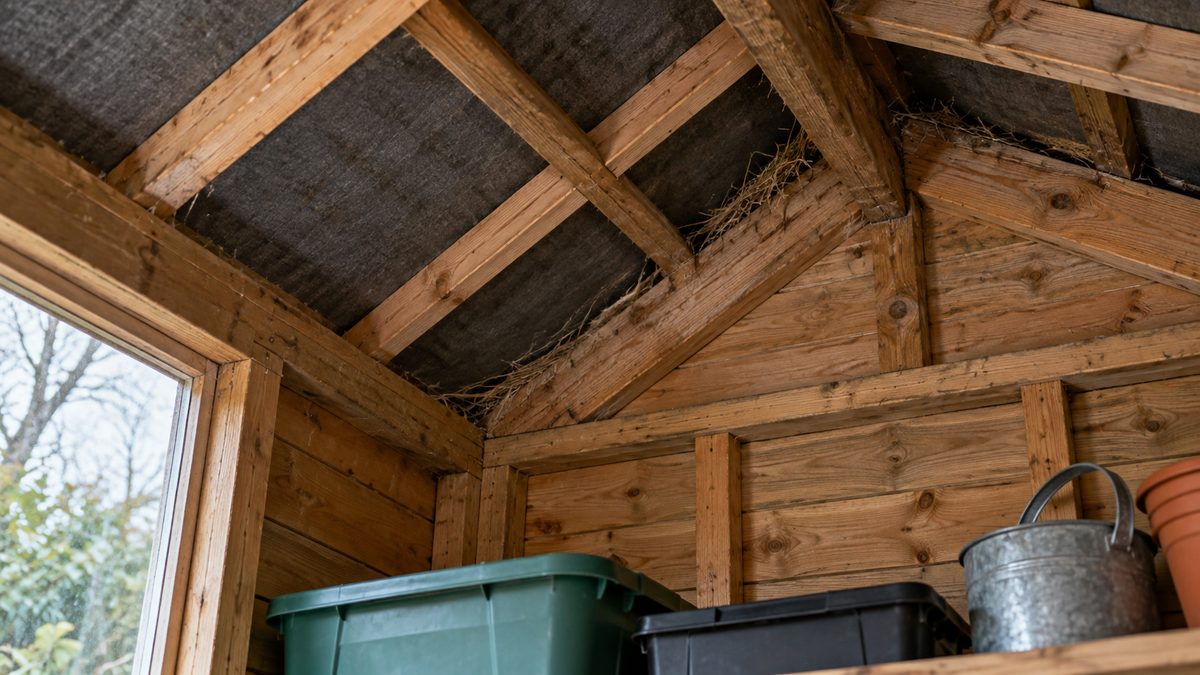
Rats can nest in a garden shed or garage roof when the space offers shelter, access and nearby food. Check for droppings, shredded insulation and gnawed roof edges from a safe position; avoid climbing onto the roof or pulling apart a suspected nest.
Cold weather can make an undisturbed roof void attractive, but scratching overhead does not identify the animal. Start with visible evidence and the condition of the building, then decide who should investigate. A damaged ceiling or unsafe ladder position is a reason to stop before opening anything.
Read the clues along rafters and roof edges
Use a torch from the doorway or a stable floor position. Look along rafter tops, wall plates and the junction where the roof meets the wall. Droppings collected on a beam, torn insulation around a gap and dark marks along a repeated route can support a suspicion of rodents. None of these tells you how many animals are present.
Gnawing around timber joints, damaged stored fabric and material gathered into a sheltered corner are more useful together than a single sound. Photograph what you can see without moving it. Record the location so that a pest professional can connect signs above the ceiling with possible entrances outside.
An old stain or brittle dropping cannot reliably establish when an animal last visited. Avoid touching droppings to judge freshness. If insulation is covering the rafters, leave it in place until the inspection method has been agreed. Our article on droppings in loft insulation explains why disturbed fibres and hidden contamination complicate the job.
Make a ground-level shed roof checklist
- Check whether doors close properly and daylight shows beneath them.
- Look from the ground for loose fascia boards, damaged soffits and lifted roof edges.
- Note branches or stored objects that give access to the roof.
- Identify feed, bird seed, pet food or open rubbish near the building.
- Check visible cables for damaged insulation without touching them.
- Mark areas of sagging ceiling, water damage or loose boards as unsafe to enter.
- Photograph suspected entrances before arranging pest removal and repairs.
Do not walk on a shed roof to get a better view. Roof sheets may be fragile even when they look intact, and a garage ceiling is not a working platform. If inspection requires access at height, use a contractor with suitable equipment. Stop work around old roofing or lining that might contain asbestos and have it assessed before drilling or removal.
Remove food and clutter without opening the nest
A roof void offers shelter, while the reason animals remain nearby may be on the floor below. Put garden seed and animal feed into secure containers. Clear spills beneath shelves and remove unwanted cardboard after checking it for contamination. Keep enough space beside walls to see new damage rather than stacking everything tightly against them.
Treat contaminated bags differently from clean clutter. Do not shake them out indoors or carry loose nesting material through the house. Leave heavily affected items for a planned clean-up. For the wider building, cleaning a shed after mice covers the distinction between clearing storage and handling rodent waste.
Check the outside too. Fallen fruit, poorly closed bins and accessible compost can keep rodents visiting a shed even after roof repairs. Tidying one corner will have limited value if food remains available along the fence. Reduce those sources while a professional assesses any active roof nest.
Coordinate removal with weatherproof repairs
Do not simply stuff the most visible hole while animals may still be inside. A pest professional can assess occupancy and arrange control, then coordinate proofing with the roofer. Closing an occupied route may leave animals in the void or encourage further chewing elsewhere.
Use durable materials suited to the gap and the roof construction. Expanding foam alone is not a reliable gnaw-resistant barrier. Keep designed ventilation and drainage working; covering every opening indiscriminately can cause damp or interfere with the building. Roof leaks also need repair so that new insulation is not placed back into a wet space.
Where cables have been chewed, keep clear and have an electrician assess them before using affected equipment. Do not hide a suspect cable behind new lining. Garage roof activity also justifies checking the vehicle below, especially if feed is stored nearby. The guide to mice in garages helps connect those routes.
Decide what roof insulation can stay
Insulation with embedded droppings, nesting pockets or urine contamination may need local or wider replacement. Surface appearance alone does not show how far waste has penetrated. Ask the cleaning contractor to distinguish removable contamination on hard surfaces from porous material that cannot be cleaned effectively.
Avoid sweeping or vacuuming rodent waste, and do not use compressed air. Small accessible areas require a suitable wet cleaning method; widespread deposits, confined voids and overhead contamination are better assessed professionally. Follow local public-health advice for protective equipment and disposal. Seek medical advice after a bite or if illness develops following exposure, mentioning the rodent contact.
Keep a simple record after repairs: the original photographs, the repaired entrances and later checks from the same safe viewpoint. Fresh damage or new deposits mean the route or control plan needs another look. For this setting, the EchoRepel Ultrasonic Rat Repellent offers a poison-free device using ultrasonic sound that rats and mice want to avoid. It does not replace inspection, cleaning or repairs, and results cannot be promised.