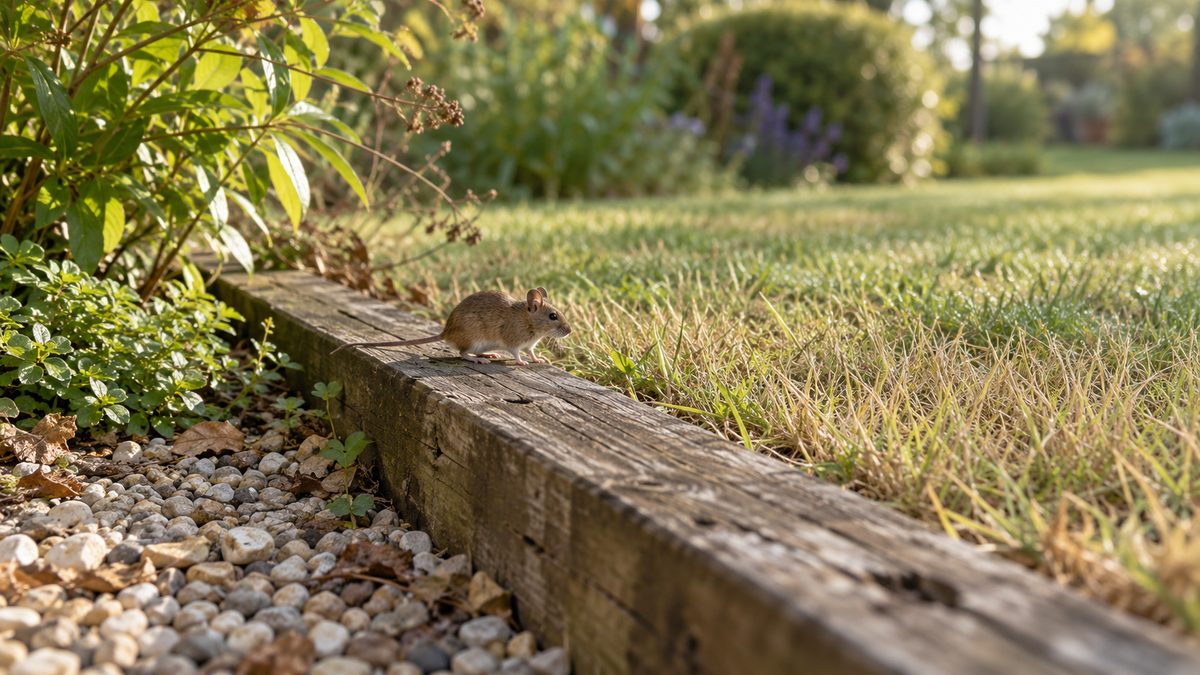
A deer mouse generally has a white belly and feet, a tail with darker and lighter sides, and relatively large eyes and ears. A house mouse usually looks more uniformly gray-brown. Look at those features together, from a distance. A quick glimpse of a small brown animal crossing the floor may leave the identification uncertain.
The distinction matters for understanding US hantavirus information. It does not change the first cleanup decision: handle all rodent waste carefully. A likely house mouse is no reason to sweep a cupboard, and a likely deer mouse does not tell you that anyone has become infected. Plan the response around the waste and the building.
Compare several visible features
| Feature | Deer mouse | House mouse |
|---|---|---|
| Belly and feet | Generally white | Usually less sharply contrasted |
| Tail | Bicolored, darker above and lighter below | More uniform in appearance |
| Eyes and ears | Generally larger and more prominent | Less prominent by comparison |
| Overall coloring | Contrasting upper body and white underside | More uniform gray-brown |
| Likely setting | Rural areas, sheds, cabins and garages | Homes and household storage areas |
Lighting can hide the underside and make a tail look different from one angle to another. Avoid chasing, catching or handling a mouse to inspect those details. If identification remains unclear, describe what you saw and where you saw it to a pest control professional. They can consider the building signs alongside the animal’s appearance.
Where deer mice and house mice turn up
Deer mice are associated with rural settings and can enter sheds, cabins and garages. House mice commonly use homes. These are broad patterns, not firm boundaries. A garage attached to a house or a cabin used throughout the year should still be inspected on its own signs rather than assigned a species by its address.
In fall (autumn), opening a storage shed may reveal signs you never noticed during summer visits. Check the accessible floor, shelving and stored containers before unpacking everything. A closed-up cabin deserves a planned opening and cleaning sequence. Our guide to cleaning a shed or cabin after mice explains that process.
What the US hantavirus connection means
In the US, the deer mouse is the main carrier of the hantavirus strain linked to most US cases. Not every deer mouse carries it. Some wild rodents carry hantavirus, and people can be exposed by breathing dust contaminated with urine, droppings or nesting material. See the CDC overview of hantavirus for the wider context.
House mice are not the main hantavirus carrier in the US. Their droppings can still carry other germs, so the same careful cleanup applies. A mouse’s coat, the room where you saw it and the number of droppings cannot establish whether an exposure has caused illness. Keep species identification separate from questions a doctor should assess.
The phrase field mouse is an everyday description that may leave the species unclear. When asking for help, describe the white underside, feet and tail if you saw them, and state that you are unsure. Avoid translating the word field into a health conclusion. Our article on whether mouse droppings can make you sick covers exposure without treating every mouse as the same carrier.
Use the same cleanup method for both
Follow the CDC rodent cleanup steps. Open doors and windows for 30 minutes before cleaning and leave the area while it airs out. Wear rubber or plastic gloves when you return. Do not sweep or vacuum urine, droppings or nesting material, including waste from a mouse you believe is a house mouse.
Spray the waste with an EPA-registered disinfectant until very wet. Let it soak for five minutes or the label contact time. Wipe up using paper towels and put them in a covered garbage can emptied regularly. Then mop or wipe the affected hard surfaces with disinfectant. Prepare the supplies before you start so you can complete the sequence.
For dead rodents and nests, spray, allow the soaking time, bag and double-bag before disposal in a covered garbage can. Wash gloved hands before removing gloves, then wash your hands with soap and warm water. A heavy infestation or an attic or crawl space full of droppings needs professional cleanup rather than an extended household cleaning session.
Plan the follow-up around the building
After cleanup, check entry gaps, stored food and clutter. Use hard containers with secure lids for food and seed, repair accessible openings and arrange rodent control if signs continue. Keeping a simple record of affected areas helps you explain the problem. It also gives you a useful comparison after the first cleanup and repairs.
If you feel unwell after rodent exposure, contact a doctor promptly and tell them about the exposure. Explain the setting and what happened, including any cleaning. Do not wait for a certain species identification before seeking care, and do not use a house mouse guess to dismiss illness after exposure.