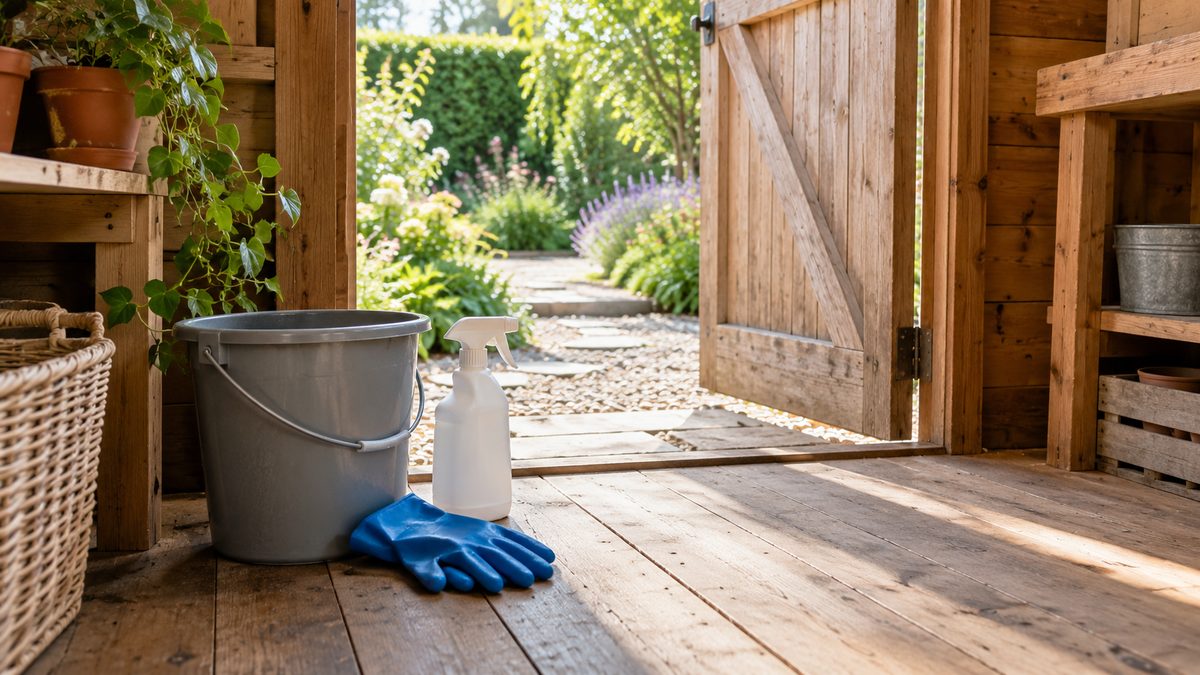
Open the shed or cabin, let it air out for 30 minutes and leave the area while you wait. That is the first cleaning step for a building that has been closed up. Resist the urge to start by sweeping the floor or shaking out stored blankets. Prepare a wet-cleaning plan before disturbing rodent waste.
The CDC cleanup guidance for homes and outbuildings covers cabins, sheds and similar spaces. The sequence below keeps opening, waste removal and stored-item decisions separate. During fall (autumn), give yourself enough time to assess a seasonal building before turning it into a weekend unpacking job.
1. Open doors and windows, then leave
Open doors and windows for 30 minutes before cleaning. Leave the area during that period. Carrying boxes around, brushing shelves or stripping bedding is cleaning activity, so leave those tasks until after ventilation and preparation. Keep a note of the opening time rather than estimating the wait while doing other jobs inside.
When you return, look for waste before moving stored belongings. A heavy infestation or an attic or crawl space full of droppings needs professional cleanup. If that describes what you find, arrange help before carrying on. Tell the service about the closed-up building, affected rooms and any contaminated soft furnishings or storage areas.
2. Set out gloves and cleaning supplies
Wear rubber or plastic gloves. Prepare an EPA-registered disinfectant, paper towels, bags for nests or dead rodents, and a covered garbage can that is emptied regularly. Read the disinfectant label before use. Knowing the contact time in advance makes it easier to work through one manageable area without rushing the soaking stage.
Our guide to cleaning mouse droppings safely describes the full waste-removal sequence. Use that same method on waste found in a cabin cupboard or on a shed floor. Do not sweep or vacuum urine, droppings or nesting material. Dry collection is not a preparation step for disinfecting later.
3. Wet waste, wait and wipe
Spray the waste until very wet. Allow five minutes of soaking time or follow the disinfectant label instructions. Then wipe it up with paper towels. Put the used towels in the covered garbage can. Clean the surrounding hard surface after removal, rather than stopping when the visible pellets are gone.
Dead rodents and nests need bagging after spraying and soaking. Seal the material in a bag, place it inside a second bag and seal that too. Put the double-bagged material in the covered garbage can. Keep gloves on through handling and disposal. Work through the affected areas without carrying waste between clean storage spaces.
If you have already used a vacuum, CDC says to follow the cleanup steps anyway. Stop vacuuming and return to the wet-cleaning method for the area. Our guide for accidental vacuuming of mouse droppings explains the next steps without assuming that an exposure has or has not caused illness.
4. Sort stored items by cleaning needs
| Item or area | Cleaning plan | Decision to make |
|---|---|---|
| Hard floors and shelves | Wet-remove waste, then mop or wipe with disinfectant | Follow the product label |
| Stored hard containers | Plan surface cleaning before returning them to storage | Keep cleaned items apart from affected items |
| Mattresses and upholstery | Steam-clean or arrange professional cleaning | Discard if heavily soiled |
| Nests or dead rodents | Spray, soak, bag and double-bag | Use a covered garbage can emptied regularly |
| Extensive contamination | Professional cleanup | Arrange help before continuing |
A sealed plastic storage tub and an upholstered chair need different plans. Read the cleaning directions for the item and the disinfectant before applying liquid. Keep the task list practical: hard surfaces to wipe, soft furnishings to assess, waste to dispose of and items requiring a cleaner’s advice. Avoid piling everything in a doorway where decisions become harder.
For mattresses and upholstery, plan steam-cleaning or professional cleaning, and discard items that are heavily soiled. Describe the rodent contamination when contacting a cleaner so they can advise on the item. Do not put a cover over a visibly affected mattress and treat the problem as finished. Decide how it will be cleaned or removed before reuse.
5. Finish surfaces and handwashing
Mop or wipe the affected hard surfaces with disinfectant after waste removal. Include shelves, cabinet interiors and the floor areas involved in the cleanup. Then wash gloved hands before removing gloves. Wash bare hands with soap and warm water afterwards. Keep that final handwashing step in the plan, even when the shed is separate from the house.
6. Close entry routes before storing again
After cleanup, inspect door bottoms, accessible wall gaps and pipe entries. Arrange suitable repairs, store seed and food in hard containers with secure lids and reduce clutter. A tidy shelf layout also makes later checks easier. If signs return, review the rodent control and entry repairs together instead of repeating cleanup without addressing access.
If you feel unwell after rodent exposure, contact a doctor promptly and tell them about the exposure. Mention the building and any cleaning you carried out. Professional cleanup is the appropriate next step for heavy contamination; a doctor is the appropriate contact for illness after exposure. Keep both decisions independent of guesses about the mouse species.