Clearing out a rat feels like the finish line. Too often, it is only half-time. Within days or weeks the scratching returns, and it is rarely the same rat. Understanding why is the key to making the fix permanent, and so is doing the steps in the right order.
You removed the rats, not the reasons
A rat came to your space for three things, food, water and shelter, plus easy access. Trapping or removing the current rat does nothing about any of that. The space is just as appealing as before, now with a vacancy. In a city there are almost always more rats nearby, in drains, gardens, shops and neighbouring flats, ready to fill it.
They leave a trail for the next one
Rats navigate by scent, following urine trails and grease marks left by others along walls and pipes. A spot that has hosted one rat is effectively signposted for the rest of the neighbourhood, which is why problems recur so reliably in the same corners.
Rats breed quickly
If even a pair is left behind, numbers can climb again within weeks, because rats breed several times a year. That is why a single catch rarely ends the problem, and why our guide to telling one rat from an infestation is worth reading before you decide you are done.
Do the steps in the right order
The most common mistake is sealing every hole first. If a rat is still inside, sealing can trap it in a wall void or false ceiling, where it may die and leave a smell that lasts for weeks. A better order:
| When | What to do | Why |
|---|---|---|
| Days 1 to 3 | Remove food and water sources; find the routes and the nest | Hungry rats are easier to trap and less likely to stay |
| Days 1 to 7 | Trap along the routes, or call a pest professional for a large problem | Clears the rats already inside |
| Once activity stops | Seal every gap larger than about 2 cm with durable material | Stops new rats getting in without trapping any inside |
| Same day as sealing | Clean droppings and trails safely with a wet method | Removes the scent that guides new rats |
| Next 4 weeks | Check for fresh signs weekly; keep a deterrent running | Catches a return early, while it is still one rat |
Making it stick
- Remove the food: sealed containers, no crumbs, covered bins, no pet food left out overnight.
- Remove the water: fix leaks and drips, and do not leave buckets standing.
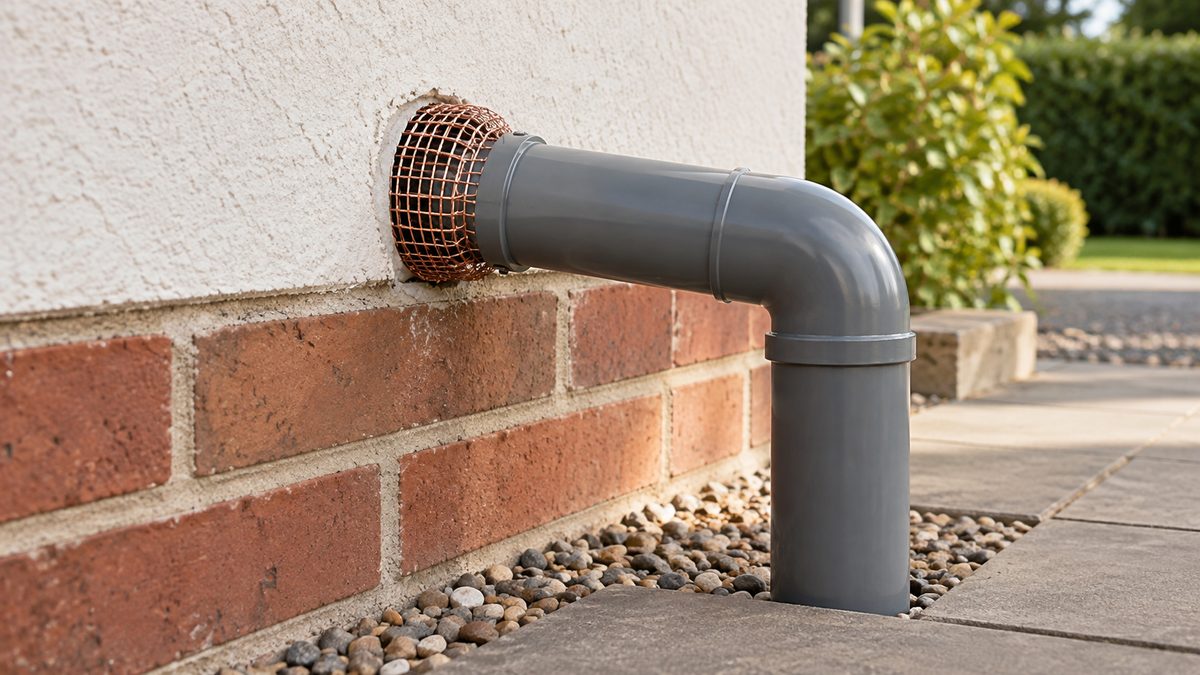
- Close the doors: seal gaps larger than 2 cm around pipes, cables and drains. Our guide to what rats can chew through explains which materials hold up.
- Erase the welcome mat: clean surfaces to remove scent trails, using gloves and a wet method rather than dry sweeping.
- Declutter: cartons, old newspapers and sacks are nesting material and cover.
- Keep it uncomfortable: a deterrent that runs continuously so the space never feels safe again.
How to tell if they are back
Check the same places every week: behind the fridge and cooker, under the sink, the storeroom floor. Fresh droppings are dark and soft; old ones are dry and crumble. A simple trick is to dust a thin layer of flour or talc on the floor near a suspected entry point at night and look for footprints in the morning.
When it is not your flat
In apartment buildings, rats often travel through shared ducts, drain chambers and false ceilings. If neighbours see them too, the fix has to be building-wide: the society needs to repair broken drain lids, manage garbage collection points and seal shared ducts. Our guide on whether rats can come up the toilet or drain covers the shared-drain route.
Keeping the space unwelcoming is what turns a temporary win into a lasting one. The EchoRepel Ultrasonic Rat Repellent keeps the area uncomfortable for rats after the last one is gone, so the vacancy you created is less likely to be filled. For the full prevention checklist, see how to rat-proof your house.