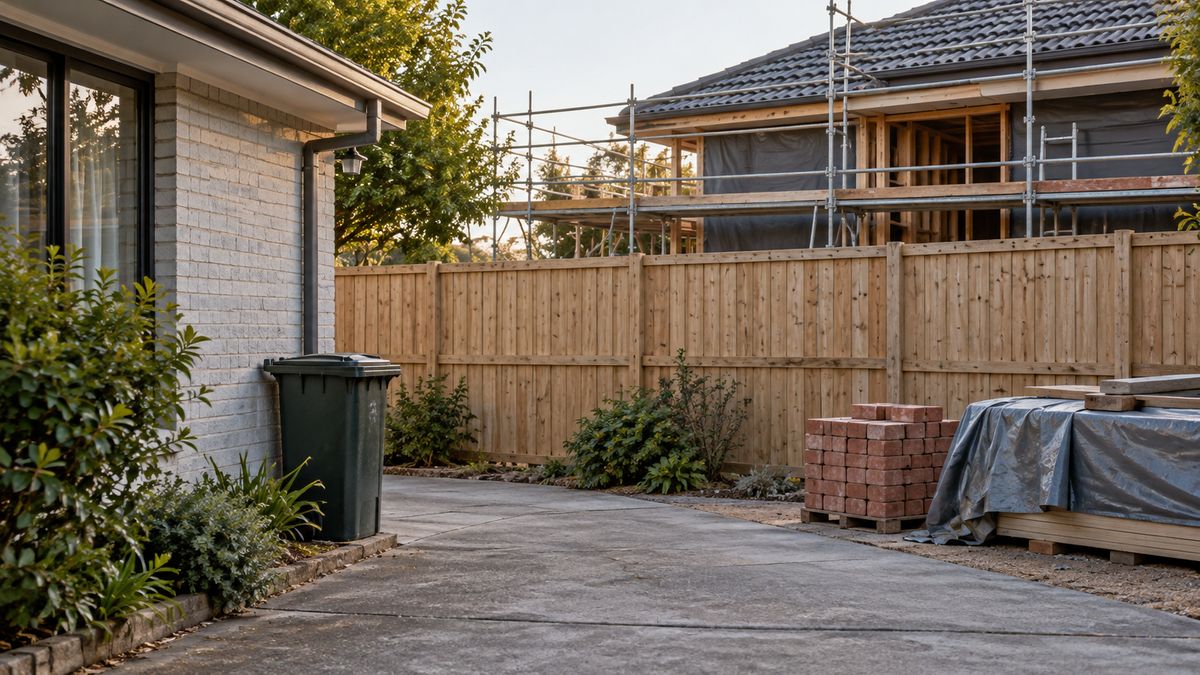
Rats may become more visible when nearby building work disturbs their shelter or changes access to food and covered routes. A new sighting does not prove the site created an infestation, but it is a useful prompt to check your home, bins and parked car before animals settle elsewhere.
Focus on the boundary of your own property and on evidence you can record safely. Do not enter excavations, move site waste or inspect open drains. Those areas belong in a coordinated response involving the site manager, property manager and, where needed, a pest professional.
Separate displaced shelter from food on the site
Demolition, clearance and excavation can disturb places where rodents were hiding. At the same time, poorly contained food waste or piles of stored material can offer new resources. The two processes can overlap: an animal may leave one shelter and remain nearby because food is still accessible.
Changes in visibility can also be misleading. Removing a hedge may expose an existing route that was previously hidden. Seeing rats in daylight is worth reporting, but it does not tell you their numbers or establish that they came from a particular address. Avoid making those assumptions when talking to neighbours or the contractor.
Record what you see instead: which boundary, the direction of travel, visible holes and nearby waste. Photograph from your property or a safe public position without approaching the animal. The guide to telling one rat from wider activity explains why repeated evidence is more useful than a single encounter.
Walk your boundary before moving indoors
Start outside in daylight. Look at the base of external doors, pipe penetrations, damaged air bricks and openings around utility entries. Check additions such as a garage or utility room, where unfinished edges can leave routes into the main building. Do not reach into holes or lift heavy covers.
- Put household food waste in bins with properly closing lids.
- Clear spilled bird seed and bring pet feeding bowls inside after use.
- Move cardboard and unused materials away from exterior walls.
- Note gaps around services for suitable durable repairs.
- Keep ventilation and drainage openings functional when arranging proofing.
- Photograph damaged fences or drainage features and report them to the responsible owner.
- Check garage door edges and the space around stored animal feed.
If animals may already be inside, get an assessment before sealing the suspected active route. Blocking a visible entrance without dealing with occupancy can move the problem into another void. Our article on rat-proofing a house covers how to plan repairs without treating every opening alike.
Give parked cars their own inspection
A home can be well sealed while the car remains close to cover and food waste. If practical, choose a parking space away from rubbish storage, thick vegetation and piles of building materials. Keep wrappers, shopping bags containing food and pet treats out of the cabin and boot.
Inspect a cool engine bay before starting the car if you have found nearby activity. Look for loose nesting material and gnawed visible cables without touching unfamiliar components. Check the cowl below the windscreen and beneath the removable boot floor. A quick glance through the windscreen will not reveal material hidden under the bonnet.
Do not start the vehicle to frighten an animal out of a suspected nest. Visible wiring damage, chewed hoses or debris beside hot components needs a workshop assessment. Read how rats find a parked car for more on the surroundings that matter. Vehicle use alone does not establish that the engine bay is clear.
Send a factual report to the right contact
Ask the site contact how food waste is stored, who handles pest reports and whether affected boundaries can be inspected. Provide locations and photographs rather than demanding a particular poison or trapping method. The contractor needs to consider workers, wildlife, drains and neighbouring properties when choosing a response.
For flats or shared parking, give the same evidence to the managing agent. Several households reporting through one route can reveal a common bin store or service passage. Keep a dated record of sightings, responses and repairs so that a later visit does not start from memory alone.
If waste or repeated activity affects public space, consult the relevant local authority for the reporting route. Do not quote a universal legal duty or deadline: responsibilities differ between India, the US and the UK and between local areas. Tenants should also use their landlord's repair process for damaged doors, pipes or shared services.
Handle contamination without making a dusty clear-out
Construction dust and rodent waste require different decisions. Do not assume that an ordinary dust mask makes cleaning a contaminated garage safe. Avoid dry sweeping, vacuuming or pressure washing droppings. For limited contamination on suitable accessible surfaces, use the wet-cleaning method and protective measures recommended by public-health guidance.
Leave extensive deposits, nests inside voids and contamination around damaged electrics to professionals. Keep children and pets away while the area is assessed. Seek medical advice after a bite or if you feel unwell following exposure, explaining the contact rather than trying to diagnose an infection yourself.
Continue checking while site conditions change. A repaired door gap and a secure food bin are useful improvements even if the source of the first rat remains uncertain. The EchoRepel Ultrasonic Rat Repellent uses ultrasonic sound that rats and mice want to avoid; the device is poison-free. It offers no promise of results and does not take the place of waste control, removal or building repairs.