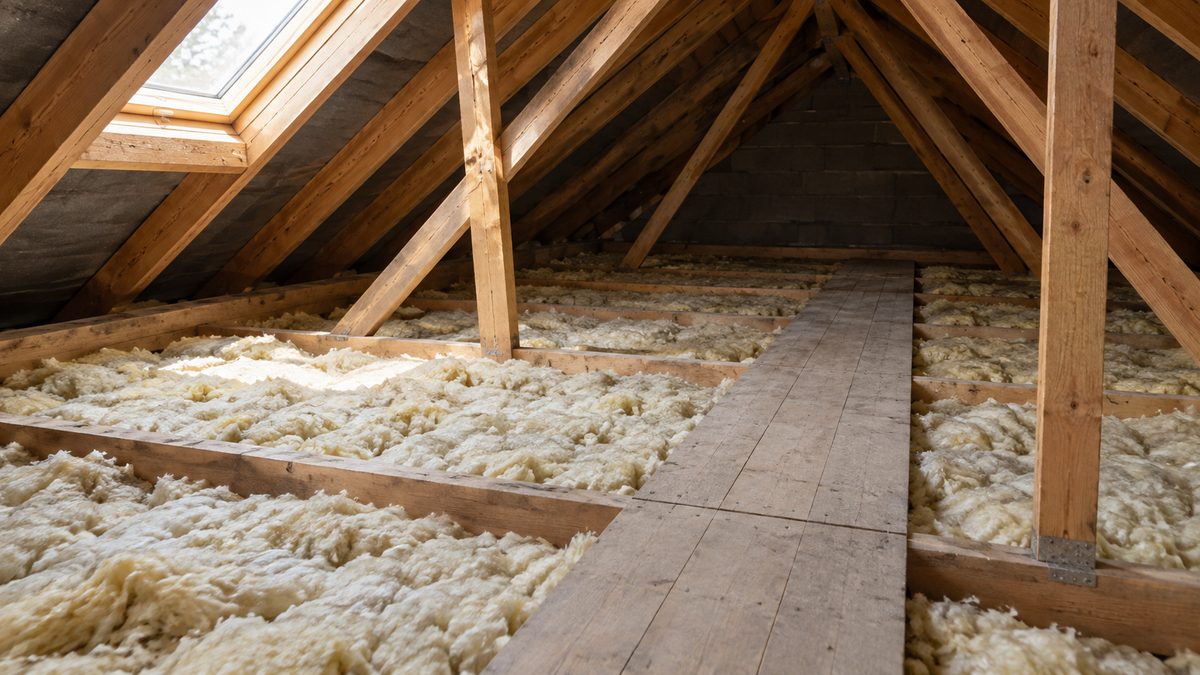
If you find suspected mouse droppings in loft insulation, stop disturbing the material and arrange a safe assessment of contamination and rodent access. Insulation does not always need complete replacement, but nesting, urine-soaked patches and waste embedded through porous material can make replacement necessary.
The first decision is how to inspect without spreading dust or falling through the ceiling. Do not pull insulation aside to see how much waste is underneath. A small visible patch may be the edge of a larger affected area, while old deposits alone do not prove mice are still present.
Pause at the hatch and check the access
Look from a secure position with a torch before climbing into the loft. Ceiling plasterboard is not a walking surface, and insulation can hide joists, cable runs and openings. If there is no suitable boarded access, leave the inspection to someone equipped to work there safely.
Keep the hatch area clear and stop other household members from standing below while contaminated material is assessed. Do not lower loose insulation into a hallway or carry unbagged waste through bedrooms. Mention any fragile ceilings, awkward access or electrical problems when arranging the visit.
Older buildings can contain materials that need specialist assessment before disturbance, including suspected asbestos. Do not assume every unfamiliar loose material is ordinary insulation. If identification is uncertain, avoid sampling it yourself. An assessment should consider the building materials as well as the rodent signs.
Map the deposit rather than raking through fibres
Photographs from a safe position can record affected edges, nearby pipes and possible entry points. Note visible shredding, concentrated nesting pockets and damage to cable insulation. A mouse identification should use several clues; droppings alone may be confused with signs from other animals.
Do not crush pellets or use bare hands to check texture. Avoid close sniffing to locate urine. If birds or bats may be using the roof, get advice on identification and local wildlife protections before removal or sealing. The article on rats in the loft offers broader inspection context without requiring you to open a nest.
Ask the inspector to explain which surfaces are affected. Waste sitting on a cleanable board is a different cleaning problem from waste scattered inside layers of fibrous insulation. The depth of contamination, condition of the insulation and ability to remove it without spreading material matter more than a guessed animal count.
Questions that determine the replacement scope
- Is contamination limited to one accessible patch or present across connected bays?
- Are droppings and nest fibres embedded through the insulation rather than resting on a hard surface?
- Is there urine contamination, persistent odour or damaged insulation facing?
- Can affected sections be removed without dragging them across clean material?
- Is roof leakage or condensation also damaging the insulation?
- Have active rodent access and any chewed electrics been assessed?
- Will the contractor contain, bag and dispose of removed material appropriately?
There is no useful universal rule that one dropping means a whole loft must be stripped. Equally, picking off visible pellets does not establish that porous material is clean. Ask for a written scope identifying retained and replaced areas, the reason for each choice and how adjacent spaces will be protected.
Stop activity before installing fresh material
Replacing insulation while rodents can still enter may lead to another contaminated layer. Coordinate pest removal, inspection of entrances and durable repairs before reinstatement. Avoid sealing a suspected occupied entrance without advice, because animals may remain inside or move into a different void.
Roof edges, service penetrations and damaged vents deserve attention, but proofing should preserve ventilation. A roofer can deal with defective soffits or tiles; an electrician should assess chewed cables. Do not bury damaged wiring beneath replacement insulation or tape over an exposed conductor as a household fix.
Our guide to keeping mice out of the house covers entry prevention, while rats in gutters and roof spacesconsiders routes above ground level. Ask the contractors who will confirm that repairs are complete before new material arrives.
Clean-up methods that keep loft waste contained
Dry sweeping, household vacuuming and compressed air can spread contaminated dust. Do not use them on rodent droppings. Spraying a disinfectant across loose insulation also does not establish that the full depth has been treated, and soaking the loft can create moisture and electrical hazards.
For hard surfaces, cleaning requires suitable protective equipment, a compatible disinfectant and its labelled contact time. Porous material may require removal instead. Extensive deposits, poor access and waste near electrical services are reasons to use a specialist rather than extending a small household clean-up method across the entire roof space.
Consult local public-health guidance for rodent clean-up and disposal. Tell a doctor about rodent exposure if illness develops afterwards, and seek medical care for bites. This is general information, not a diagnosis or a substitute for an assessment of your loft.
Record the loft before closing the hatch
Keep photographs of cleaned surfaces, replacement sections and repaired access points. At later safe inspections, compare the same locations. New waste or fresh chewing needs a further investigation; do not treat a clean first visit as proof that the problem has ended.
Check that ventilation remains clear and the insulation has been installed without obstructing services that need clearance. Follow the installer's guidance rather than compressing material under storage boxes. A poison-free option, the EchoRepel Ultrasonic Rat Repellent uses ultrasonic sound that rats and mice want to avoid. It cannot clean contaminated insulation or promise that rodents will stay away.