Keeping mice out starts with the building itself. During fall (autumn), walk around your house before filling the garage with seasonal storage. Carry a flashlight, take photographs of suspect gaps and work from the ground upward. A tidy kitchen helps, but an opening behind the sink can keep the problem going.
Separate prevention from an active infestation. If you already find fresh droppings, damaged food packets or repeated nighttime scratching, arrange removal while closing access. Our guide to getting rid of mice in the house covers that next step. Do not wait for a scent pouch to solve it.
Start with an outside inspection
Follow the foundation where it meets siding or brickwork. Look around water pipes, cable entries, basement windows and crawl-space access panels. Mice can use very small openings, so check narrow cracks as well as obvious holes. A gap hidden behind a downspout deserves the same attention as one beside the front door.
Inspect vents for missing covers and damaged edges. Dryer vent flaps should close when the dryer is off. Use a cover approved for that application; improvised fine mesh can collect lint and restrict airflow. Keep air bricks, drainage openings and combustion-air supplies functional. Ask a qualified contractor when the correct exclusion detail is unclear.
From ground level, check roof edges, soffits and places where cables enter upper walls. Branches touching the house can provide access to higher openings. Leave ladder work and repairs near overhead wires to someone equipped for them. For a route-by-route explanation, read how mice get in the house.
A room-by-room mouse prevention checklist
| Area | What to check | Fix |
|---|---|---|
| Kitchen | Sink pipes, appliance gaps, open food | Secure metal filling around pipes; use tight-lidded containers |
| Utility room | Dryer outlet, service entries, leaks | Repair approved vent cover and seal around service sleeves |
| Garage | Bottom corners, door seal, birdseed bags | Replace worn seals; move seed into metal bins |
| Basement or crawl space | Foundation cracks, vents, access hatch | Repair masonry; fasten appropriate metal vent guards |
| Attic | Soffits, roof junctions, loose insulation | Arrange safe exterior repairs and inspect for activity |
| Yard | Wood piles, feeder spills, dense shrubs | Move shelter away from walls and clear food spills |
Match the sealing material to the opening
For a small, irregular gap around a cool pipe, pack purpose-made steel wool or copper exclusion mesh firmly into the space and secure it with a compatible sealant. The metal makes gnawing harder; the sealant holds the filling in place. Loose strands tucked into the surface are easy to dislodge.
Copper mesh avoids the red rust associated with ordinary steel wool, but it still needs a sound installation. Our copper mesh guide explains packing and retention. For wider holes, use securely fastened metal flashing, metal plates or suitable hardware cloth. Repair damaged surrounding wood or masonry rather than hiding it behind filler.
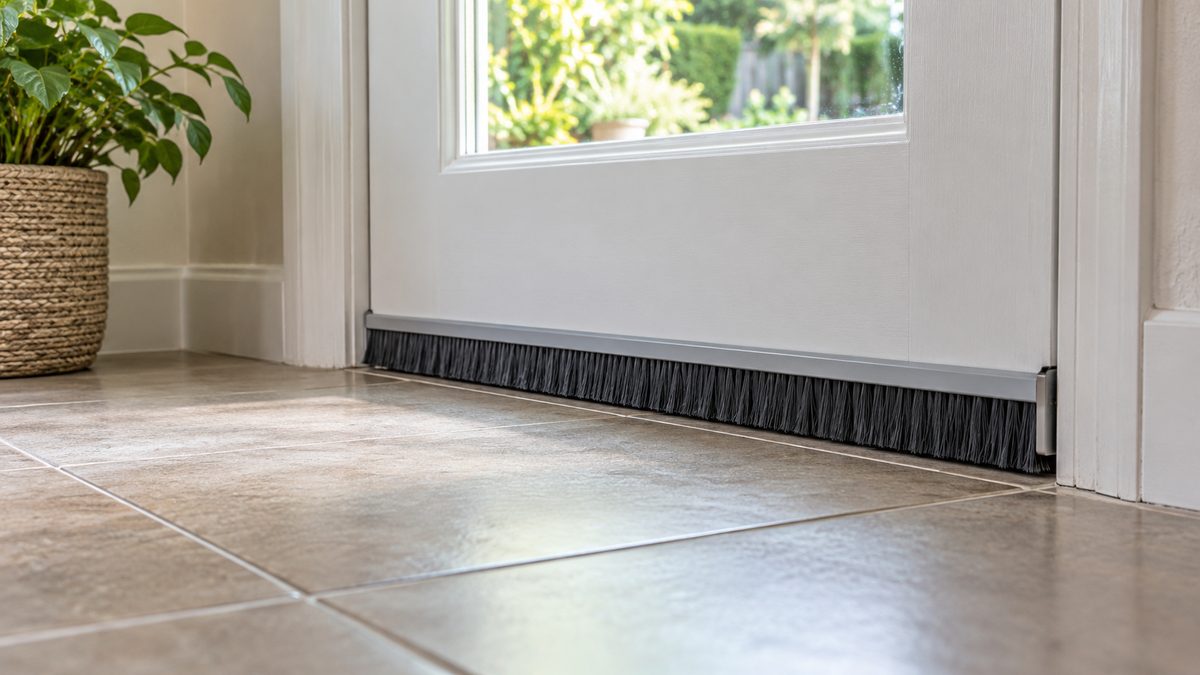
Do not rely on expanding foam alone where mice can reach it. At doors, fit a durable sweep and repair the threshold so corners close too. Open and close the door after fitting: a sweep that prevents latching or leaves a side gap needs adjustment. Observe clearance and fire requirements around heating equipment.
Remove food and nesting cover indoors
Check beneath the toaster, stove and refrigerator for crumbs and grease. Put cereal, flour and pet food into sturdy containers with close-fitting lids. Avoid leaving pet meals out overnight, and clean the bowl area after feeding. Empty small kitchen bins before scraps accumulate, and keep larger trash containers closed.
Reduce cardboard piles in pantries, basements and closets. Store seasonal decorations in closed containers, with enough access around them to inspect the wall. Repair dripping taps and appliance leaks. An inspection route you can reach is more useful than a spotless room with a hidden pile behind a cabinet.
Make the yard less inviting
Move firewood away from the house and raise it off the ground where practical. Clear fallen fruit and spilled birdseed. If mice keep feeding beneath a feeder, pause feeding while you address the problem. Store spare seed in a secure metal container rather than its original bag.
Trim shrubs back enough to see and reach the foundation. Keep shed doors and garbage lids in good repair. Avoid transferring clutter from indoors into a sheltered pile beside the garage: that leaves a hiding place next to the route you just repaired.
Check that the repairs hold
Photograph completed repairs and revisit them after heavy weather or service work. Look for fresh gnawing, displaced mesh and new droppings. The CDC rodent-control guidance recommends regular inspections and reducing food, water and shelter. If activity continues, look for a missed route or ask a pest professional to inspect inaccessible spaces.
Ultrasonic repellents are only a supporting measure. Results vary, and sound does not pass through walls or closed cabinets. Keep your attention on physical repairs, food access and evidence of continuing activity. Those checks tell you whether the house is becoming harder for mice to enter and use.