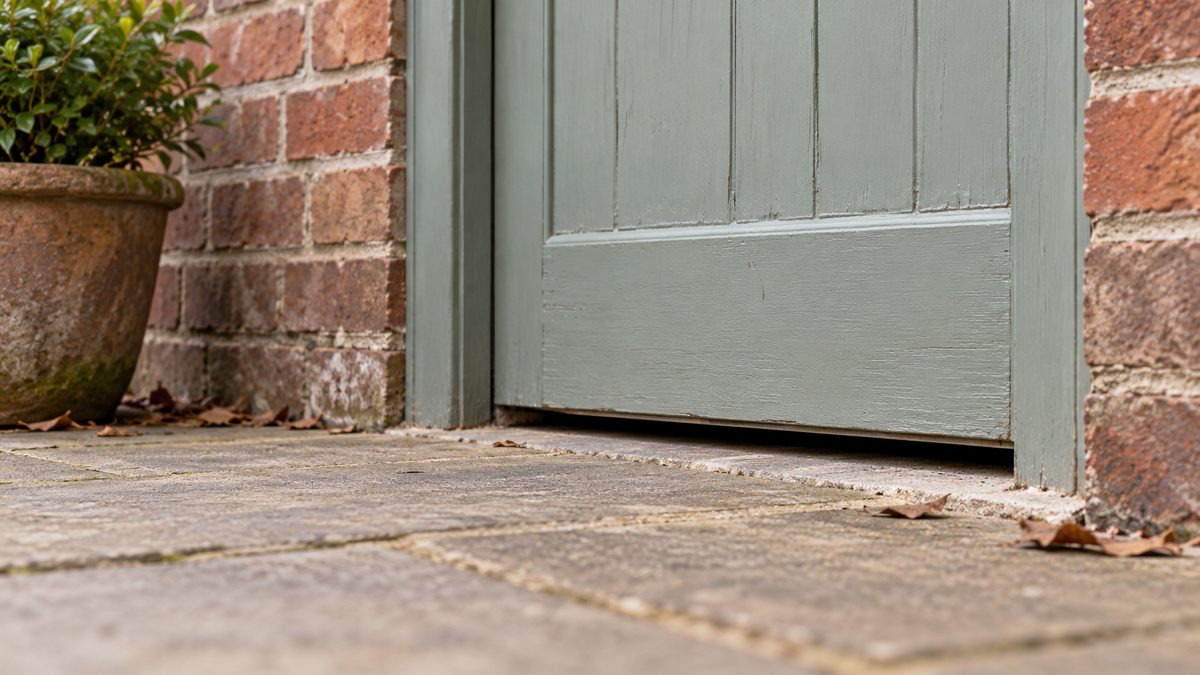
A mouse does not need an open front door. A gap about 1/4 inch [0.6 cm, or 6 mm] wide can be enough, although the shape and surrounding material matter too. During fall (autumn), inspect the building before assuming that the animal appeared through a door someone left open.
The CDC rodent exclusion guidance identifies small holes around doors, services and other building openings as inspection targets. Start outside, then check the corresponding room or cavity inside. Droppings in the pantry tell you where mice have traveled, but they do not prove that the pantry is where they first entered.
1. Gaps around water and waste pipes
Look where pipes enter exterior walls, beneath sinks and behind washing machines. A neat visible collar may hide an unfilled space around the sleeve. Use a flashlight to inspect the underside without disturbing plumbing. For a small suitable gap, a secured metal filling and compatible sealant may work; repair leaks first.
2. Cable and utility entries
Internet, electrical and other service entries can leave spaces after an installation or replacement. Check both the outer wall and the inside access point. Do not push metal mesh against damaged wiring or into an electrical box. Have an electrician or qualified installer repair penetrations that involve electrical, gas or fire-safety requirements.
3. Garage door corners and bottom seals
Close the garage door and inspect the lower edge from inside. Look for daylight, chewed rubber and uneven contact at each corner. Daylight can reveal a problem, though its absence does not prove a tight seal. Replace worn seals and check the garage-to-house door as well. Stored birdseed can keep mice near this route.
Cars in the same garage deserve inspection if you find activity nearby. Our guide to rodent signs in a car can help you check the vehicle, although it focuses on rats. Do not seal vehicle air intakes or drains as though they were gaps in a house wall.
4. Exterior doors and thresholds
Inspect the front, back and side doors, including rarely used basement entrances. Check the sweep, frame corners and threshold for wear or movement. Fit a durable sweep that closes the gap while allowing the door to latch. A weather strip designed only to stop drafts may not withstand gnawing at an accessible edge.
5. Foundation cracks and siding junctions
Follow the base of the wall, looking behind movable planters and stored items. Pay attention where siding meets masonry or an extension joins the original house. Repair sound masonry with an appropriate material. A widening crack, rotten sill or damaged structural timber needs assessment rather than a quick patch of foam.
6. Basement windows and crawl-space hatches
Check frames, damaged screens and access panels near ground level. Clear leaves so the frame edges are visible, and close hatches securely after service visits. Repair the frame as well as the opening if the wood is soft. Keep required crawl-space ventilation working when choosing a rodent-resistant guard.
7. Dryer outlets and ventilation covers
Inspect the dryer's exterior flap with the machine off, then check that it opens normally during operation. A stuck or missing flap needs repair. Also inspect vent edges and the space around the duct. Use an approved dryer cover; improvised screening can collect lint. Never fill air bricks, exhausts or combustion-air supplies with mesh.
8. Soffits, eaves and roof junctions
Look from ground level for loose soffit panels, damaged fascia and gaps around roof intersections. Mice can reach higher openings by climbing suitable surfaces or nearby branches. Use binoculars or photographs for a closer view. Arrange safe roof access for repairs, and inspect attic edges for activity without stepping off supported flooring.
9. Chimney surrounds and attached structures
A porch, deck or attached shed can conceal the wall behind it. Check accessible junctions and the exterior area around the chimney for broken building materials. A chimney and flue need suitable specialist protection; do not block the opening or improvise a cap. Inaccessible junctions are a useful place for a professional inspection.
Turn the inspection into repairs
| Finding | Practical next step |
|---|---|
| Small gap around a cool pipe | Secure appropriate metal filling with compatible sealant |
| Large opening in a sound wall | Fix metal plate or suitable hardware cloth securely |
| Worn door edge | Repair threshold and replace sweep or seal |
| Damaged vent or flue detail | Fit an approved guard or obtain qualified repair |
| Rot, widening cracks or damaged wiring | Arrange assessment before covering the damage |
Our copper mesh instructions cover small irregular gaps. For food storage, yard changes and follow-up checks, use the whole-house prevention checklist. Photograph repairs and look for fresh activity afterward; a second route may remain.
Remove mice already inside while closing entry points. Keep traps inaccessible to children and pets, following their instructions, or get professional help. Ultrasonic repellents are only a supporting measure: results vary, and sound does not pass through walls. They do not repair any of these nine routes.