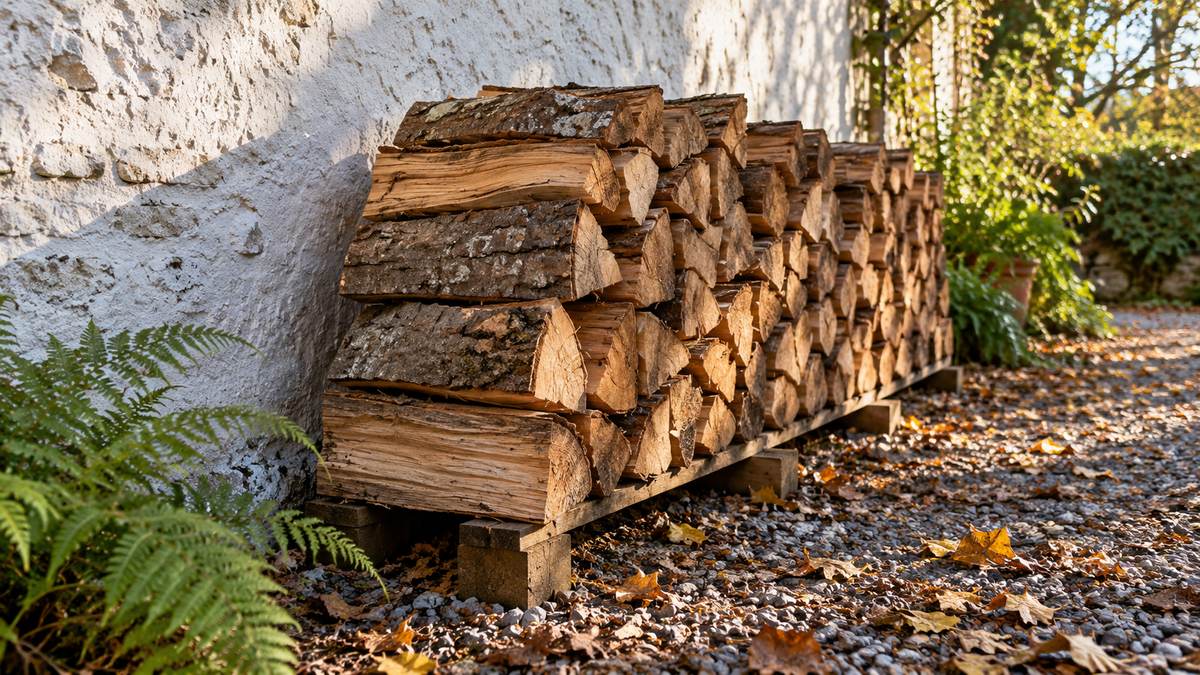
As the evenings get colder, log piles appear against back walls and in garages. A tidy stack of firewood is also a dry, sheltered place full of gaps, which is exactly what rats and mice look for in autumn. If the pile sits against the house, you have built them a sheltered corridor to your doors and air vents. A few changes to how and where you stack wood make a big difference.
Why rodents like log piles
- Shelter: the gaps between logs are dry and protected from wind and predators.
- Nesting space: the base of a pile on the ground stays undisturbed for months.
- Food nearby: log piles are often near bins, compost or bird feeders.
- Cover to the house: a pile against a wall hides rodents moving to vents and gaps.
How to stack firewood the rodent-aware way
| Do | Why |
|---|---|
| Stack on a log rack or pallets | Removes the sheltered gap at ground level and keeps wood dry |
| Keep the pile away from the house wall | Breaks the hidden route to doors, vents and air bricks |
| Leave a gap between the pile and fences or sheds | Lets you see and clean around it |
| Cover the top, leave the sides open | Keeps rain off while air dries the wood and less shelter forms |
| Stack neatly in rows rather than a heap | Fewer large cavities for nests |
| Use the oldest wood first | Wood that sits undisturbed for a long time becomes a nest site |
Keep the area around the pile clear
Rodents prefer to move under cover. Keep grass short around the pile, clear fallen leaves and do not store bags, boxes or garden waste next to it. Move bird feeders and compost bins away from the log store. Our guides to rat-proof bird feeders and rats in compost bins explain how to manage those.
Bringing logs indoors
- Bring in only what you will burn in the next day or two.
- Knock logs together outside to dislodge anything hiding in them.
- Look for droppings or shredded material on the logs.
- Keep the indoor log basket off the floor and away from walls.
- Do not keep a large indoor stack; it becomes another shelter.
Firewood in the garage or shed
Garages and sheds offer even more shelter, so the same rules apply: racks off the floor, gaps around the stack and regular use. Check the building itself for gaps under doors and around pipes. Our guide to mice in the garage covers sealing and checking a garage, and cleaning a shed after mice explains how to clear up safely.
Signs rodents are using the pile
- Droppings on or under the logs.
- Burrow holes in the soil near the base.
- Shredded bark, paper or fabric gathered into a nest.
- Runs, flattened paths in grass leading to the pile.
- Gnaw marks on nearby sheds or fences.
If you find these, wear gloves when handling the wood, avoid stirring up dust, and restack the pile off the ground and further from the house. Then check the house walls for signs too. Our guide to rats in the garden covers the wider garden.
Buying and delivering firewood
How wood arrives affects how it is stored. Bulk loads are often tipped in a heap on the drive, and a heap that sits for weeks before it is stacked becomes a shelter. Plan where the wood will go before it arrives, and stack it on a rack within a day or two. If you buy bags of logs, keep them closed and off the floor of the garage or shed until you use them, and do not store bags of kindling, coal or pellets on the ground next to the house.
Only buy as much as you will burn this season. Wood that sits for years at the back of a store is rarely disturbed, so it is exactly where rodents settle. Rotating stock, so the oldest logs are burned first, keeps the pile moving and makes any sign of rodents much easier to spot.
In short
Store firewood on a rack, away from the house and walls, covered on top with open sides. Keep the area around it clear, use the oldest wood first, and bring in only what you will burn soon, checking it outside first.
For sheds, garages and storerooms near the log store, the EchoRepel Ultrasonic Rat Repellent adds a poison-free layer, using ultrasonic sound that rats and mice want to avoid.