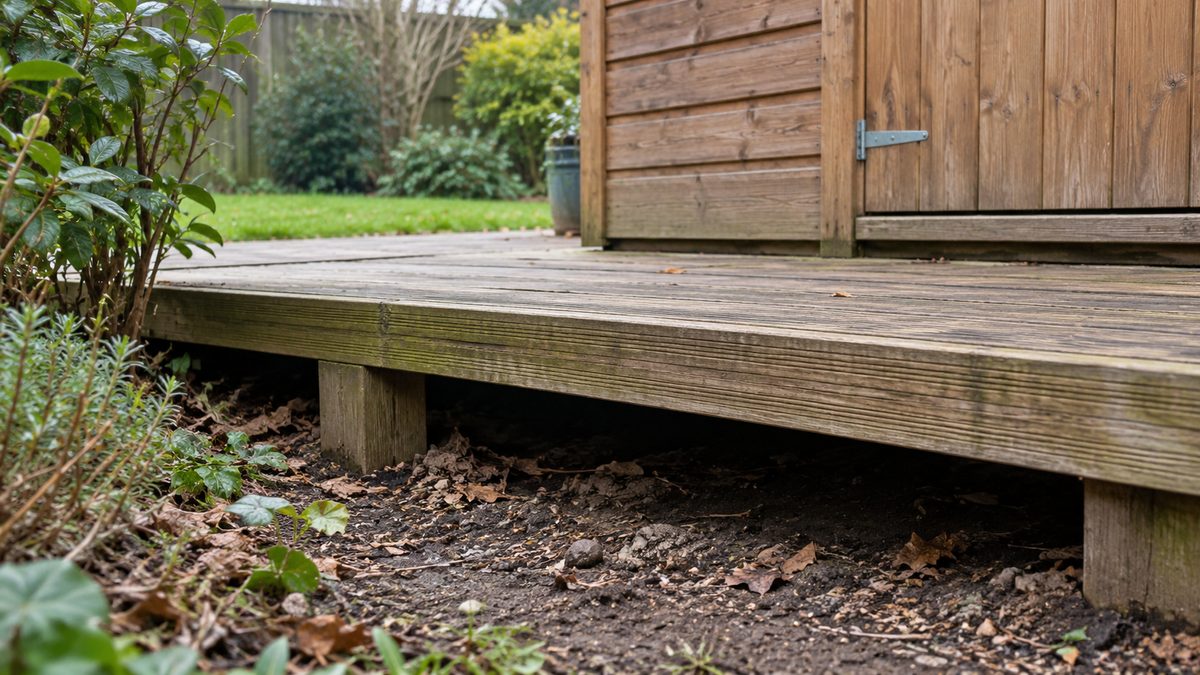
A small hole beside the shed does not prove rats are underneath, but a hole with a worn path leading to spilled birdseed deserves attention. The space beneath decking offers cover from disturbance and weather. When a reliable meal is a short journey away, rats have little reason to move on without changes around the garden.
Start by identifying the animal and its food supply. Avoid lifting boards, reaching into burrows or blocking every opening on the first afternoon. A useful plan removes the attraction, deals with rats already there and then closes access. These are separate jobs, and their order matters.
Check for several signs together
Inspect from accessible ground in daylight. Look along the shed base, beneath the visible edge of decking and where fences meet outbuildings. Rats tend to use sheltered routes, so check the edges before the middle of the lawn. Keep children and pets away from suspected activity while you investigate.
| Sign | What to look for | Next step |
|---|---|---|
| Burrows | Openings beside the base, sometimes with displaced soil | Photograph without poking or flooding |
| Runs | Narrow, repeatedly used routes through grass or beneath fences | Trace towards possible food sources |
| Gnawing | Damage to timber edges, bags or stored items | Check nearby storage and building entries |
| Droppings | Rodent droppings along protected edges | Avoid disturbance and arrange careful cleanup |
A quiet night or an apparently unused hole is not reliable proof that the shelter is empty. Other animals also use garden cover. If identification is uncertain, ask a pest controller before placing equipment. Take photographs from a safe distance rather than handling droppings to judge their age.
Remove the meals near the shelter
Walk from the shed to the places where food appears each day. Pick up fallen fruit, clear barbecue scraps and bring pet food indoors after feeding. Store animal feed and seed in hard, tightly closed containers. A folded bag inside a timber shed still gives rats something to investigate.
Bird feeding often supplies more than expected. Seeds collect beneath feeders, in decking grooves and behind pots. Clear spills daily and pause feeding if rat activity continues. Our guide to rat-proofing a bird feeder explains trays, positioning and other changes that reduce food reaching the ground.
Check compost too. Keep cooked food, meat and dairy out of an ordinary garden compost bin, secure its lid and inspect the base. Moving a food source a few feet away does not remove it. See rats in the compost bin for a closer look at bin access and garden scraps.
Reduce cover without disturbing an occupied void
Move loose bags, unused pots and timber offcuts away from the shed edge. Keep an accessible strip around the structure so you can spot fresh digging. Work on visible clutter first. Do not crawl under unstable decking or dismantle a shed that may contain damaged cables, rotten supports or an occupied nest.
Check where the shelter connects to the house. A pipe opening, damaged air brick or gap beneath a nearby door can turn an outdoor problem into an indoor one. Note these defects for repair, but get advice before closing a route that animals may still be using. Preserve working drains and required ventilation.
Use covered trapping or arrange professional help
Suitable rat traps can remove animals already using the site. Place them only in covered, secured stations designed for the trap and location, following the instructions. Keep them inaccessible to children, pets and visiting wildlife. Covered stations reduce access; they still need careful positioning and daily checks.
If you cannot reach a station to check it safely, that is a poor location for a household trapping attempt. Contact your council or a pest controller. Check your local council for available services, and ask a contractor whether inspection, follow-up visits and exclusion advice are included in the quote.
Get help early when burrows approach foundations, activity spreads across neighbouring gardens or the space beneath decking is inaccessible. Avoid flooding burrows, pouring chemicals underneath or using smoke. Those attempts leave the food and access problems unresolved and can affect other animals or the structure.
Fit the perimeter barrier after removal
Once the rats are gone, secure the perimeter with durable wire mesh fixed firmly to sound material and buried into the ground. An installer can assess the soil, supports and corners, including whether an outward buried return is appropriate. Loose mesh tucked behind decorative edging leaves weak points at joins and below the surface.
Do not cover air bricks, obstruct drainage or trap moisture against timber. Leave a practical inspection route. Where decking meets steps, pipes or a wall, the detail of the joint matters as much as the main mesh panel. Ask for those transitions to be checked before the job is finished.
Keep checking the whole garden
Look for fresh runs, digging and spilled food during regular garden checks, especially after storms or changes to storage. Photograph repaired areas so new damage is easier to compare. Continue the food routine after trapping stops. The wider UK garden rat guide covers the surrounding routes that can bring another rat back to the same shelter.