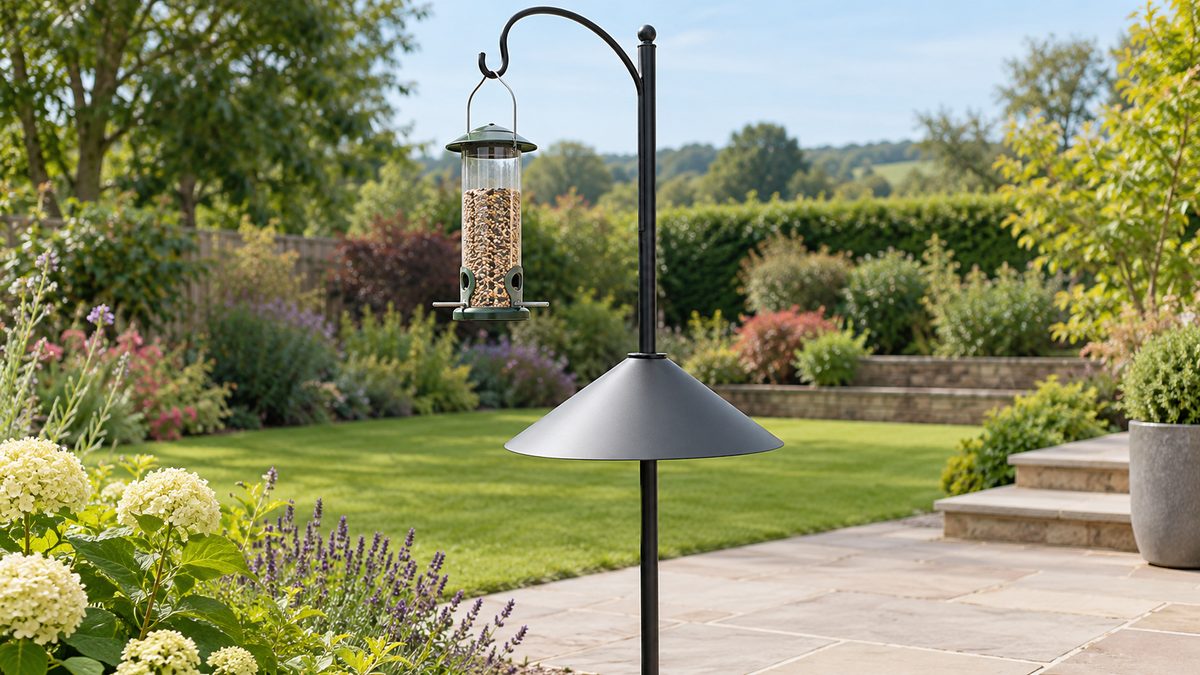
The first place to look for a bird-feeder rat problem is the ground beneath it. Seed spilled during feeding gives rats a meal without any need to climb. A feeder advertised as difficult to reach can still leave a dependable food supply on the lawn every evening.
In fall (autumn) and winter, start with smaller portions, a catching tray and daily cleanup. Then review the pole and surrounding garden. These changes can reduce access while birds continue visiting, although persistent rat activity may require a temporary pause in feeding and a wider pest-control plan.
Find where the seed is landing
Watch a feeding session from indoors. Birds may flick unwanted seed out of ports, scatter food from a flat tray or drop it while moving between perches. Check paving cracks, grass and the space behind pots. A quick glance at the feeder itself will miss most of this food.
Offer only an amount the birds use during the day, then adjust as you observe demand. Avoid topping up a partly full feeder automatically. Check for damaged ports or an opening that lets seed pour out in wind. Replace broken components rather than compensating with a larger pile of food.
Use a seed tray and review the mix
Fit a compatible seed-catching tray below the feeding ports. Empty it regularly so caught food does not become another accessible pile. Choose a tray that drains and can be removed for cleaning. A tray helps contain spills; it does not turn the whole setup into a sealed food store.
Husk-free sunflower hearts and suitable no-mess mixes can reduce hulls and some discarded material. Watch what your visiting birds eat rather than assuming every ingredient will be taken. No-mess is a description of waste, not a guarantee against rats. Edible fragments still need clearing from the ground.
| Part of the setup | Useful change | Limit to remember |
|---|---|---|
| Feeding ports | Repair damage and offer smaller portions | Birds can still drop individual seeds |
| Below the feeder | Fit and empty a catching tray | Overflow puts food back on the ground |
| Pole | Add a compatible climbing baffle | Nearby structures can bypass it |
| Food mix | Try suitable husk-free seed | Edible seed still feeds rodents |
| Night routine | Bring feeders in if rats appear | Spilled seed must also be removed |
Fit a baffle on an isolated pole
A smooth, freestanding pole gives you more control over access than a feeder hanging beside a fence. Fit a suitable cone or cylinder baffle below the feeder according to its instructions. Check the collar and attachments so it stays in position instead of sliding down or tilting aside.
Keep the feeder away from fences, shrubs, branches, walls and stored furniture that could provide another route. The necessary clearance depends on the layout and hardware, so check the whole approach rather than relying on one universal distance. Birds still need a sensible place to approach and leave the feeder.
Clear spilled food every day
Make cleanup part of the feeding routine. Collect fallen seed before nightfall, including food caught at the edge of paving or beneath containers. Pick a feeding location where this is practical. Seed scattered through dense planting or deep gravel is harder to collect than food on an accessible surface.
Store spare birdseed in a sealed metal container with a secure lid. An open bag in the shed can sustain the problem after you improve the feeder. Clear spilled seed from the storage shelf too, and avoid leaving scoops full of food beside the bin between refills.
Remove feeders overnight when rats appear
If you see rats, bring feeders into secure storage before nightfall and inspect the ground below. Store them in a closed container if loose food remains inside. Moving a feeder to an open garage or shed can transfer the food source to another sheltered part of the property.
If signs continue, pause feeding for a couple of weeks while removing other food and checking shelter. Restart cautiously with smaller daytime amounts once the wider problem has been addressed. A pause is one management step, not a promise that rats will leave within a fixed number of days.
Check the rest of the garden
Review the arrangement after windy weather and busy feeding days. A tray that catches seed in calm conditions may spill when the feeder swings. Tighten compatible fittings, check the baffle position and adjust the portion before the next refill. Make each change visible enough that you can judge whether it reduces waste.
Look at compost, rubbish storage, pet bowls and sheltered spaces under outbuildings. Our garden rat guide covers those connected sources. If food scraps are accessible nearby, the compost-bin checklist gives you a separate set of lid, base and contents checks to make.
Seek local pest-control advice for recurring activity or signs near the house. Ultrasonic deterrents are supporting measures with variable results; sound does not travel through walls or closed containers. Keep attention on accessible food, physical access and follow-up checks when deciding whether the revised feeding arrangement is working.