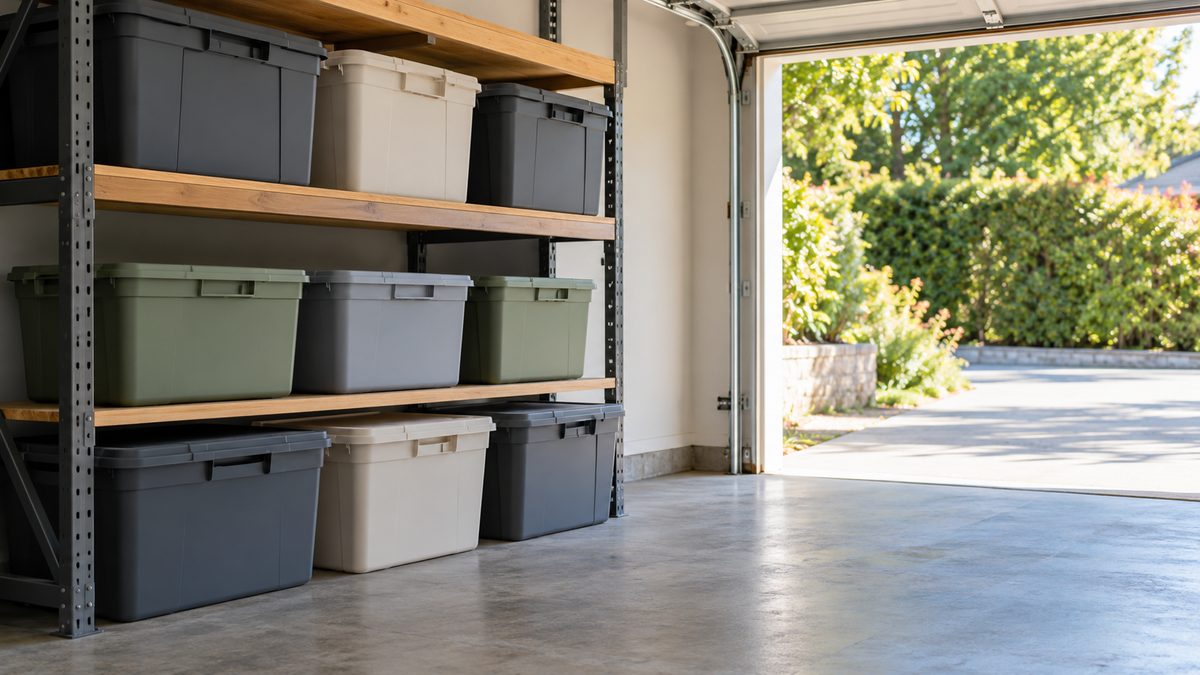
Start a garage mouse problem at the door and the food shelf. A worn bottom seal can leave a route inside, while birdseed, pet food or grass seed supplies a reason to stay. Trapping addresses mice already present; repairs and secure storage reduce the chance of more arriving.
In fall (autumn), check the garage before adding winter supplies or parking a car for long periods. Look for droppings, gnawed bags and shredded nesting material without moving contaminated piles. Plan cleanup before reorganizing, so a storage project does not begin by sweeping mouse waste across the floor.
Inspect the closed garage door
With the door fully closed, inspect the bottom seal, both lower corners and the side weatherstripping. Daylight can help reveal a gap, but inspect the rubber and its contact with the floor too. A mouse can use an opening about 1/4 inch (0.6 cm) wide.
Replace split or flattened seals with parts intended for the door. Check the side access door and its sweep as well. If the main door closes unevenly or needs track, cable or spring adjustments, arrange a qualified repair. Do not try to solve alignment problems by altering loaded door hardware.
Follow pipes and cables through the walls
Inspect utility entries, vents and the junctions between wall and floor. Use suitable metal mesh, flashing and sealant for the opening, keeping required ventilation clear. Expanding foam alone can leave a repair vulnerable to chewing. Wear gloves when handling mesh, and leave electrical or damaged service connections to a professional.
Check the door into the house and any shared-wall penetrations. Photograph or sketch each repair location so you can revisit it after cleaning. Avoid sealing an active nest into a wall; a pest professional can coordinate removal and exclusion when signs suggest mice are using inaccessible cavities.
| Garage area | What to check | Practical next step |
|---|---|---|
| Main door | Split seals and corner gaps | Fit compatible seals; repair uneven closing |
| Utility entries | Open space around pipes and cables | Use suitable durable exclusion materials |
| Food shelf | Gnawed seed bags and loose spills | Transfer supplies to sealed metal bins |
| Wall edges | Clutter hiding movement routes | Restore an accessible inspection strip |
| Parked car | Droppings, nesting material or chewed parts | Arrange inspection before use if damaged |
Secure seed and pet food
Move birdseed, pet food and grass seed into sealed metal containers with tight-fitting lids. Check the lids after every use. A bag folded shut on a shelf still leaves food accessible, and a sturdy container beside a pile of spilled seed only solves part of the problem.
Inspect bags before moving them. Separate anything showing rodent contamination from clean supplies and use the cleanup guidance below for affected surfaces. Remove pet bowls overnight and avoid storing food in the car. Include snacks, camping groceries and forgotten feed scoops in your search for accessible food.
Clear hiding places and place traps
After affected areas are cleaned, organize belongings on shelving and leave wall edges accessible for inspection. Reduce cardboard, loose fabric and unused packing material. Aim for a layout where you can see the floor beneath stored items and notice fresh signs without unloading the entire garage each time.
Place mouse-sized snap traps along walls near activity, using the orientation and bait amount in their instructions. Keep them clear of tires and foot traffic and inaccessible to children and pets. Use appropriate enclosed stations where needed. Check traps daily and record locations rather than scattering them where they become forgotten.
Clean waste with CDC steps
Follow the CDC rodent-cleanup guidance. Open doors and windows for 30 minutes and leave the area while it airs out. Wear rubber or plastic gloves. Do not sweep or vacuum urine, droppings or nesting material, including waste hidden behind storage bins.
Spray waste with an EPA-registered disinfectant until very wet. Wait five minutes or the label contact time, then wipe it up with paper towels and put them in a covered garbage can emptied regularly. Mop or wipe surfaces afterwards. Wash gloved hands, remove gloves and wash hands with soap and warm water.
Spray and soak nests or dead rodents, then bag and double-bag them. Arrange professional cleanup for a heavy infestation. If you feel unwell after rodent exposure, contact a doctor promptly and tell them about the exposure. Our mouse-droppings cleanup guide sets out the sequence in more detail.
Inspect the car and keep monitoring
Check a parked car for signs before driving, especially after a period without use. The guide to mice in the cabin, vents and air filter covers those areas. New droppings after cleanup mean you need to revisit traps, food storage and repaired gaps.
Continue inspections after the first quiet night. If signs persist or you find chewed wiring, arrange professional help. Ultrasonic devices offer variable results and sound cannot pass through walls or packed storage, so keep repairs, sanitation and trapping central to the plan.