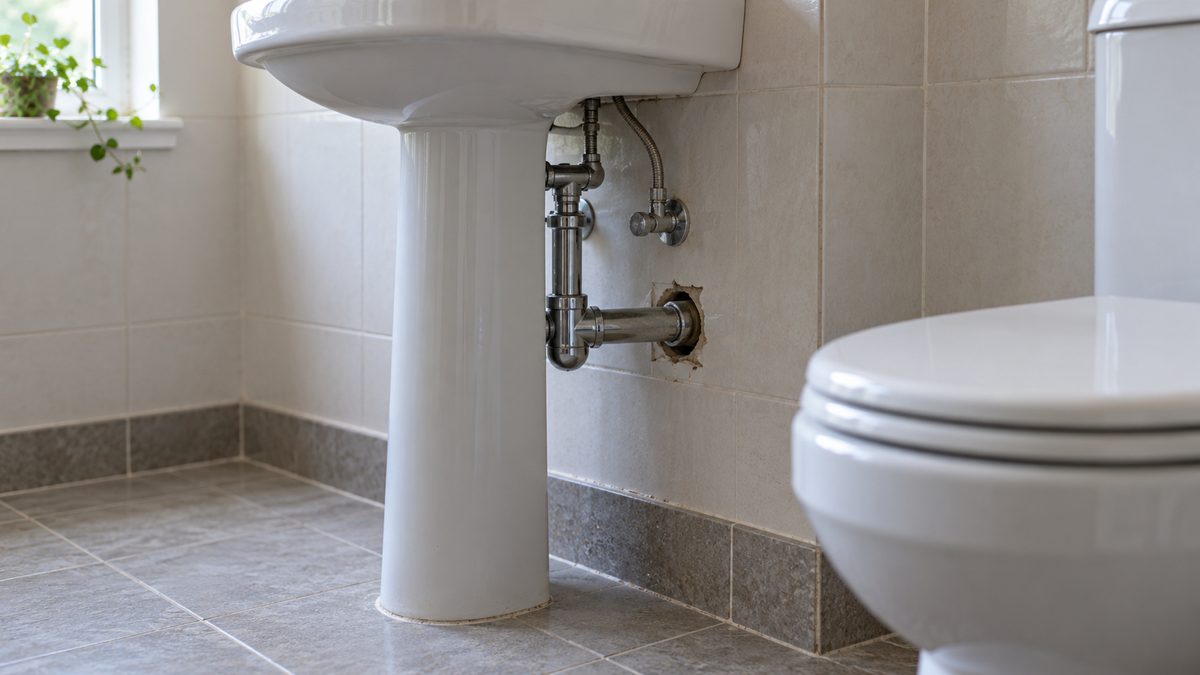
A rat in the bathroom may have entered through a gap around pipes, a connected wall void or defective drainage; the toilet is one possible route, not the only explanation. Keep people and pets out, avoid handling the animal and contact a pest controller. Leaks, sewage smells, repeated blockages or a rat seen in the toilet also warrant a plumber or drainage specialist.
The most useful first detail is where you saw it: in the bowl, beside a pipe box, under the bath or crossing the doorway. Record that before cleaning. It helps distinguish an animal passing through the room from a fault connected to drainage.
If there is a rat in the room or toilet now
Leave the bathroom and close the room door if you can do so without approaching the rat. Keep children and pets away. Do not corner it with a broom or try to pick it up with gloves. A frightened animal can bite, and chasing it can send it into another hidden space.
If the animal is inside the toilet bowl, keep the lid closed if it is already closed or can be lowered safely without bringing your hands close to the animal. Do not reach into the bowl, repeatedly flush it or pour bleach, poison or boiling water at it. Stop using that toilet and seek pest-control advice, with a drainage assessment to investigate the route.
A bite or scratch needs prompt medical advice; wash the wound with soap and running water while arranging help. Tell the clinician that a rat was involved. This article provides general household information, rather than advice about an individual's treatment.
Separate room openings from drainage faults
A pipe running through a wall can leave an opening around its outside. A rodent using that gap has not necessarily travelled inside the pipe. Likewise, noises behind the toilet may come from a boxed service void rather than the toilet connection itself.
| Observation | Route or fault to investigate | Useful first contact |
|---|---|---|
| Rat seen inside the toilet bowl | Connected drainage route and possible defects | Pest controller and drainage specialist |
| Droppings beside a pipe penetration | Gap around the pipe or an adjoining void | Pest controller; tradesperson for repairs |
| Sewage smell, slow drainage or recurring blockage | Plumbing or drain problem, with or without rodents | Plumber or drainage specialist |
| Activity beneath a bath panel | Service openings, floor void or leaking plumbing | Pest controller, with plumbing help if wet |
| Signs around a floor drain | Drain cover, trap and connection condition | Plumber to assess the drain arrangement |
Drainage layouts vary between homes in India, the US and the UK. A floor drain may be part of the room's normal design, while another bathroom may have no floor drain at all. Do not apply a repair intended for a different system. Read about rats coming through toilets and drains for the distinction between possible access and a confirmed route.
Inspect visible edges without opening the plumbing
Once the animal has been dealt with and access is safe, use a torch to examine the room perimeter. Look around the outside of waste pipes, the base of pipe boxing and existing accessible panel edges. Photograph damaged covers, gnawing and droppings without touching them. Avoid kneeling in contamination or reaching under a bath.
Do not remove the toilet, disconnect a waste pipe or pry open a fixed panel just to look for rats. These actions can create leaks and expose hidden services. Leave heavy inspection covers in place, and never enter a drain chamber. A professional can choose appropriate access and decide whether a drain camera survey would answer a specific question.
Water on the floor adds another concern where sockets or appliances are nearby. Keep away from wet electrical equipment and seek suitable professional help. If scratching extends beneath the room, compare the evidence with rat activity under floorboards so the inspection includes connected spaces.
Repair the actual opening and preserve drainage
Ask the plumber to assess leaks, damaged connections and missing or unsuitable drain components. Water traps are part of many drainage systems, but their presence alone should not be treated as a guarantee against rodents. Unused connections and recurring loss of a water seal need assessment rather than an improvised plug.
A pest controller can help identify active rodent routes while the plumber addresses drainage defects. They may need to coordinate before an opening is closed. In flats or attached buildings, ask the building manager about shared risers or drains if signs point beyond your bathroom.
For a dry gap around the outside of a pipe, use a durable repair suited to the wall, pipe and any movement or fire-protection requirements. Foam alone may be chewed. Do not stuff wire into a drain, fit mesh over a toilet outlet or block a floor drain that carries water. Any specialist exclusion fitting inside drainage needs professional selection and provision for maintenance.
Clean touch points after the room is secure
Put exposed toothbrushes and other potentially contaminated personal-care items aside for assessment or replacement. Wear gloves and follow local public-health advice for cleaning rodent contamination. Wet droppings with a suitable disinfectant before lifting them; do not vacuum or brush them up dry. Respect the product's contact time and surface instructions.
Clean affected hard surfaces, including accessible floor edges and touch points, then wash your hands after removing gloves. Never mix bleach with toilet cleaners or other chemicals. Sewage contamination, inaccessible remains or a heavily soiled void needs professional cleaning. The guide to cleaning rodent droppings covers precautions for accessible household surfaces.
Keep checking the repaired area for fresh signs and report recurring drainage symptoms. General prevention steps in avoiding rats at home also apply outside the bathroom. The EchoRepel Ultrasonic Rat Repellent uses ultrasonic sound that rats and mice want to avoid and is poison-free; it offers no promise of results and cannot resolve a plumbing defect.