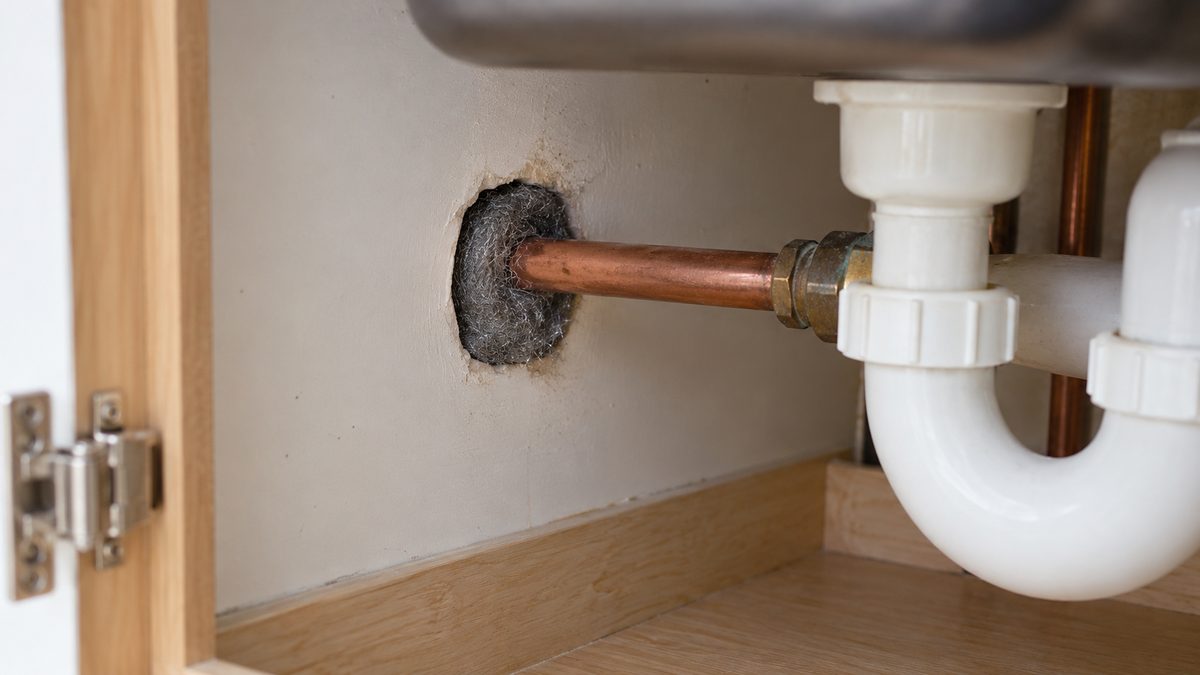
Steel wool is useful for an awkward little opening where a pipe disappears through a wall. Its metal strands can form a physical obstacle, provided the filling stays put. Pushing a loose tuft into the front of a hole and walking away leaves too much to chance. The quality of the repair matters as much as the material.
During fall (autumn), inspect utility entries before storing boxes against them. Mice can use openings about 1/4 inch [0.6 cm] wide. Trace the full edge of each gap with a flashlight, including the underside of pipes. A repair that looks closed from above may still leave access below.
Where steel wool fits the job
Use plain coarse steel wool for small, irregular gaps in sound surfaces, with a compatible retaining sealant. Choose material suitable for exclusion work rather than a soap-filled cleaning pad. Do not rely on fragrance or detergent to deter mice. The purpose is a dense metal barrier held securely within the opening.
The CDC sealing guidance recommends steel wool for small holes and caulk to retain it, with metal or other durable repairs for larger holes. Match the repair to the surface and exposure. A pipe gap inside a dry cabinet and a broken exterior vent surround need different approaches.
There is no single maximum hole size that makes every wool plug reliable. If the filling lacks support, the wall is damaged or the opening is broad, choose a rigid repair. Loose metal fibers are poor substitutes for a properly fixed cover. Repair rotten wood or crumbling masonry before treating the edge as secure.
Compare the materials
| Material | Best for | Downside |
|---|---|---|
| Plain coarse steel wool with sealant | Small, dry, supported interior gaps | Can rust, loosen or be displaced |
| Copper exclusion mesh with sealant | Small irregular gaps where moisture is a concern | Still needs secure retention; can tarnish |
| Galvanized hardware cloth | Larger openings needing a fixed metal barrier | Requires cutting and secure edge fasteners |
| Metal flashing or plate | Solid patches over suitable larger holes | Needs careful fitting around services |
| Sealant alone | Closing compatible joints and retaining metal filling | Soft material alone may be gnawed |
Choose hardware cloth with openings no larger than about 1/4 inch [0.6 cm] for mouse exclusion, and secure every edge. A cut piece resting over a hole is not a finished repair. On exterior surfaces, consider weather exposure and compatible fasteners. Preserve required ventilation when selecting guards for vents.
Prepare before packing the gap
Wear work gloves: cut strands can scratch or puncture skin. Use suitable cutters and a blunt packing tool, keeping fingers out of unseen cavities. Read the sealant label for surface preparation and curing conditions. Wet, dusty or loose edges may prevent a sound bond even if the visible bead looks tidy.
Inspect for leaks, hot pipes and damaged wiring first. Do not pack metal against electrical terminals or into electrical boxes. For a flue, combustion appliance or fire-rated penetration, get the appropriate rated repair. Keep drains, air bricks and dryer exhausts clear. Filling a functioning opening can create a bigger problem than the gap you meant to close.
Pack firmly and retain the filling
- Prepare sound edges. Remove loose debris safely and follow the sealant maker's surface instructions. Address moisture or damaged material before proceeding.
- Shape the wool. Cut enough to fill the supported space rather than covering only the mouth. Keep the pipe opening itself clear.
- Pack the whole perimeter. Use a blunt tool gently, working around the underside as well as the visible top. Avoid damaging the pipe or sleeve.
- Apply compatible sealant. Retain the wool and close remaining spaces according to the product instructions. Do not assume a thin cosmetic bead secures a deep void.
- Inspect after curing. Check for open edges and movement. Photograph the repair so future changes are easier to spot.
If the other side is safely accessible, inspect it too. A cabinet panel can hide an unfilled route behind the surface plug. When you cannot support the wool or see what you are sealing around, a professional repair is a sensible choice. Do not keep adding fibers to an opening that needs a fitted plate.
Why outdoor and damp repairs deteriorate
Ordinary steel wool rusts. Moisture beneath a sink, rain at an exterior joint or persistent condensation can weaken the filling and leave rust staining. Loose edges can shift as the surrounding joint moves or service work disturbs it. Check these locations after leaks, repairs and seasonal weather changes rather than assuming the first plug lasts indefinitely.
Our copper mesh guide explains the alternative. Copper does not rust like ordinary steel, but it can tarnish and still needs proper fitting. Neither material repairs a leaking pipe or compensates for movement that keeps reopening the joint. Resolve that cause before choosing the replacement filling.
Check the rest of the route
Use the mouse entry-point guide to inspect garage doors, utility sleeves and other openings nearby. Keep a short repair list with locations and photographs. Revisit completed work after plumbers or other contractors have moved services, because access holes can reopen during routine maintenance.
Sealing prevents entry; mice already inside still need removal. Secure food, reduce nesting clutter and use appropriate traps checked daily where children and pets cannot reach them. If activity continues despite completed repairs, ask a pest control professional to trace hidden routes. More loose wool in the first hole is unlikely to resolve a separate entry elsewhere.