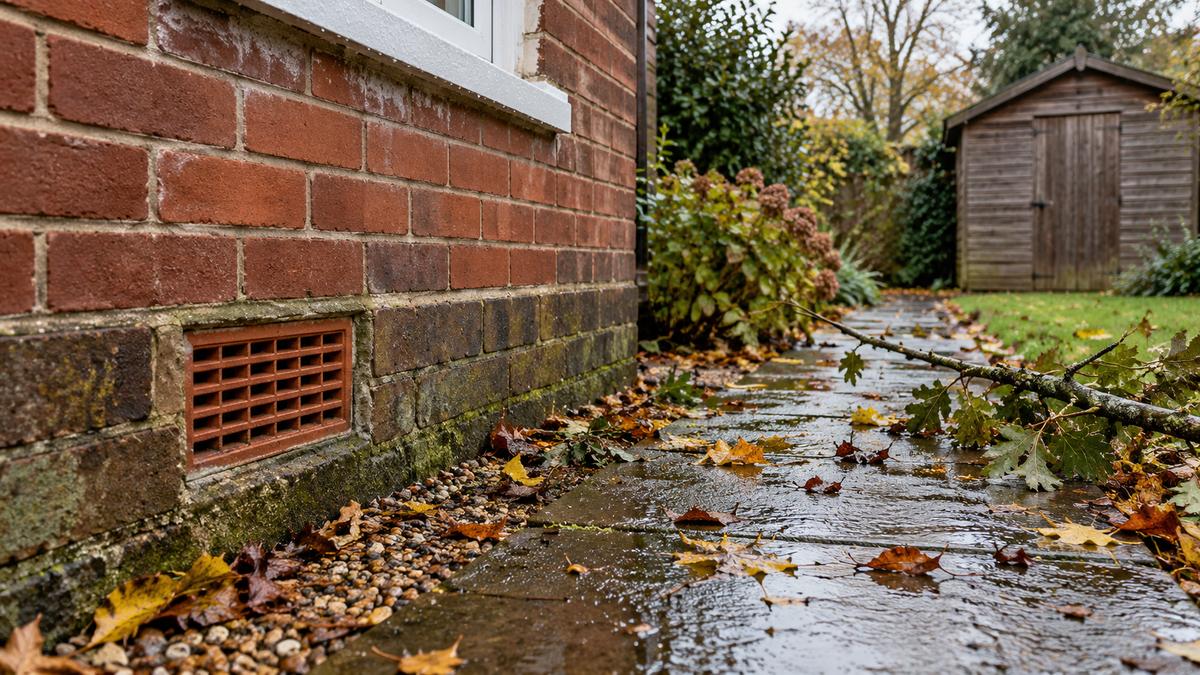
Rats can move towards homes after storms if flooding disturbs their shelter or damaged buildings offer a way inside. Once conditions are safe, check the building from the ground, secure food waste and arrange repairs to openings rather than assuming every sound means an infestation.
Storm Austen was the first named storm of the 2026-27 UK season. For Friday 23 October 2026, the Met Office issued an amber wind warning for Cornwall, Devon, the Isles of Scilly and Plymouth, with gusts of 60-70 mph and up to 80 mph in exposed spots. A yellow warning covered much of south-west England, southern Wales and the south coast.
Those warning details do not establish damage or rodent activity at any particular home. Check current official warnings before going outside. The inspection below also suits homes after heavy storms in India or the US, with local emergency advice taking priority.
How floodwater and debris change rat routes
Floodwater can disturb burrows and low shelters, while fallen branches, displaced boards and torn coverings create new cover beside a building. Rats looking for shelter may find an existing gap or a fresh defect. Food spilled from an overturned bin gives them another reason to stay nearby.
A storm does not create rats, and an intact home is not automatically at risk just because rain was heavy. Focus on what has changed: a lifted drain cover, a damaged shed door or debris pressed against an air brick. Compare with older photographs if you have them.
Start your inspection where it is safe to stand
Wait until strong winds and immediate hazards have passed. Stay away from hanging branches, loose roof materials, fallen cables and standing water near electrical equipment. Do not enter floodwater to reach a shed or lift a drain cover. Follow emergency-service or utility instructions where access is unsafe.
Take a phone or notebook and walk a safe route around the house. Photograph defects from a distance. A photograph lets you explain the location to a tradesperson without touching unstable materials or repeatedly approaching a dangerous area.
| Area | What has changed? | Next action |
|---|---|---|
| Roof edge | Missing tiles, loose fascia or hanging gutter | Keep clear underneath and contact a roofer |
| Air bricks | Broken grille, displaced surround or covering debris | Arrange a repair that preserves ventilation |
| Shed | Warped door, lifted panel or displaced stored items | Check structural safety before clearing storage |
| Drainage | Broken cover, backing-up water or sewage smell | Report to the responsible drainage service |
| Bins | Open lid, split bags or spilled food | Contain waste when the area is safe |
Check air bricks and pipe openings without blocking airflow
Look along the lower wall for broken vent faces, missing mortar and gaps around pipes. Clear loose leaves from accessible vents only when the surroundings are safe and there is no suspected contamination. Photograph a damaged grille before arranging suitable replacement materials.
Do not stuff ventilation openings with cloth, expanding foam or bags. Air bricks have a purpose, and blocking them can create moisture or ventilation problems. A competent repairer can advise on a durable rodent-resistant grille that retains the required airflow. Our house rat-proofing guide covers other places to inspect.
Separate shed damage from garden clearing
Check the shed roof and walls visually before opening the door. If panels have shifted or the structure leans, keep out and arrange repairs. Once access is safe, inspect stored seed, pet feed and sacks for damage rather than simply pushing everything back into place.
Remove ordinary fallen debris in manageable amounts and keep reusable timber away from the house wall. Avoid reaching blindly under boards. If you see droppings or nesting material, stop dry sweeping and follow appropriate cleaning guidance. The advice on cleaning a shed after mice explains the separate contamination precautions.
Leave damaged drains to the right service
A displaced cover or broken drainage fitting needs repair even when there are no rodent signs. Keep people and pets away from an open drain. Do not climb into inspection chambers, reach into pipes or try to flush rodents out with chemicals.
Contact the property owner, drainage contractor or responsible water service as appropriate. Explain any overflow, blockage and visible damage. For the connection between drainage defects and indoor sightings, read rats and household drains. Sewage contamination calls for suitable professional advice, not an ordinary garden clean-up.
Use fresh signs to decide what happens next
Inside, look from accessible, dry areas for newly damaged food packets, droppings or repeated scratching in one location. Note the room, time and sign. Avoid disturbing suspect material to test how old it is, and keep children and pets away.
Persistent signs, an indoor sighting or a route you cannot safely inspect justify contacting a pest professional. Tell them about the storm damage so that pest work and building repairs can be coordinated. Do not seal a suspected occupied cavity without a plan for the animals inside.
Review the same safe viewpoints after repairs and ordinary household use resume. A repaired opening and contained waste are useful changes to confirm; silence alone does not prove a cavity is clear. For upper-level defects, use the more detailed storm-damaged roof rodent check.
If anyone becomes unwell after contact with floodwater or suspected rodent contamination, seek medical advice and explain the exposure. This is general household information; a doctor should assess health concerns.
For a home, the EchoRepel Ultrasonic Rat Repellent uses ultrasonic sound that rats and mice want to avoid and is poison-free. It does not replace repairs, cleaning or professional assessment, and no result is guaranteed.