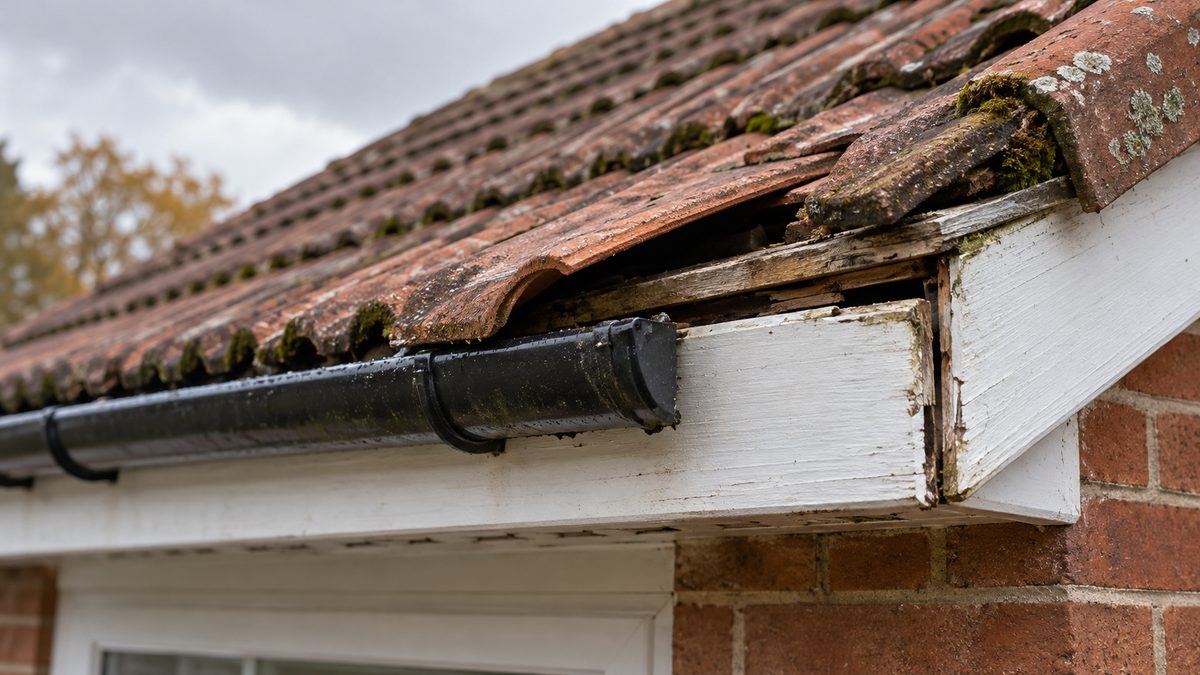
After high winds, inspect your roof from a safe ground-level position for slipped tiles, opened roof edges, damaged fascias and displaced gutters. These defects can expose routes into roof spaces, so arrange a roofer's assessment without climbing onto the roof or assuming that visible damage proves rodents are inside.
Storm Austen brought an amber wind warning for parts of south-west England on 23 October 2026. A warning is a reason to check conditions and inspect safely afterwards, not evidence that your property suffered damage. Use current Met Office advice in the UK and the relevant official weather service elsewhere before starting.
Read the roofline from a safe viewpoint
Stand where you can see the roof without passing below hanging materials. Use binoculars or a phone camera zoom if available. Compare the tile rows, roof edges and gutters with older photographs, looking for a change in alignment rather than trying to judge every dark shadow.
Move to another safe viewpoint if the first angle hides the eaves. A neighbouring public path may give a clearer view, but do not enter another property without permission. If access is obstructed, record the limitation and let the roofer inspect it with suitable equipment.
Keep away from loose tiles, falling branches and damaged cables. Do not put a ladder against a gutter or climb out of an upper window for a closer photograph. High winds can leave materials unstable even after the weather becomes calmer.
Distinguish roof damage from a confirmed entry route
A slipped tile can expose the layer beneath it, but the visible defect may not lead directly into the loft. Underlay, boarding and the shape of the roof all affect the route. Ask the roofer what has opened and whether a sheltered void is accessible, rather than treating every missing tile as an occupied entrance.
Damage to fascia boards and soffits deserves attention because these form parts of the roof edge. An opened joint or broken panel can expose spaces that are difficult to inspect from inside. Existing rot or a loose fitting may also become more noticeable after a storm without being newly created by it.
| Visible change | Question for the roofer | Safe action now |
|---|---|---|
| Tile shifted out of line | Is the underlying roof layer intact? | Photograph from the ground |
| Open fascia or soffit joint | Does this expose an internal void? | Record the affected roof edge |
| Gutter pulled away | Are its fixings and adjacent timber sound? | Keep clear of the area below |
| Daylight newly visible indoors | Is this damage or an intended vent? | Report the location without entering the void |
| Fresh ceiling staining | Where is water entering? | Arrange assessment and avoid affected electrics |
Follow the gutter junction, not just the fallen section
A gutter normally carries rainwater away; a damaged gutter is not by itself a hole into the house. Look for related changes where brackets, downpipes and roof-edge boards meet. A pulled fitting, loose board or exposed junction may need attention alongside the gutter repair.
Overflowing water can wet adjacent materials, so tell the roofer where water ran during rain if you observed it safely indoors. Do not test a loose gutter by pulling it or attempt to clear it from an unsecured ladder. Read rats in gutters and roofs for other signs to discuss during the visit.
Check upstairs rooms without entering a damaged loft
From ordinary rooms, note new staining, damp patches, fallen debris and repeated noises above the ceiling. Keep the observations separate: a water mark needs investigation even if there is no scratching, and scratching needs assessment even if the roof looks sound.
Do not enter a loft with water ingress, damaged wiring, displaced boards or suspected structural damage. If looking from a hatch would require an unsafe ladder or unstable footing, leave that inspection to a professional. Never step between joists or onto ceiling material.
Droppings, gnawed material and repeated sounds can support a pest inspection, but noises alone do not identify the animal. Birds and other animals may occupy roof spaces too. Our guide to scratching sounds in walls at night helps organise observations without treating them as a diagnosis.
Call a roofer before a temporary patch becomes a repair
Contact a roofer for displaced tiles, damaged roof-edge boards, hanging gutters or water entering the building. If materials appear likely to fall, keep people away and seek urgent assistance through the appropriate local service. Stay out of rooms where a ceiling appears to be sagging.
Give the roofer the address, photographs, the side of the house affected and details of leaks. Ask what needs immediate attention, which materials need replacement and how the repair will maintain drainage and ventilation. Do not request that all roof openings be filled: some are intentional ventilation features.
A suitable repair should address the building defect rather than cover it with a loose wad of filler. The right construction depends on the roof. For broader checks at ground level, use the post-storm home inspection alongside the roof assessment.
Coordinate pest checks before closing an occupied void
If there are indoor sightings, droppings or repeated activity in the roof space, tell the roofer before repairs begin and contact a pest professional. They can assess the signs and coordinate access work. Closing a suspected occupied space without assessment may leave animals trapped inside.
Keep contaminated insulation and nesting material undisturbed until a safe removal plan is agreed. Avoid dry sweeping or vacuuming droppings. The article on rats in an attic covers the pest side of the problem; structural and electrical questions still need the relevant trades.
After work, retain photographs and monitor the previously affected areas from safe positions. Report continuing leaks or fresh activity rather than treating a completed roof invoice as proof that the entire rodent problem has ended.
The EchoRepel Ultrasonic Rat Repellent is poison-free and uses ultrasonic sound that rats and mice want to avoid. It cannot repair a roof or establish that a void is clear, and results are not guaranteed.