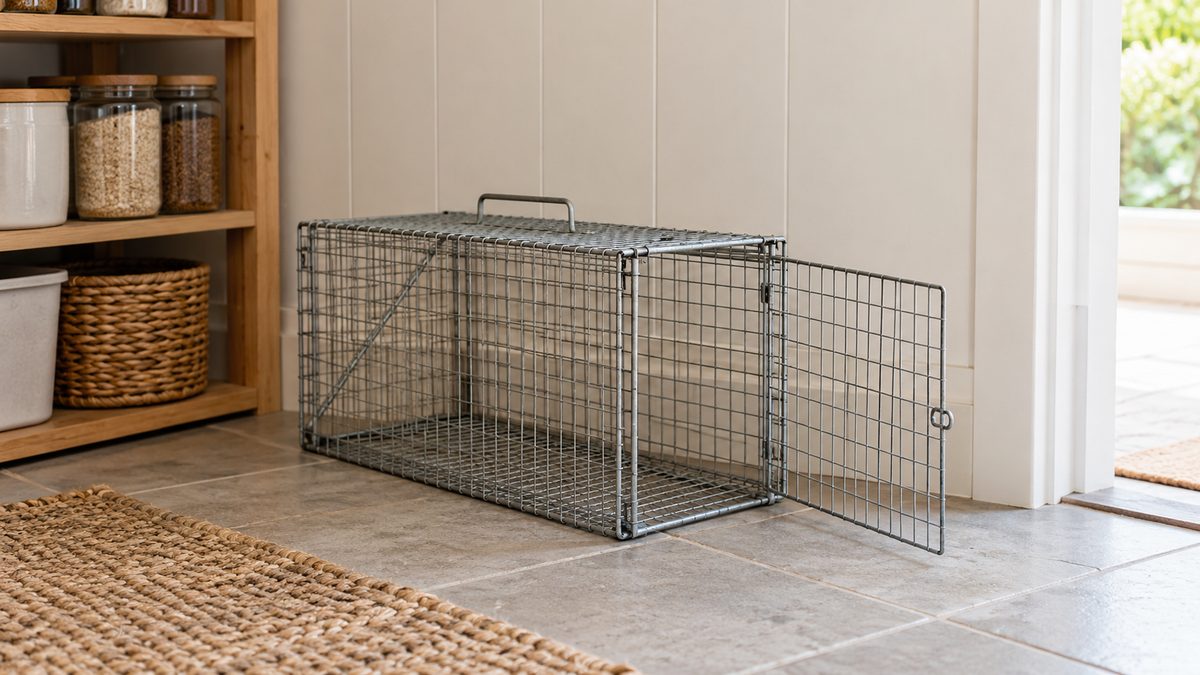
A wire cage trap is the simplest way to catch a rat without poison or glue. It is also the easiest trap to get wrong. Most failed cage traps sit in the middle of the floor with a large lump of food inside, set on the first night. Rats are cautious about new objects, so a trap needs the right spot, the right bait and a little patience.
Find the route before you set anything
Rats rarely cross open floor. They run along walls, behind the fridge, under the sink and along the back of shelves, where their whiskers can touch a surface. Look for fresh droppings, grease marks along skirting, gnawed packets and small holes near pipes. The trap belongs right on that line, flat against the wall, with the door facing the direction the rat travels.
If you are not sure how many animals you are dealing with, read how to tell one rat from an infestation first. One cage handles one rat at a time. Several routes may need several traps or professional help.
Choose bait rats already want
Rats go for food they recognise. In Indian homes that usually means something oily, sweet or strongly scented. Keep the amount small and place it at the far end, behind the trigger plate, so the rat has to walk fully inside.
| Bait | Where it works well | Tip |
|---|---|---|
| Peanut butter | Kitchens, storerooms | Smear it on the plate so it cannot be carried off |
| Roti or bread with oil | Kitchens | Tie a small piece to the hook with thread |
| Dried fish | Balconies, utility areas | Strong smell draws rats from further away |
| Coconut or a little jaggery | Storerooms, lofts | Replace it if it dries out or ants find it |
Pre-bait for a night or two
Tie the door open, put bait inside and leave it. Rats that eat from an open cage without anything happening lose their suspicion of it. After one or two nights of bait disappearing, rebait and set the trap properly. Wear gloves when you handle the cage so it carries less of your smell, and keep children and pets away from the area.
Check it every morning
A cage trap is only humane if someone checks it. Look at it first thing every day. A rat left in a cage for days becomes dehydrated, overheated and stressed, and it may injure itself trying to get out. If you are going away, untie the bait and leave the door locked open until you return.
When you find a catch, cover the cage with an old cloth to calm the animal and lift it by the handle with thick gloves. Never put fingers through the wire. Rats bite when frightened, and their urine and droppings can carry disease.
Decide what happens next
Rules on releasing rodents vary by area, so check before you drive anywhere. If release is allowed, go well away from homes and shops. Many released rats do not survive in unfamiliar ground, which is one reason some households call a pest professional at this stage instead.
Afterwards, wash the cage with soapy water and disinfect it, and clean the floor where it stood without dry sweeping droppings. Our guide to catching a rat in the house covers snap traps and other options if the cage keeps failing. Avoid glue boards; our page on glue traps for rats explains why they cause long suffering.
Why one catch rarely ends it
Catching a rat removes that animal, not the reason it came in. If the gap under the door, the open drain or the bag of rice on the floor is still there, another rat will find it. After each catch, seal the entry points you found, store food in closed steel or thick plastic containers and take rubbish out at night. A repellent can support that work by making the area less inviting, but sealing and clean storage do most of the job.