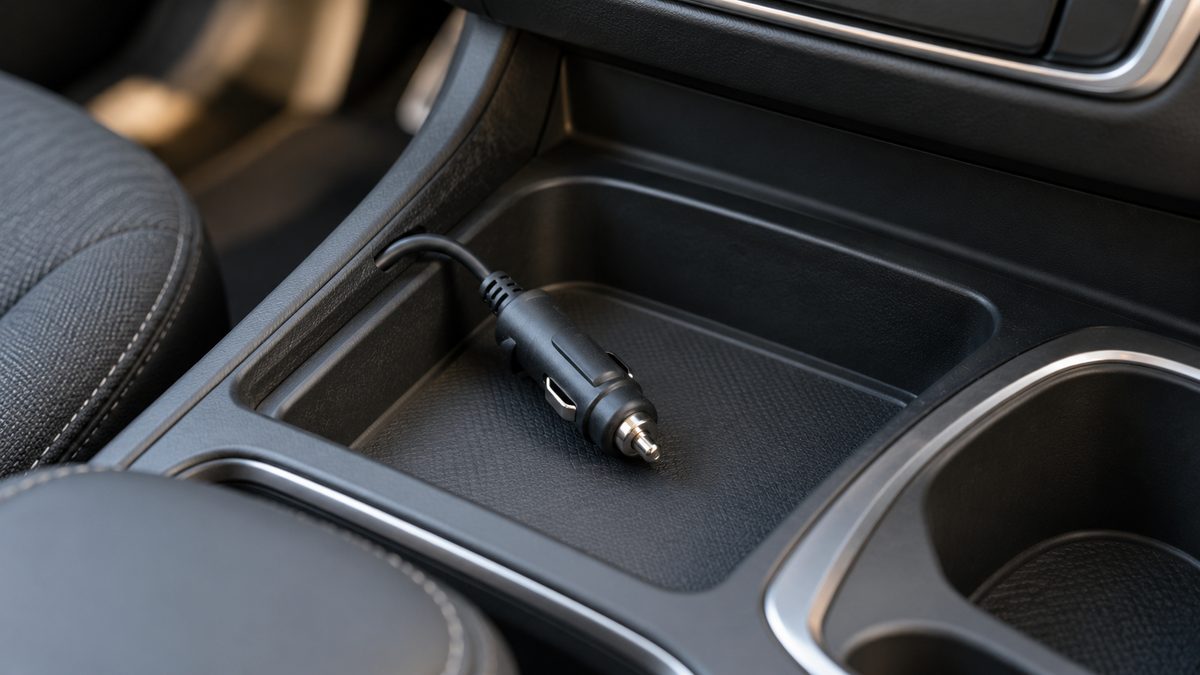
Unplug a car inverter when parking unless the vehicle and inverter instructions clearly support leaving it connected. A live socket can keep supplying power with the engine off, and a switched-off inverter is not a substitute for checking how your car behaves.
While the engine is running: yes
With the engine running outdoors, an inverter can supply compatible equipment within its own and the vehicle’s limits. Keep its vents clear, secure the equipment and check the instructions for the permitted operating conditions.
With the engine off: unplug it or switch it off
An inverter draws a small idle current even with nothing connected to it, because its electronics stay awake. Your manual may list this as the "no-load" current. Leave it switched on for days with the engine off and that trickle, added to the car's own standby drain, can flatten the battery. So when you park up for a while, switch it off or unplug it.
Check how your socket behaves
Many cars cut power to the 12V socket when the ignition is off, which reduces parked drain, subject to the vehicle and device instructions. Others keep the socket live all the time. To find out, plug in a phone charger with the car locked and off, and see whether the phone still charges. If it does, unplug the inverter whenever you park for long.
What protection features do
| Feature | What it protects against |
|---|---|
| Low-voltage shutdown | Switches off when the battery drops to a set level, to leave charge for starting. It helps, but is not a guarantee on a weak battery. |
| Overload protection | Shuts off if you plug in more than it can supply, instead of overheating. |
| Over-temperature protection | Shuts off if the unit gets too hot, for example when covered or in direct sun. |
| Short-circuit protection | Cuts power if a faulty device or cable shorts. |
Heat and ventilation
Inverters get warm when working. Keep the vents clear, don't bury it under bags or seat cushions, and don't leave it on the dashboard in the sun. In Indian summers a parked car gets very hot inside, so let the cabin cool before running a heavy load.
Use a good one
Cheap inverters can output "modified" sine wave power that stresses sensitive electronics, and some lack basic safety features. A pure sine wave inverter with overload, over-temperature and low-voltage protection is safe for your laptop and camera and helps protect your car's battery.
Warning signs: unplug straight away
- The plug or socket feels hot to the touch.
- A burning or melting smell.
- Devices flicker, or the inverter keeps cutting out with a light load.
- The socket fuse keeps blowing; our guide to a car inverter not working covers the checks.
Quick safe-use checklist
- Powering devices while driving: leave it in.
- Parked for a while: switch off or unplug, unless your socket goes dead with the ignition.
- For extended stationary use, choose an appropriate independent power supply. Never run an engine in an enclosed garage.
- Stay under the inverter's rating and your socket's fuse limit.
- Keep it ventilated and out of direct sun.
The EchoRepel 200W Pure Sine Wave Inverter gives you clean, protected power for this kind of everyday use. For picking the right size, see what size car inverter do I need, and for how long a battery lasts while the car sits, see how long a car battery lasts when parked.
Make a shutdown routine that does not depend on memory
At the end of a journey, save work on connected devices, switch them off as needed and disconnect the inverter. Coil the cable where it cannot fall into the driver's footwell. This is simpler than trying to estimate how much charge remains in an ageing starter battery after every stop.
If the inverter is installed permanently, ask the installer to explain its isolation method and permitted operating conditions. Do not assume a dashboard indicator proves that every circuit is dead. Follow the vehicle manual, particularly where sockets stay powered for a delay after locking.
Verify socket behaviour without repeatedly opening doors
Some vehicles wake electrical systems when a door opens or a key approaches. A quick check immediately after switching off may therefore miss a timed shutdown. Read the manual first and, if necessary, ask the workshop how to confirm the socket's normal parked state.
Do not bypass that behaviour to keep a laptop charging while you are away. Low-voltage protection is a fallback with device-specific thresholds, not a personal guarantee that the car will restart. Battery condition, temperature and other standby loads still matter.
When stopping power is the only useful next step
A loose plug, discoloration, heat or repeated shutdowns needs inspection. Reduce the load and stop using a suspect socket instead of pushing the plug into a different angle or replacing the fuse with a larger one. The specified fuse protects wiring and should never be uprated to suit an appliance.
If you need hours of stationary device use, plan a suitable independent supply rather than repeatedly starting the car to rescue a weak battery. Never run an engine in an enclosed garage or another poorly ventilated area. For a hardwired arrangement, use a qualified installer who can check cables, fusing and the vehicle's electrical requirements. This is general safety information; the equipment manuals take priority for the actual setup.
Frequently asked questions
Should I replace a blowing socket fuse with a larger one?
No. The specified fuse protects the vehicle wiring. Stop using the setup and have the load, plug and socket checked rather than increasing the fuse rating.
Can low-voltage shutdown guarantee my car will restart?
No. The threshold is device-specific and the battery’s condition and other loads still matter. Disconnect when parked and plan an independent supply for extended stationary use.
Does the power light going out prove every socket is isolated?
No. Socket circuits and shutdown delays vary. Check the handbook or ask a workshop how the particular vehicle behaves after locking, without repeatedly waking its electrical systems.
Can an empty inverter still draw power?
A powered inverter can consume energy without an appliance connected. Check its no-load specification and disconnect it when parking rather than assuming an empty outlet means zero drain.