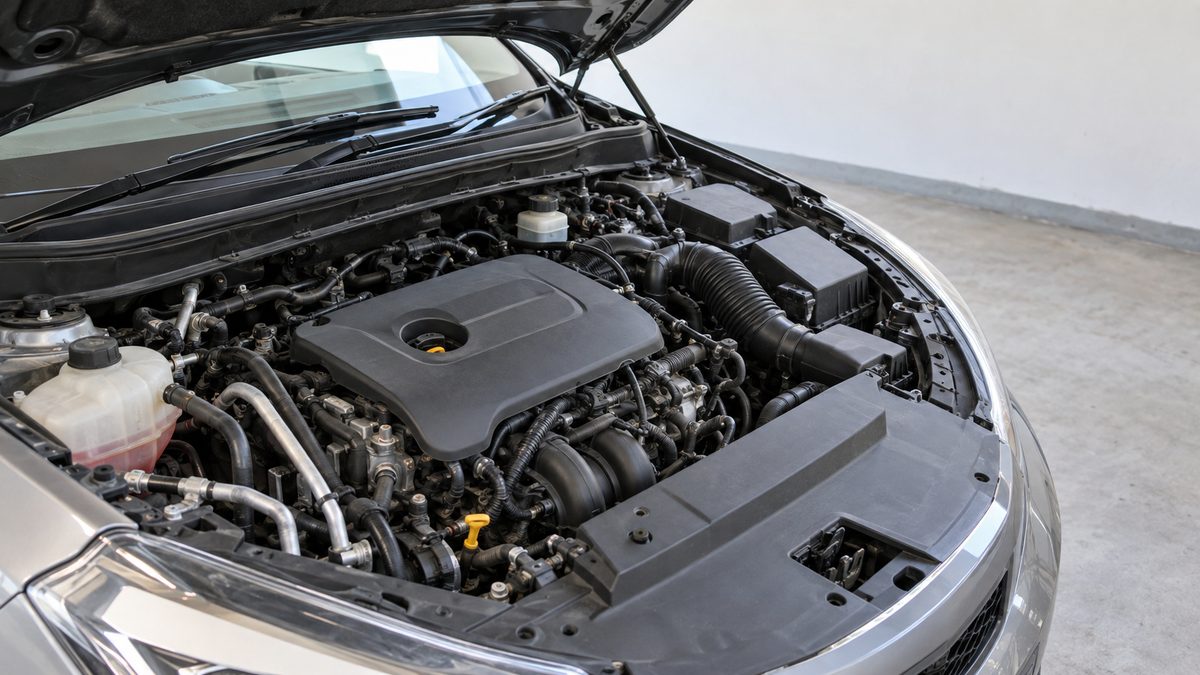
If you suspect a rat has died in your car, stop using the ventilation fan and locate the source before trying to cover the smell. Remove it yourself only if it is clearly visible, safely accessible and away from electrical or moving parts. A carcass inside ducting, behind trim or beneath inaccessible engine components is a workshop job.
Separate a rotten smell from an urgent vehicle fault
A decomposition-like smell can come from a dead rodent, but smell alone is not confirmation. Forgotten food and other contamination can also produce odours. Burning, fuel-like or exhaust smells need urgent attention for their own reasons.
If there is smoke, overheating, a fuel leak or a warning suggesting an unsafe fault, stop in a safe place and contact appropriate assistance. Do not keep driving or running the fan to work out whether the smell improves.
Let the engine cool before a visual check, switch the vehicle off and follow its handbook for safe access. Keep children and pets away. Do not touch fans, belts, high-voltage parts or unfamiliar electrical assemblies.
Search the accessible places without dismantling the car
Look first for spoiled food in the cabin and boot. Check beneath removable mats and in accessible storage wells. Then use a torch to inspect visible engine-bay surfaces and the area below the windscreen.
Note whether the odour is strongest in the cabin, near the intake or around the engine bay. That observation can help a technician, but avoid repeated close sniffing. Do not start the fan to draw contaminated air through the cabin as a test.
If the handbook gives a straightforward cabin-filter inspection procedure, follow it only if you are competent and the housing is safely accessible. Our article on mouse-related car heater smells explains the connection between intake, filter and blower areas.
Decide who should handle the removal
| Finding | Suitable next step |
|---|---|
| Visible remains on an accessible hard surface | Assess safe removal and compatible cleaning before touching anything |
| Remains inside a blower or air duct | Workshop access and cleaning |
| Chewed wiring, hoses or a nest near hot parts | Keep the engine off and arrange mechanical assessment |
| Strong odour without a visible source | Inspection rather than random trim removal or chemical spraying |
| Extensive waste, insects or soaked upholstery | Workshop and specialist cleaning advice |
A visible tail or patch of fur does not make removal accessible if reaching it means working beside sharp parts or underneath an unsupported vehicle. Never crawl under a car supported only by a jack.
Use controlled cleaning for a small accessible area
For an accessible carcass on a compatible non-electrical surface, wear disposable gloves and follow local public health guidance. Use a suitable disinfectant as labelled to wet the remains and surrounding contamination without soaking vehicle components.
Allow the labelled contact time, then lift the remains with disposable material and bag them securely. Follow local guidance for carcass disposal. Do not sweep, vacuum or pressure-wash associated droppings and nesting material.
Clean the compatible surrounding surface, dispose of used cleaning materials and wash hands after removing gloves. Never mix disinfectants or spray them into electrical connectors, ducts or air-filter assemblies. If safe treatment would wet sensitive components, stop and use a workshop.
This is general cleaning information. Contact a doctor if you become unwell after exposure, and explain the contact with rodent material rather than relying on the absence of a bite.
Ask the workshop to remove the source and inspect damage
Tell the workshop where the smell seems strongest, what you have seen and whether any poison was used nearby. Ask for the carcass and associated nest to be removed, affected accessible areas cleaned and contaminated filters assessed for replacement.
Request an inspection of nearby wiring, hoses and insulation. Damage may exist even if the car still starts. The advice on what to do after rats chew wiring helps you describe the problem and avoid a risky test drive.
Ask how the vehicle should be transported if safety is uncertain. A workshop may need to remove components to reach the source; spraying fragrance through the vents is not an equivalent service.
Resolve lingering odour before returning to normal use
After removal, a smell can remain if contaminated porous material or waste was missed. Return to the source check rather than adding stronger scents. Ventilate in a secure outdoor position when practical, following workshop advice.
See removing rat smells from a car for the wider cabin clean-up. Avoid improvised ozone treatments, chemical fogging or household sprays in the ventilation system.
Finally, clear food from the cabin and address waste or dense cover beside the parking space. Check under the bonnet before subsequent journeys until the situation has been reassessed. Removal solves the carcass problem; preventing another visit also needs attention to the parking area and possible access routes.