The bonnet's up and there it is: stripped insulation, bits of chewed plastic, maybe a nest. It's a sinking feeling. But what you do next makes a real difference — to your safety, to the repair bill, and to whether you're back here in a month. Here's the order to do things in.
1. Don't start the car yet
If you can see exposed copper or chewed wires, don't crank the engine. A shorted wire can damage electronics or, in the worst case, start a fire. A chewed sensor wire can also make the car run badly.
2. Photograph everything
Before anyone touches it, take clear photos of the damage, any droppings and nesting material. You'll want them for the mechanic and for any insurance conversation.
3. Check your insurance
Coverage for rodent damage varies between insurers, policy types and add-ons. Call your insurer, describe the damage, and ask before you assume either way. Don't start repairs until you know whether they need to inspect it first.
4. Get it inspected or towed
A mechanic needs to trace every chewed wire — rats rarely stop at one. If the car can't be safely started, get it towed rather than risk it.
5. Clean out the nest safely
Wear gloves and a mask. Don't sweep or vacuum dry droppings — dampen them with disinfectant first, then wipe and bag everything. Replace the cabin air filter if rats have been near it.
6. Remove the scent trail
Rats follow urine trails back to places that worked for them. A thorough clean of the engine bay after the repair makes your car less likely to be revisited.
7. Set up prevention before you park again
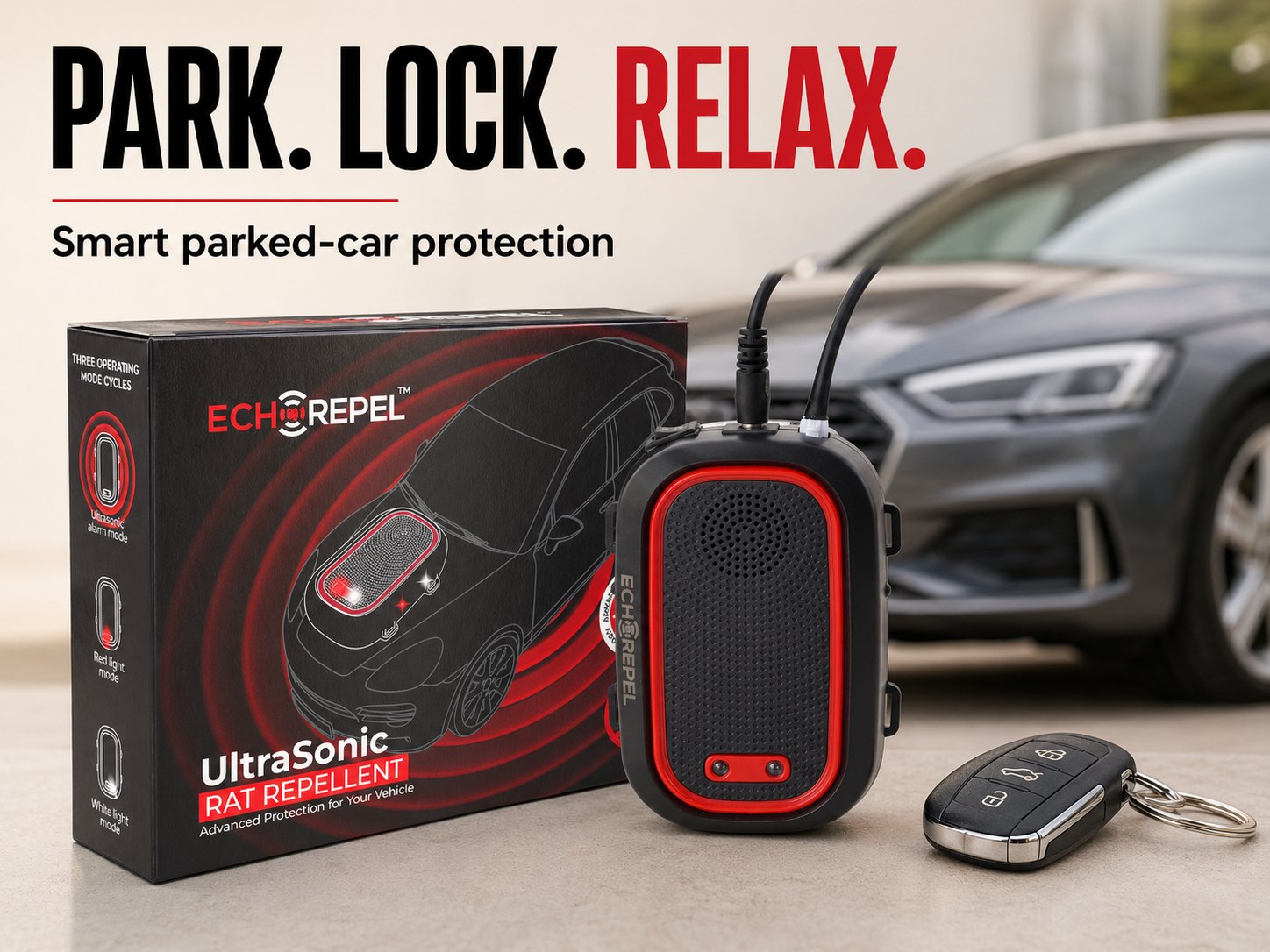
The same car, in the same spot, will attract the same rats. Move the parking spot if you can, keep food out of the car, and add a deterrent. The EchoRepel Car Rat Repellent runs while the car is parked — which is exactly when they come back. For what the repair might cost, see the real cost of a rat in your car.