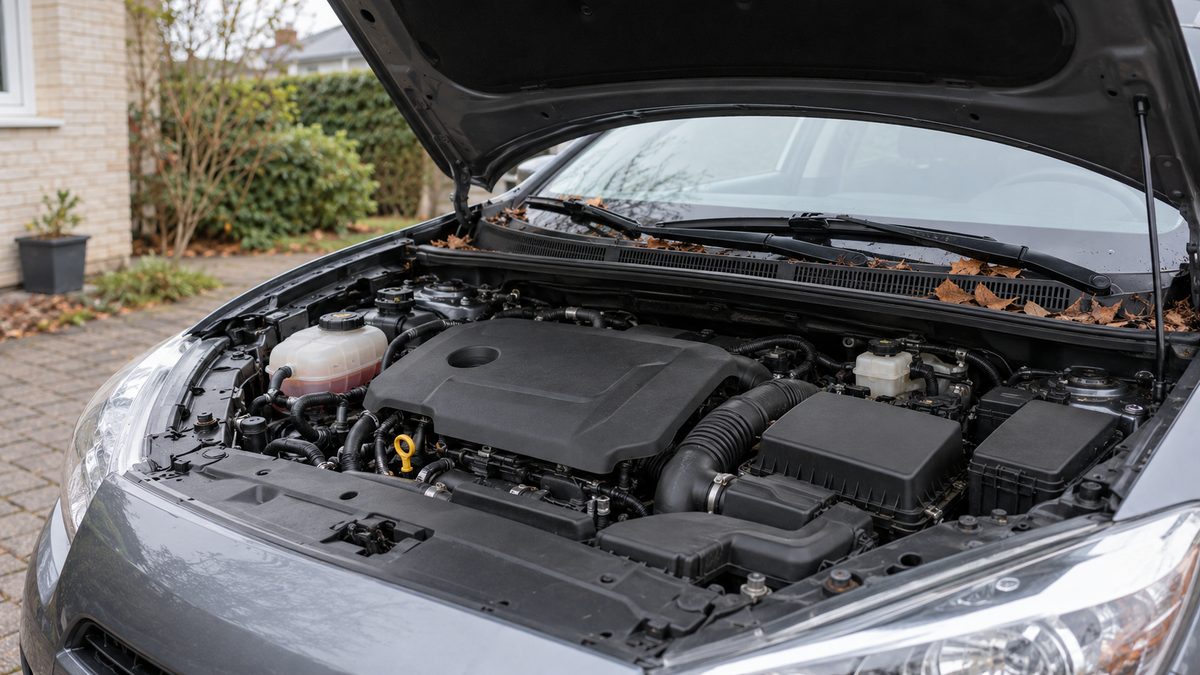
Before starting a car that has been parked over the holidays, check beneath it, under the bonnet and inside the cabin for rodent signs. If you find chewed wiring, damaged hoses or nesting material near working parts, leave it switched off and arrange a workshop inspection. Starting the engine is not a safe way to clear a suspected nest.
A quiet parking place can offer shelter even when no food was left in the cabin. Treat this as a visual check from safe positions, not a reason to dismantle the car on your return.
Keep the vehicle fully off while you look
Parked vehicles can still have powered systems. Keep the ignition off, avoid the start button and follow the handbook for inspection precautions. Keep a keyless fob away from the vehicle as advised by its manufacturer. Do not reach near fans, belts or other moving components.
Use daylight or a torch, and check that the car is secure against movement. Do not crawl underneath a vehicle supported only by a jack. If you cannot safely open the bonnet or inspect an area, leave it for a workshop.
Tell anyone helping that you are checking before starting. That avoids a well-meant attempt to turn the engine over while another person is near the engine bay.
Walk around before opening the bonnet
Look at the ground for unusual fluid, scattered nesting material and objects beneath the engine area. A leak needs mechanical assessment even if you cannot see rodent damage. Check the tyres and the parking surroundings as part of the return to use, without assuming every fault is connected to animals.
Note nearby bins, spilled animal feed, dense plants and piles of stored material. These help explain how rodents may have reached the car. How rats find a parked car covers that setting in more detail.
If you see an animal, step back and keep pets away. Do not prod it into the engine bay or start the car to frighten it out. Get assistance if it remains hidden and you cannot establish that the vehicle can be inspected safely.
Follow a visible-parts inspection sequence
| Area | What to look for | Decision |
|---|---|---|
| Top of engine and accessible recesses | Leaves, fabric, food or concentrated shredded material | Leave suspected nests undisturbed pending safe removal |
| Visible wiring and connectors | Tooth marks, missing covering or exposed conductors | Do not start; arrange assessment |
| Accessible hoses | Chewing, splits or fluid staining | Have damage checked before use |
| Windscreen cowl and air intake | Debris, droppings or displaced material | Keep ventilation off until checked |
| Seats, footwells and luggage area | Droppings, shredded upholstery or damaged food packaging | Arrange suitable cleaning and inspect surrounding spaces |
Take photographs before touching anything. Do not pull a wire to test whether its covering is intact, and do not remove engine covers unless the handbook permits the task and you know how. A clear view from above cannot certify that hidden wiring is undamaged.
For electric and hybrid vehicles, leave high-voltage components and orange cables alone. Damage in those areas requires appropriately qualified assistance. The general check remains visual; a different powertrain does not make rodent damage a household repair.
Check the cabin without switching on the blower
Open doors and look under seats, around the glovebox and beneath loose luggage. Do not put your hands into a concealed recess without looking. Remove ordinary forgotten food only if you can do so without disturbing contaminated nesting material.
Follow the handbook if the cabin filter has a user-accessible inspection procedure. Do not force panels or shake a suspect filter inside the car. A filter with droppings or a nest needs suitable handling, replacement and an inspection of the housing.
Leave the fan off if contamination is suspected. A possible mouse nest in the car heater explains why a smell or blower problem needs further checking. Heavy contamination or material deep in the ventilation system belongs with a workshop familiar with the problem.
Decide between starting, cleaning and recovery
Visible chewed wires, fluid leaks, damaged hoses or nesting near hot and moving parts are reasons to keep the car off. Contact a workshop or recovery service and describe what you found. Do not assume that a short drive is harmless because the garage is nearby.
A taped covering or a removed handful of leaves does not establish that the system is safe. Use what to do after rats chew car wiring when discussing repair and inspection. Ask for the affected area and related components to be checked, not just the visible bite.
If you find no rodent signs, complete the handbook's normal checks for returning a stored car to use. A weak battery, tyre issue or warning light may have another cause. Stop and seek help if starting produces a burning smell, smoke, a leak or abnormal operation.
Change the parking routine after the inspection
Remove cabin crumbs, clear loose rubbish around the space and keep feed or household waste secure nearby. Arrange future checks if the car will remain unused. Regular observation makes changes easier to spot, although it does not guarantee that rodents will stay away.
The EchoRepel car device is poison-free and uses ultrasonic sound that rats and mice want to avoid. It does not establish roadworthiness or replace inspecting damage and removing nesting material safely.