Before an Indian road trip, check the tyres, brakes, fluids, lights, battery and required documents, then plan rest stops and charging. Deal with warning lights or fresh rodent damage before departure rather than hoping they will clear during the drive.
The car
- Tyre pressure and tread: including the spare. Check pressure cold, before you leave.
- Engine oil and coolant: top up, and service older cars before a long trip.
- Brakes: any noise or softness gets checked before you go.
- Wipers and washer fluid: dust and sudden showers happen.
- All lights: headlights, brake lights, indicators.
- Battery: clean terminals, and a quick test if it's over three years old.
Documents and safety
- Licence, RC, insurance and PUC: accepted digital copies where appropriate.
- Electronic toll account balance: top it up before you hit the highway.
- First-aid kit, torch and warning triangle.
- Jack, wrench and a tyre inflator.
Power for your devices
- Phone chargers and cables for everyone.
- A pure sine wave inverter: for laptops, cameras and anything with a normal wall charger. Choose pure sine wave for sensitive electronics (see what size inverter you need).
- A power bank: for stops with the engine off.
At your stops
- Park smart overnight: away from garbage and drains. Unfamiliar parking spots are where cars often pick up rats (see how rats find a parked car).
- Keep food out of the car overnight: snacks and wrappers are an invitation.
Packing the boot
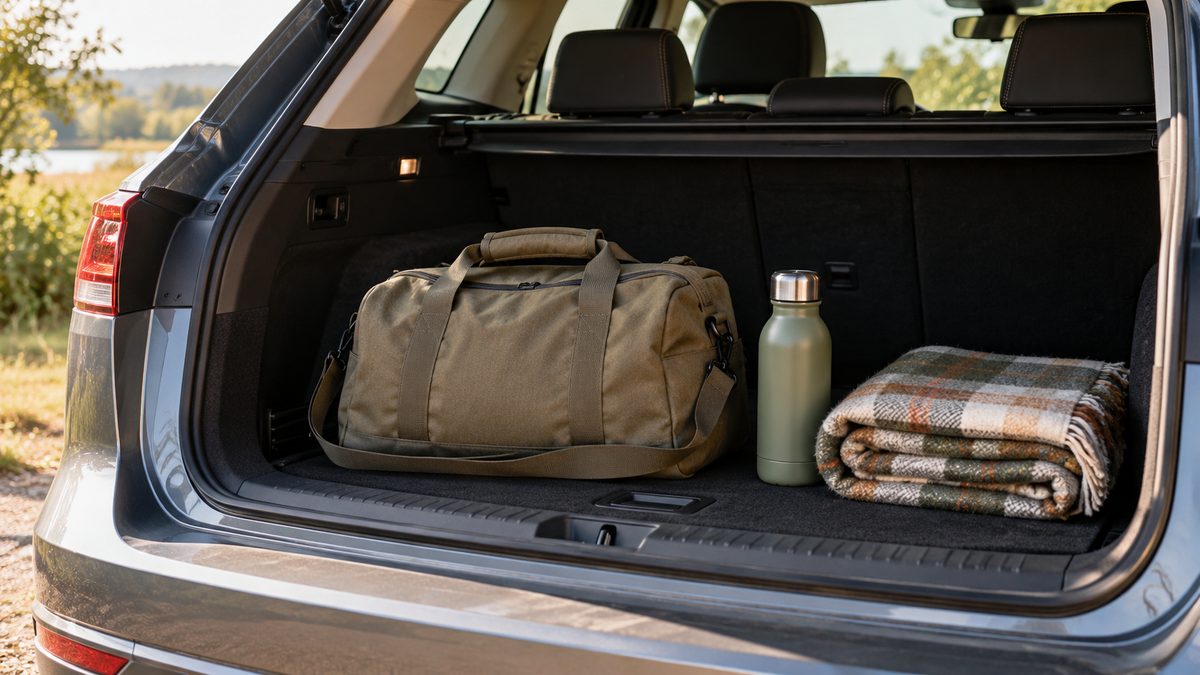
- Heavy bags low and forward: against the back of the rear seat, so they can't slide or fly forward under hard braking.
- Keep the spare and toolkit reachable: don't bury them under luggage.
- A small "day bag" in the cabin: water, snacks, medicines, chargers and documents, so you don't unpack the boot at every stop.
- Don't block the rear view: keep the parcel shelf and rear window clear.
Keeping every device charged
| Device | Best way to charge on the road |
|---|---|
| Phones | USB-C or USB-A port / car charger |
| Tablets | USB-C Power Delivery port |
| Laptop | Its own charger, through a pure sine wave inverter |
| Camera / drone batteries | Their own charger, through an inverter |
| Power banks | Top up while driving, use at stops |
Charge while the engine is running. Leaving a laptop charging from the car at a long stop with the engine off is how batteries go flat in hotel car parks. For the details, see how to run a laptop from your car.
On the highway
- Stop every two hours: 15 minutes out of the car keeps the driver alert.
- Avoid driving through the small hours: fatigue peaks between about 2 and 5 a.m.
- Plan fuel stops: on some stretches pumps are far apart; don't run below a quarter tank.
- Ghats and hill roads: use lower gears downhill rather than riding the brakes.
- Download offline maps: signal drops in hills and remote stretches.
When you get home
If the car sat for days at a relative's house or in an unfamiliar car park, lift the bonnet once you're back. Look for droppings, shredded paper or leaves, and chewed wires, cars parked in new places are exactly where rats move in. Our list of 7 signs of rats in your car tells you what to look for.
For keeping everything charged on the way, the EchoRepel 200W Pure Sine Wave Inverter plugs into the 12V socket and runs your laptop and camera chargers with clean power. Safe travels.
Do the checks before the boot is packed
Leave enough time for a workshop visit if the inspection finds a problem. A checklist completed on departure morning cannot help much if the spare tyre is damaged or the battery fails a test. Use the pressures and fluid specifications in the vehicle manual, including its guidance for a full passenger and luggage load.
Inspect the spare and check whether your car instead carries a repair kit with its own instructions. Find the locking-wheel-nut key if fitted. Make sure the driver knows where the jack points and towing information are, but leave roadside wheel work to assistance services when traffic or ground conditions make it unsafe.
Make the overnight stop part of the plan
Ask the hotel or host where the car will stand. A parking space beside open waste bins or a drain may need more attention than a clean, frequently used area. Remove takeaway bags, fruit and snack wrappers at the end of the day, including items children have dropped beneath seats.
Before the next departure, look around the tyres and, with the car safely parked and cool, inspect accessible areas under the bonnet. Fresh shredded material, chewed insulation or an unfamiliar smell warrants a closer check. Do not start the engine merely to frighten an animal out.
Give each passenger a useful task
One person can keep documents and accommodation details accessible; another can check the planned route and downloaded maps. Arrange cables so they cannot cross pedals, interfere with gear changes or pull devices off seats. Set up navigation before moving and let a passenger manage charging changes.
Rest plans need flexibility. A driver who feels sleepy should stop somewhere safe even if the planned break is still far away. Heavy rain, poor visibility and a late departure are reasons to shorten the day. For current document, toll and route requirements, check the relevant official transport and road sources before travel.
Frequently asked questions
What if the spare is buried under luggage?
Repack before departure so emergency equipment remains accessible. Heavy bags should be secure, and anyone reaching equipment should be able to do so without unloading into moving traffic.
Should I clear a warning light and see if it returns?
Have an unexplained warning assessed before a long trip. Clearing a message does not repair a fault, and a recent nest or chewed wire gives the workshop useful diagnostic context.
Can the passenger change chargers while we drive?
Only if doing so will not distract the driver or interfere with controls. Set up cables before departure and stop safely if equipment needs repositioning.
Should I service the car immediately before leaving?
Arrange any needed service with time for a local drive afterwards. That gives you a chance to notice leaks, loose items or unresolved warning lights before the longer journey.