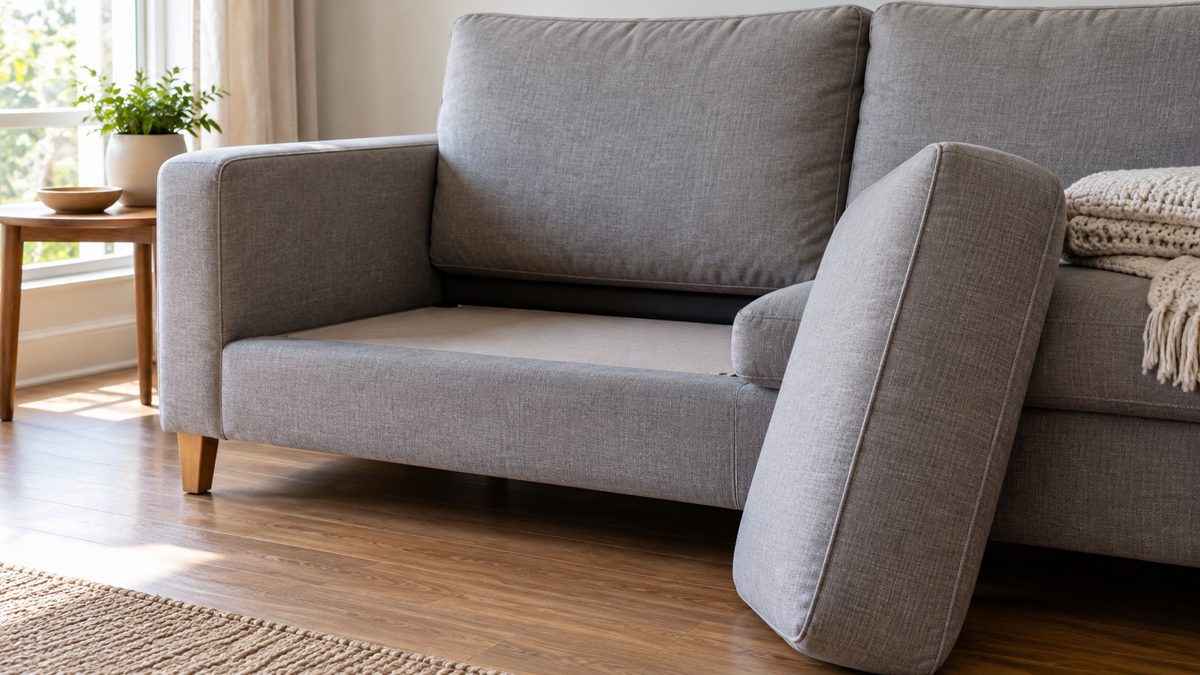
Mice can nest inside sofas and upholstered furniture by entering through torn underside fabric, frame gaps or damaged padding. Stop using an affected item and assess the depth of contamination before cleaning it: a washable cover is a different problem from waste embedded in foam or stuffing.
Do not beat cushions, vacuum droppings or cut open a suspected nest in the living room. Those actions can spread contaminated dust. The decision to clean, reupholster or discard should depend on access, materials and contamination, alongside a plan to remove mice from the room itself.
Look under the sofa without turning it into a dust cloud
Check the visible floor and lower edges with a torch. Look for gnawed seams, torn black underside lining, shredded stuffing and deposits near the legs. A missing patch of fabric is not proof of mice by itself, but a cluster of signs deserves investigation.
Do not tip a heavy sofa alone or place fingers beneath a mechanism. Recliners and sofa beds have moving parts, and powered furniture may have electrical damage hidden near the base. If a lead is chewed, keep clear and have the item safely isolated and inspected by a suitable professional.
Take photographs of visible damage before moving anything. Clear a route if the item needs removal, but leave potentially contaminated cushions in place until there is a handling plan. Our guide to finding a rat nest in the house helps place furniture signs within the wider room rather than assuming the sofa is the only shelter.
Separate crumbs from contaminated upholstery
Food dropped between cushions can draw mice towards a quiet seating area. Crumbs alone can be cleaned normally when there is no rodent contamination, but once droppings or nesting material are present, dry vacuuming is the wrong first step. Keep the two situations separate when deciding what to do.
Check pet food bowls, snack storage and clutter behind the furniture. Boxes underneath a sofa and rarely moved throws offer concealed material as well as shelter. Secure food elsewhere before returning a cleaned or replacement item to the same spot.
Do not attempt to flush mice out with smoke, strong fragrances or household chemicals. These methods do not establish that internal padding is clean and can damage furniture or expose people to fumes. An animal leaving the sofa also does not prove that the room's entry routes have been resolved.
Use material and access to make the reuse decision
- Removable washable covers: check the care label and handle without shaking; assess the cushion beneath separately.
- Cleanable hard frame sections: consider a compatible wet-cleaning method if fully accessible.
- Foam or stuffing containing urine, droppings or nest material: seek advice about removal and replacement.
- Fixed upholstery with an inaccessible internal nest: arrange specialist assessment before reuse.
- Widespread soiling or damage across the base and padding: disposal may be more practical than attempted surface cleaning.
- Chewed powered-recliner cables or controls: obtain an electrical assessment as well as contamination advice.
There is no reliable household test that proves hidden padding is clean because the outer fabric looks dry. Ask an upholstery cleaner or restoration professional what they can inspect, which materials they can treat and what they cannot reach. A deodorising treatment alone does not answer those questions.
Cost matters, but do not let a low cleaning quote stand in for a defined scope. Compare the work needed on the cover, frame, lining and cushion interiors. Where substantial padding must be removed, reupholstery may be possible, but the underlying rodent problem still needs attention before the item returns.
Keep cleaning suitable for both waste and fabric
For limited deposits on compatible hard surfaces, public-health guidance generally favours wetting with an appropriate disinfectant and allowing the labelled contact time before wiping. Wear gloves, avoid splashing and wash hands afterwards. Never mix cleaning chemicals, and keep children and pets away during the work.
That method cannot simply be transferred to every upholstery fabric. Saturating a cushion may damage it without treating contamination throughout its depth. Use the care instructions and professional advice for washable textiles; heavily contaminated porous material may need discarding instead of repeated treatment.
Avoid dry sweeping, household vacuuming and compressed air on rodent waste. If deposits cover a wide area, stop and arrange professional cleaning. The article oncleaning mouse droppingscovers the basic precautions, while getting rid of mice in the house addresses removal beyond the affected furniture.
Remove an unusable sofa without spreading the problem
Contact the local bulky-waste service or a suitable contractor before moving an affected item. Explain that rodent contamination is present and ask how it should be contained for collection. Do not drag exposed contaminated lining across communal halls or leave an uncovered sofa where someone might take it for reuse.
Bag loose contaminated materials where they are handled, following local disposal guidance. Avoid removing stuffing solely to make the sofa lighter unless the person doing it has a suitable safe method. In flats, coordinate access and collection with management so an affected item does not sit in a shared escape route.
After removal, inspect the floor edge, skirting and nearby service openings. Arrange control before sealing a route that may still be occupied. Photograph cleaned areas so later checks can distinguish new signs from the original deposits.
Seek medical advice after a bite or illness following exposure, explaining any contact with droppings or dust. The EchoRepel Ultrasonic Rat Repellent uses ultrasonic sound that rats and mice want to avoid, without poison. It cannot decontaminate upholstery, repair damage or promise that a replacement sofa will stay clear.