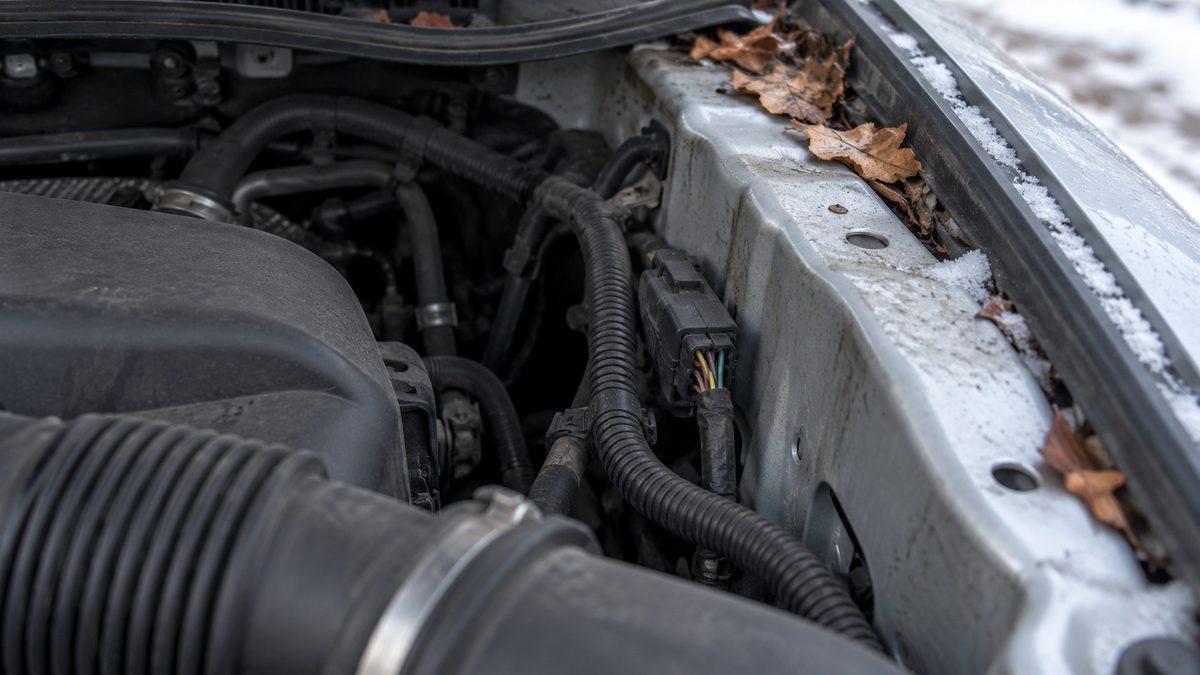
Rats can chew wiring in a parked car during winter, and the first clue may be damaged insulation rather than a breakdown. Check a cold, switched-off vehicle for nesting debris and visible gnaw marks before starting it. Exposed conductors, warning lights or a burning smell need a qualified workshop assessment.
A sheltered engine bay can attract rodents, especially where nearby bins, vegetation or stored materials provide food and cover. Residual warmth after a journey is temporary; a car left cold for days can still offer a protected space. Cold weather alone does not prove that a new electrical fault was caused by rats.
Begin with the parking place, before lifting the bonnet
Look for spilled animal feed, overflowing refuse, low branches touching the vehicle and clutter beside the parking bay. In shared parking, note activity near walls, drains and storage cupboards. Photograph anything relevant without handling suspect waste. Conditions around the car often explain why several vehicles in the same area receive visits.
Inspect while there is good light, with the vehicle securely parked, switched off and cool. Follow the handbook for opening the bonnet and keep clear of belts, fans and hot parts. Some fans can operate unexpectedly. Never crawl beneath a car supported only by a jack to search for rodent evidence.
Match each warning sign to a sensible response
| What you notice | What it may mean | Next action |
|---|---|---|
| Shredded material in a sheltered recess | A possible nest, with damage hidden beneath | Arrange inspection before disturbing the material |
| Tooth marks or missing cable covering | Insulation may no longer protect the circuit | Leave the wiring untouched and contact a workshop |
| New warning lamps or erratic equipment | An electrical fault with several possible causes | Follow handbook warnings and request diagnosis |
| Smoke, burning odour or a strong fuel smell | A possible fire or leak hazard | Do not start; move clear and seek appropriate assistance |
| Droppings with no visible chewing | A visit, without proof the car is undamaged | Inspect accessible areas and monitor after safe cleaning |
Use these clues together. A single chewed leaf is less specific than nesting material beside damaged cable sheathing. The broader guide to signs of rats in your car can help you record what you see without guessing which component has failed.
Inspect the covering without pulling the cable
From a safe position, use a torch to examine accessible wiring, protective sleeves and the area around connectors. Look for uneven nibbled edges, loose fragments of insulation and unfamiliar material lodged beside a loom. Do not unwrap tape, tug a connector or push your hand into a recess you cannot see.
Visible wiring is only part of the picture. Damage may lie beneath covers or involve hoses as well as electrical cables. A clean-looking top surface cannot clear the entire engine bay. Ask a technician to check the surrounding area if one damaged section is found, rather than repairing only the most obvious break.
Do not test a suspect circuit by taking a short drive
If conductors are exposed or you find extensive nesting around engine components, contact the garage before starting. Describe the location, send photographs and ask whether recovery is needed. Driving to see whether a warning disappears can turn an uncertain fault into a roadside failure. Tape over a cable is not a substitute for diagnosis.
Electric and hybrid vehicles require particular care around their electrical systems. Keep away from high-voltage components and cables, including orange cables, and leave identification and repair to a suitably trained technician. Our article on what to do after rats chew wiring sets out the next practical steps.
Give the workshop evidence it can use
Note the last normal journey, when the car was parked and which symptoms appeared first. Record warning messages accurately instead of clearing them with a diagnostic reader. Explain if the car has been hard to start, the fan behaves differently or lights work intermittently. These details help the technician distinguish rodent damage from unrelated winter battery problems.
Ask for photographs of the damage, a written description of the repair and checks on affected neighbouring circuits. If making an insurance enquiry, keep the initial evidence and check the policy directly. Do not rely on another driver's claim outcome. The page on rodent damage and car insurance explains questions worth asking.
Make the next cold morning easier to check
Once the car is repaired and contamination has been addressed, remove food from the cabin and clear ordinary leaves from accessible exterior areas as the handbook allows. Keep parking surroundings free of loose refuse and stored feed. Recheck the same photographed locations before use, especially after a longer period parked.
Regular use does not guarantee protection, and warming the engine on the driveway is not a rodent-control method. For longer absences, plan checks with someone who can inspect safely. Read winter car storage precautions for a routine that also considers the condition of the parking space.
The EchoRepel Car Rat Repellent uses ultrasonic sound that rats and mice want to avoid and is poison-free. If you choose it alongside repairs and parking checks, continue looking for fresh signs. A deterrent does not establish that damaged wiring is safe or that the vehicle cannot receive another visit.