Every spring, owners of classic cars, convertibles, RVs and second cars lift the hood after the winter and find the same thing: a nest of shredded insulation, a stash of seeds in the air filter, and a few chewed wires. A stored car is warm, dark, silent and untouched for months, which makes it the best shelter on the property. An hour of preparation prevents most of it.
1. Choose the storage spot carefully
- A closed garage beats a carport, and a carport beats open ground. Avoid parking on grass or next to hedges and woodpiles.
- Move the food out. Birdseed, pet food, grass seed and even recycling bins with food residue attract mice. Store them in metal bins with tight lids or move them to another building.
- Seal the obvious gaps. Check the bottom of the garage door and where pipes enter the walls. Mice fit through about 6 mm (a quarter inch); rats through about 2 cm (under an inch).
2. Clean the car inside and out
Vacuum the cabin, the seat tracks and the trunk. A single dropped snack wrapper is enough to draw a mouse inside. Take out food, gum, pet bedding and anything made of paper or fabric that could become nesting material. Wash the car, too; dirt and leaves around the cowl and wheel wells give rodents cover.
3. Block the openings rodents use
- Exhaust tip: plug it loosely with steel wool or stainless-steel scouring pads.
- Air intake: cover the opening of the intake snorkel the same way.
- Cabin air intake: fit fine mesh over the vent at the base of the windshield if your car has an exposed one.
- Leave a reminder. Tie a bright tag to each plug and put a note on the steering wheel listing what you blocked. Starting an engine with a plugged exhaust or intake can damage it.
4. Set traps around the car, not inside it
Place snap traps on the floor near each wheel and along the walls, where mice run. A mouse caught on the way in never reaches the engine bay. Don’t put traps or poison inside the car: a poisoned mouse can crawl into the ducting or a door cavity and die there, and the smell lasts for weeks.
5. Add a deterrent that doesn’t need the car’s battery
Scents like peppermint oil fade within days, and you won’t be there to top them up. Mothballs are toxic and their fumes soak into upholstery in a closed space. A battery-powered ultrasonic deterrent with a light strobe is a better fit for storage, because it keeps working with the car’s battery disconnected. Like any deterrent, it works best alongside sealing, cleaning and traps.
6. Look after the battery and tires
- Battery: connect a smart battery maintainer, or disconnect the negative terminal. A modern car can flatten a healthy battery in a few weeks of standing. See how long a car battery lasts when parked.
- Tires: inflate to the pressure on the door-jamb sticker to reduce flat spots.
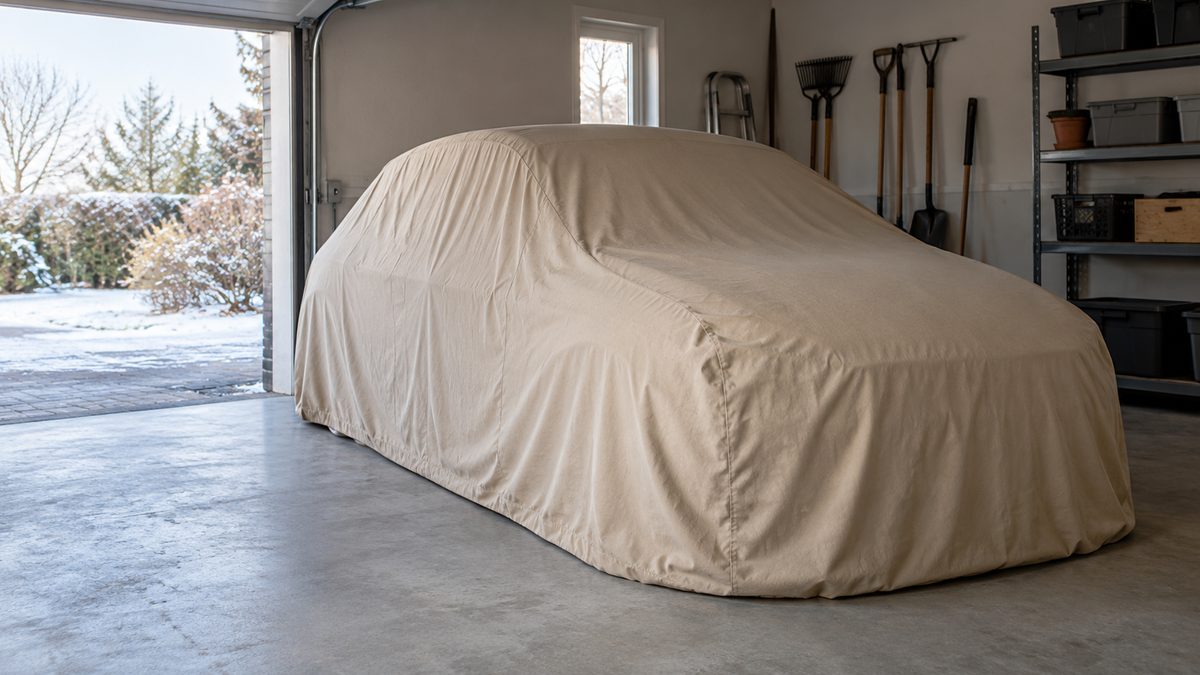
- Cover: use a breathable cover. Plastic sheeting traps moisture and gives mice a hidden route onto the car.
7. Check in every few weeks
Walk around the car every two to four weeks. Check the traps, look for droppings on the floor, and lift the hood. Catching one mouse in December is far better than finding a family in April.
Before the first drive in spring
- Remove every plug from the exhaust and intake, using your note as a checklist.
- Open the engine air filter box and the cabin filter housing and look for nests or stored seeds.
- Inspect wiring, vacuum lines and hoses for chew marks.
- Check the floor under the car for droppings and the cabin for a musty smell.
- Reconnect or check the battery, set tire pressures, and watch for warning lights on the first start.
Found signs of a visitor anyway? Our guides on mice in your car engine and removing rodent smell from a car cover the clean-up, and does car insurance cover rodent damage explains the claims side.