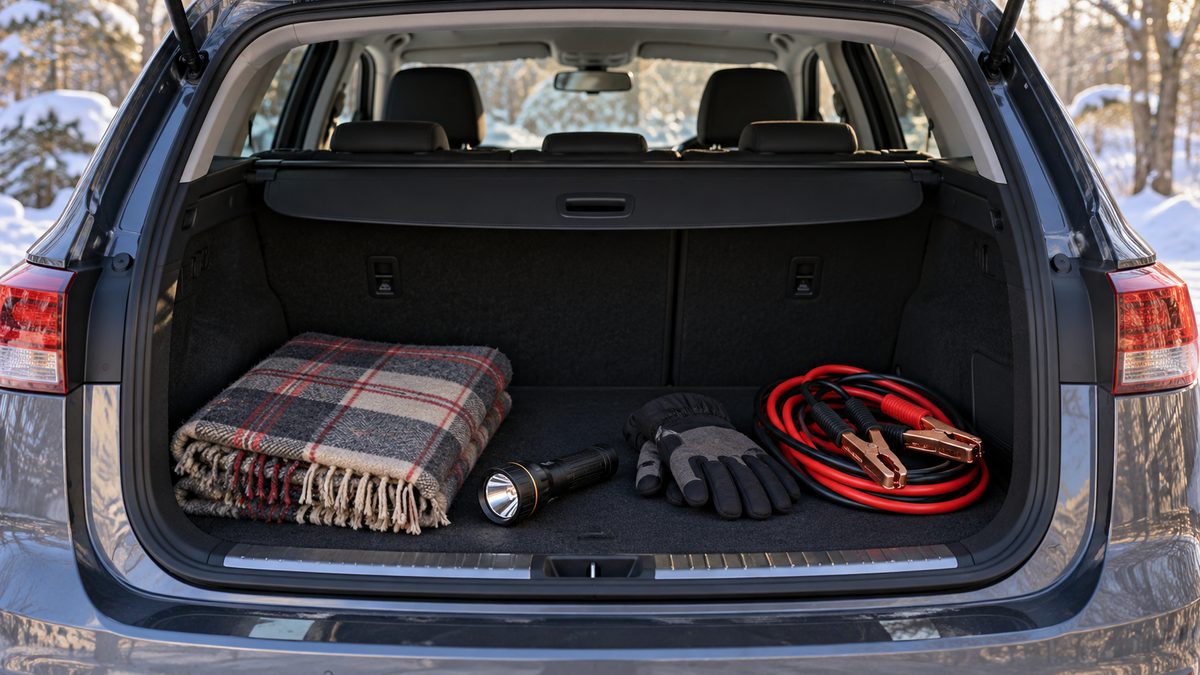
A winter emergency kit should help you manage a delay without depending on a running engine for every need. Warmth, communication, light and basic supplies come first. Recovery tools are useful only when conditions allow you to use them safely, so choose equipment around your route and abilities.
Build the kit during fall (autumn), then check it before freezing weather and longer journeys. A short urban commute and a remote country drive can need different quantities of supplies. Allow for every passenger, including children, and keep essential items accessible when the trunk or boot is full of luggage.
The winter car kit checklist
| Item | Why it belongs in the kit |
|---|---|
| Ice scraper and snow brush | Clear glass and loose snow before driving |
| Blankets | Retain warmth during a delay without electrical power |
| Warm layers, hat, gloves and dry socks | Add insulation and replace damp clothing |
| Water and shelf-stable snacks | Support passengers while waiting for help |
| Phone charger and charged power bank | Keep communication available independently of the engine |
| Jumper cables or a compatible jump starter | Provide a starting option when safe and suitable |
| Torch or flashlight with spare batteries | Provide light without draining the phone |
| First aid kit | Keep basic supplies available and organized |
| Compact shovel | Clear limited snow when safe to work outside |
| Sand or suitable non-clumping cat litter | Offer some traction beneath tires on slippery surfaces |
| Reflective triangle | Make the stopped vehicle more visible where safe and permitted |
| Washer fluid rated for low temperatures | Help keep the windshield clear in freezing conditions |
Pack warmth where passengers can reach it
Keep blankets and spare layers in a dry bag rather than loose on a damp trunk floor. Check that gloves fit and children have suitable sizes. Clothing used for a wet walk may not be the dry set you need during a breakdown, so carry separate spare socks and layers.
A blanket behind the last suitcase is difficult to retrieve in poor weather. Put at least some warmth supplies within cabin reach, secured so they cannot interfere with pedals or become loose objects. Warm clothing should be available before anyone has to step outside to inspect a problem or contact assistance.
Keep water, snacks and light usable
Choose food that needs no cooking and suits passengers’ dietary needs. Check dates and replace anything eaten on ordinary journeys. Water can freeze in a parked vehicle, so inspect containers and bring fresh drinking water on winter trips. Store it where a leak cannot damage electrical supplies or soak blankets.
A separate flashlight saves phone charge and makes finding supplies easier. Test it rather than relying on a switch that has not been used for months. Keep spare batteries dry and protected from loose metal objects. A headlamp can leave hands free, provided you know how to operate it in gloves.
Prepare charging and starting equipment separately
Pack a phone cable, compatible car charger and charged power bank. Check storage temperatures and recharge schedules for battery-powered equipment. A bank carried into the car before departure may be more dependable than one left unused in severe cold. Keep roadside assistance details available on paper as well as on the phone.
Decide between a portable jump starter and jumper cables based on compatibility and how you would use them. Cables require a suitable donor; a pack needs adequate charge. Read the vehicle and equipment manuals before a dark roadside emergency. Never jump a frozen, swollen, leaking or visibly damaged battery.
A car inverter is an optional device-power accessory, separate from starting equipment. It cannot start the engine or recharge the starter battery. A 12V socket is usually fused around 10 to 15 amps, roughly 120 to 180 watts before losses; check the manual. A 200W inverter cannot override that limit or run a household space heater.
Choose practical snow and visibility tools
Try the scraper and shovel before relying on them. A compact shovel should fit the car and be manageable while wearing winter gloves. Sand or suitable non-clumping cat litter can help provide grip, but neither guarantees recovery from deep snow. Stop if digging or moving the car would expose you to traffic.
Carry a reflective triangle, but follow local road guidance for placing it. Do not step into live traffic to set one out, and check motorway or highway restrictions for your route. Keep visibility equipment accessible. A tool in the kit never makes an unsafe roadside position safe to enter.
Check the washer fluid’s low-temperature rating against expected conditions and follow its dilution instructions. Inspect wipers, clear ice and snow before departure, and keep the scraper away from surfaces it could damage. Winter equipment helps visibility only when you also allow time to use it before setting off.
Review the kit and the journey together
Before departure, check forecasts, road conditions, fuel or charge, and your planned route. Tell someone your destination when traveling through remote areas. If severe weather makes the journey unsafe, a well-stocked kit is not a reason to continue. Our guide to useful car gadgets can help distinguish optional extras from supplies you need first.
If stranded, contact assistance and follow local emergency instructions. Run the engine only outdoors with an exhaust clear of snow and debris, never in a garage or enclosed space. Never use portable fuel heaters inside the vehicle. Check supplies after each use so the next cold-weather delay does not reveal an empty power bank or missing blanket.