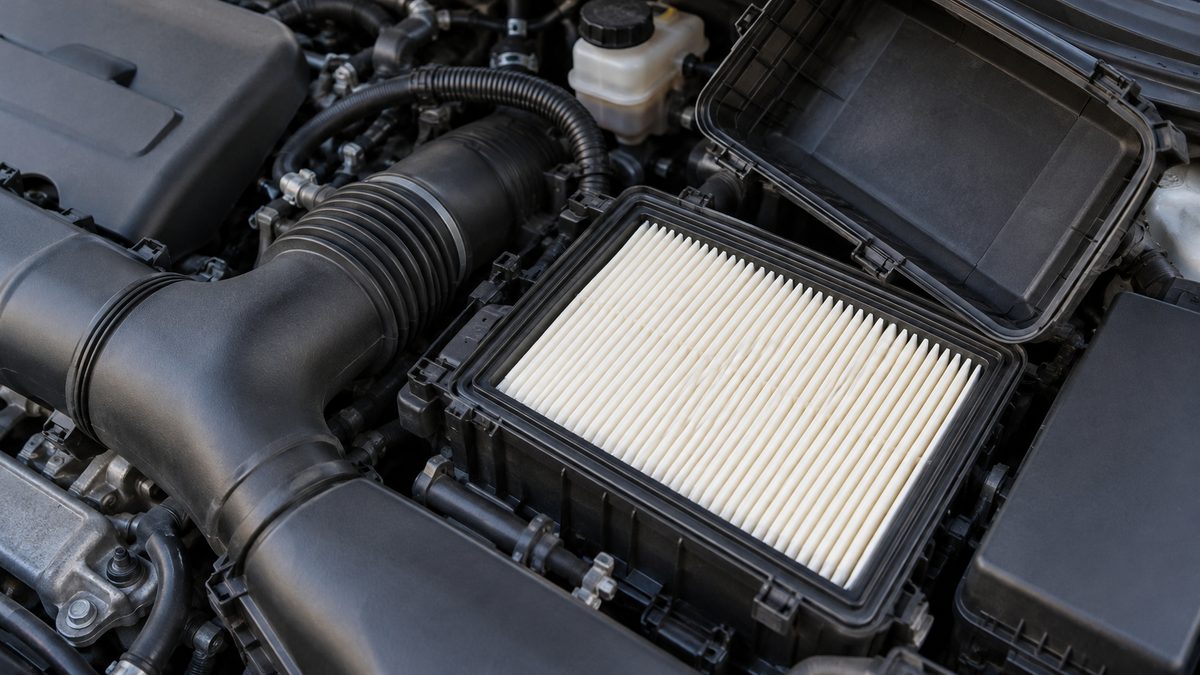
If you find a rodent nest in the engine air filter box, leave the engine off until the intake, filter and nearby wiring have been checked. Replacing a visibly damaged filter may be necessary, but it does not remove material farther along the intake or repair chewed components.
This is the housing that supplies air to the engine, not the cabin ventilation filter. The safe approach depends on where the waste sits and whether the filter has been breached. A workshop should handle material beyond the filter, contamination near sensors or any damage you cannot assess without dismantling parts.
Identify the engine intake before opening covers
Check the vehicle handbook for the air cleaner location and access instructions. Do not assume every plastic box under the bonnet is the filter housing. Some covers conceal electrical equipment, and vehicle layouts differ. If identification is unclear, take a photograph from a safe position and ask a workshop.
Park securely, allow the engine to cool and keep the ignition off with the key away from the vehicle. Keep hands clear of fans and unfamiliar cables. Do not touch high-voltage components in electric or hybrid vehicles. There is no reason to switch the ignition on to confirm that a nest is present.
Look first for shredded paper, leaves or fabric around the intake opening and housing seams. A blocked intake or damaged housing may have other causes, so record visible evidence rather than diagnosing from performance alone. The article on mice in a car engine covers the wider areas that deserve attention.
What visible signs mean for the next step
Material on the outside of an intact housing is different from material behind a chewed filter. If opening the box is a routine handbook procedure and no contamination will be disturbed, inspection may be straightforward. Stop if lifting the lid will scatter waste or requires forcing clips and moving unfamiliar connections.
- Leave the engine off when a nest or loose debris is inside the intake housing.
- Photograph the filter position and damage before any part is removed.
- Do not shake out or reuse a filter containing waste or gnawed sections.
- Treat debris on the engine side of the filter as a workshop job.
- Report damaged hoses, connectors and wire insulation along with the nest.
- Avoid compressed air, a household vacuum or a blower on rodent deposits.
- Arrange recovery rather than driving if damage or intake obstruction makes safe use uncertain.
Do not push loose material towards the intake to clear the lid. Filters have a sealing function, so a badly seated replacement can allow unfiltered air past the element. A workshop should also check that clips, seals and the housing itself are intact rather than simply fitting a new filter into a chewed box.
Why spraying the air box can create another problem
Rodent waste needs careful cleaning, but an engine intake is not a surface to flood with disinfectant. Liquid can affect sensors, electrical connections and components farther along the air path. Products intended for household surfaces are not automatically suitable for the materials inside a car's intake.
A small accessible deposit on a compatible outer surface may be suitable for a labelled wet-cleaning method after the intake is protected appropriately. If that boundary is unclear, let the workshop decide. Explain the contamination when booking so staff can prepare, rather than treating it as a routine filter change with a surprise nest.
Porous filter material containing droppings or urine is not something to wash and return to service. Ask for the correct replacement part and safe handling of the old element. Avoid dry brushing deposits from the housing. Local public-health guidance can inform exposure precautions; seek medical advice if illness follows contact with waste.
Ask the workshop to inspect beyond the obvious nest
The visible pile may be only one part of the damage. Ask for checks of the intake duct, air box seal, nearby loom and accessible hoses. If waste has passed the filter, the technician needs to assess the downstream path before restarting. Do not assume the engine must be damaged, but do not assume a new filter settles it either.
Tell the workshop about rough running, unusual noises or dashboard warnings that occurred before discovery. These symptoms can have unrelated mechanical causes and need diagnosis. Burning smells, smoke or exposed wiring are reasons to stop using the vehicle and arrange help rather than drive to test it.
Our guide to what to do after rats chew car wiring explains why a visual patch may miss damage. For odours coming through cabin vents instead, mouse nests and heater smells covers a separate air system that may need its own inspection.
Prevent another undisturbed intake nest
Remove food from the cabin and boot, including pet treats and loose crumbs. Keep the parking area clear of open rubbish and stored feed. Where possible, park away from dense cover and material piles, then inspect the cool engine bay periodically rather than relying on regular driving as proof of safety.
Do not fit improvised mesh, rags or foam across the intake. Any proposed barrier must preserve airflow, drainage and service access and should be assessed for the specific vehicle. Never leave a temporary plug in the system that could be forgotten before starting.
Keep photographs and the repair record so new deposits can be distinguished from the original finding. The EchoRepel Car Rat Repellent uses ultrasonic sound that rats and mice want to avoid and is poison-free. It cannot clear an existing nest, repair the intake or guarantee that rodents will not return.