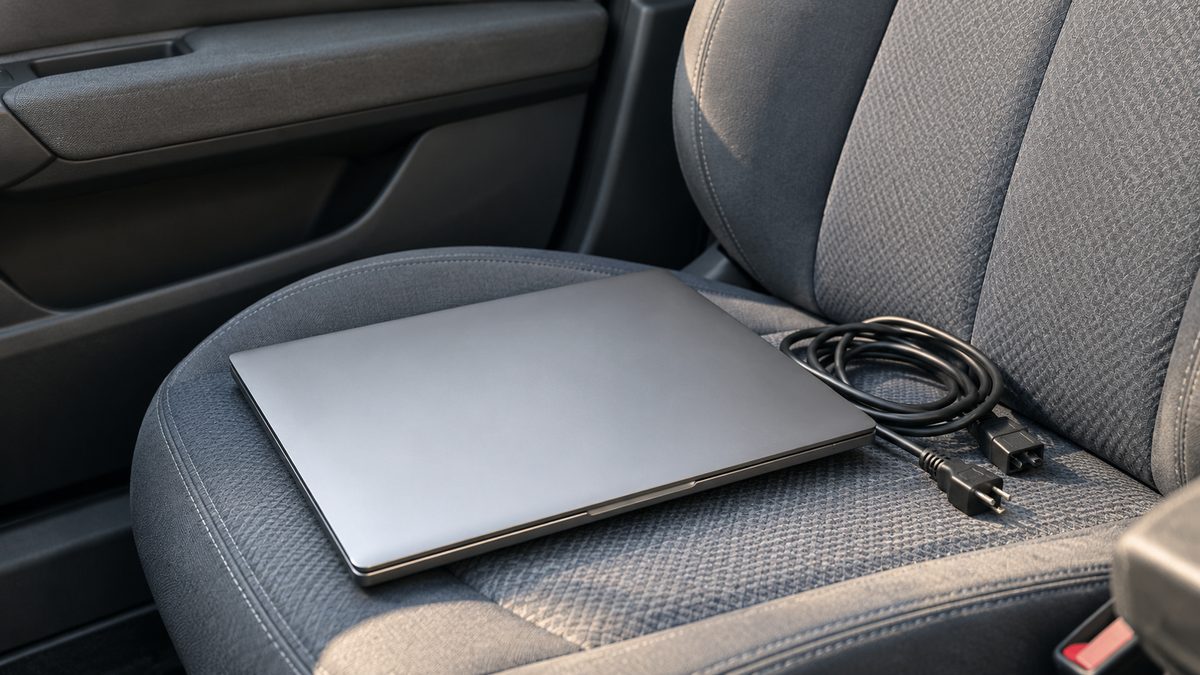
A power inverter takes battery electricity and turns it into the kind of AC power used by a wall charger. It can let you charge a laptop during a road trip or power suitable equipment from a separate battery. It does not create energy, and a standalone inverter does not store it.
Start with the equipment you need to use. A phone that accepts USB charging may need only a compatible vehicle USB adapter. A device with an AC-only charger may need an inverter. That distinction saves an unnecessary conversion step and helps you choose the right connection.
How DC becomes AC
A battery supplies direct current, or DC, with a fixed polarity. Household outlets supply alternating current, or AC, which changes direction repeatedly. Electronics inside an inverter switch and shape the battery supply into an AC output. Some energy is lost as heat during this process.
The input and output specifications must both match the installation. A 12V input inverter needs a compatible 12V source. Equipment used in the US commonly expects about 120V AC at 60Hz, but check its label. An inverter with a different outlet shape, voltage or frequency is not automatically suitable.
Continuous watts and startup surge
Continuous watts describe the load an inverter is designed to supply during normal operation under its stated conditions. Surge power is a brief allowance for equipment that draws more when starting. A large surge number on a box does not mean that power is available throughout a charging session.
Add the loads you intend to run together, then leave headroom according to the inverter instructions. Motors and compressors can need substantial starting power. If a device repeatedly trips protection, disconnect it and investigate compatibility rather than trying again until it stays on.
What a small inverter can run
These are typical, rounded planning figures, not equipment specifications. Check the label and manufacturer instructions for each device. Charging demand changes with battery level and workload, and a charger may draw more from AC than the power it delivers to the battery.
| Device | Typical watts | What to check |
|---|---|---|
| Phone charger | 20W | USB charging may be more direct |
| Camera battery charger | 20W | Adapter input and connector |
| Lightweight laptop charger | 60W | Adapter rating and conversion losses |
| Larger laptop charger | 100W | Socket limit and other connected loads |
| Electric kettle | 1,500W | Beyond a small socket-powered inverter |
A small heater, hair dryer or cooking appliance can need far more power than a laptop. Physical plug compatibility tells you little about load. Use the inverter sizing guide to compare your intended equipment with continuous and startup limits.
Pure sine wave and modified sine wave
Pure sine wave output follows a smooth waveform similar to utility power. Modified sine wave output uses a stepped approximation. Some equipment tolerates either; other equipment can produce noise, extra heat or unreliable operation on a modified waveform. Follow the equipment maker’s recommendations.
Pure sine wave does not make an undersized inverter suitable for every appliance. Output voltage, frequency, grounding arrangements and startup requirements still matter. Our pure versus modified sine wave comparison explains the distinction before you choose.
The 12V socket can be the limiting factor
Many accessory sockets are fused around 10 to 15 amps. At a nominal 12V, that corresponds to roughly 120 to 180 watts on the input side. Check your owner’s manual and fuse rating. The manufacturer’s stated socket limit takes priority over an estimate from multiplication.
AC output must be lower than the available DC input because conversion is not lossless. Shared sockets may also share a circuit limit. A higher-watt inverter needs a suitable direct battery connection when its instructions require one, using correctly sized cables and fusing installed by someone qualified.
Battery drain and safe use
For example, a charger drawing 60W through an inverter needs more than 60W from the battery. Running several chargers increases that demand even if none reaches its individual maximum. For regular stationary use, ask an installer about a suitable auxiliary battery system rather than repeatedly discharging the vehicle’s starting battery.
Check what comes with the unit, too. A compatible outlet must hold the plug securely, and a travel adapter changes only the physical connection. It does not change output voltage or frequency.
Runtime depends on battery condition, usable capacity, load and inverter losses. A starting battery is intended to start an engine, so do not treat its full capacity as available camping energy. A low-voltage shutdown helps protect equipment but cannot promise the next engine start.
For longer vehicle sessions, follow the manual and run the engine only outdoors with exhaust clear of people and openings. Never idle in a garage. Keep ventilation openings clear, protect equipment from spills, and stop if the plug, cable or socket becomes unusually hot.
Switch off and unplug after use. Never connect an inverter outlet to household wiring through an improvised cable. Before leaving equipment connected, read the guide to leaving a car inverter plugged in and check whether your socket stays live when the ignition is off.