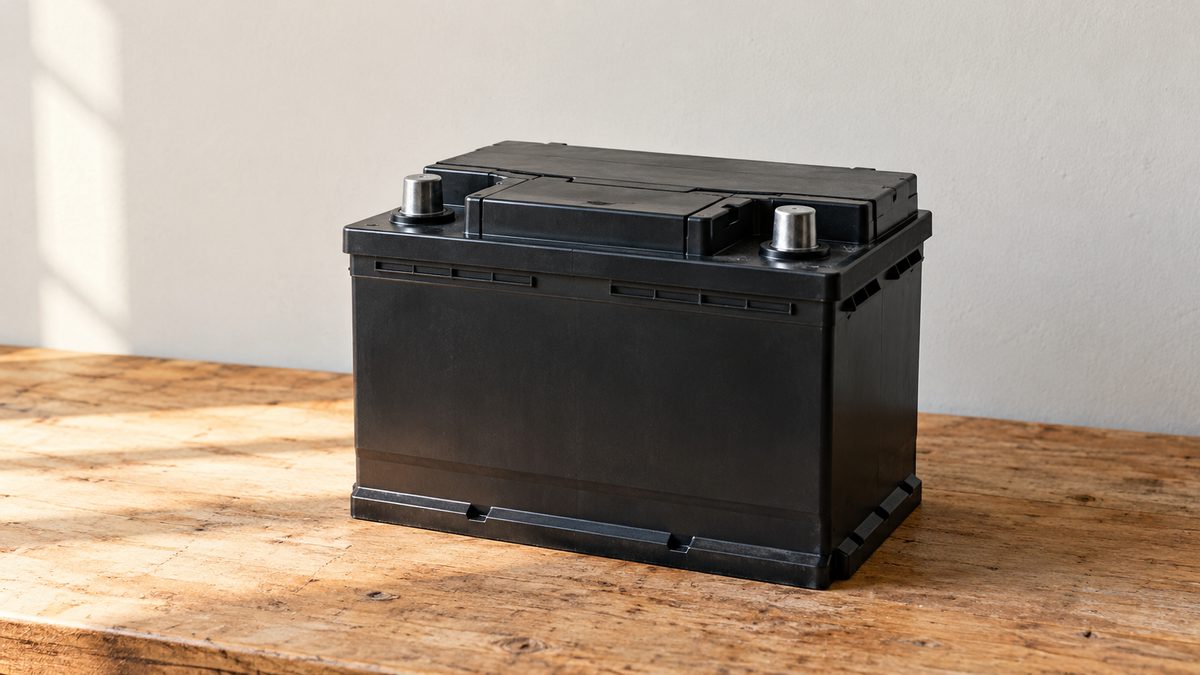
A battery quote can look reasonable until fitting, delivery or a missing exchange allowance changes the total. Another quote may be for a different capacity or technology altogether. Compare the specification and the final fitted amount before deciding which seller offers better value for your car.
As a broad planning guide, expect roughly ₹3,500 to ₹6,000 for many small hatchbacks, with more possible for sedans, SUVs and start-stop batteries. Prices vary by brand, city and time. This is not a live price list or a promise about your model. Get two current, itemised quotes.
Confirm that replacement is needed
A slow start does not prove the battery has failed. Loose connections, inadequate charging and starter faults can produce similar symptoms. Ask for a battery assessment and charging-system check before paying for a replacement. If the case is swollen, cracked or leaking, stop DIY handling and arrange professional assistance.
Our guide to signs a car battery needs replacing explains which clues need attention. Tell the technician about repeated jump starts, long parking periods and recent electrical work. A replacement may go flat again if an underlying charging fault or abnormal parked drain is left unresolved.
Size and capacity affect the quote
The battery must fit its tray, hold-down and terminal arrangement, as well as meet the electrical specification. Capacity in ampere-hours is one part of the match. Starting-current requirements and the required technology matter too. A physically similar battery is not necessarily an approved substitute for the one your car needs.
Small hatchbacks often use smaller batteries than larger vehicles, but body style alone cannot determine the price. Engine, fuel type, equipment and model year can change the specification within one vehicle range. Give sellers the exact vehicle details and ask them to confirm compatibility rather than quoting only a generic capacity.
| Price factor | Why it changes the total | Question to ask |
|---|---|---|
| Capacity and case size | Different electrical and physical requirements | Is this approved for my exact variant? |
| EFB or AGM technology | Start-stop duty needs a suitable battery | Does this match the required type? |
| Warranty | Replacement and pro-rata periods differ | What is free, and what requires payment? |
| Old-battery exchange | Eligible returns reduce the quoted total | What is the credit and its condition? |
| Fitting and delivery | Labour, location and access vary | Are these included in writing? |
| Diagnostic registration | Some vehicles need a workshop procedure | Is it required and included? |
Start-stop EFB and AGM batteries cost more
Start-stop systems can require an enhanced flooded battery, known as EFB, or an absorbent glass mat battery, known as AGM. These support more demanding cycling than a conventional starter battery. They generally cost more, and the correct choice depends on the vehicle specification rather than the cheapest available replacement.
Do not downgrade the technology because you usually switch start-stop off. The car may still have charging and energy-management requirements built around the specified battery. Ask the workshop to confirm the approved replacement and any diagnostic work. Avoid paying for an upgrade unless the vehicle guidance supports that change.
Read the warranty beyond the headline
A long warranty headline may combine a free-replacement period with a later pro-rata period. During pro-rata cover, you may still pay part of the replacement price. Ask when each period starts, what proof is needed and whether labour or transport is covered. Keep the invoice and warranty record together.
Check the manufacturing date and how the seller stores and checks stock before fitting. Ask who handles claims if you move city or buy online. A longer advertised period may be less useful if the claim route is unclear or the terms differ from what the sales conversation suggested.
Separate exchange credit from fitting charges
Request three figures: the battery price before exchange, the allowance for your old battery and the final payable amount. The credit can depend on the returned battery and seller conditions. Confirm the allowance before installation, and hand the old unit to a dealer that accepts it for proper recycling.
Then ask about delivery, call-out and fitting charges, including awkward access. Some modern cars also need battery registration or adaptation so the battery-management system recognises the replacement. Confirm this for the exact model and ask whether the quoted fitter has the required equipment. Not every car needs that step.
Compare the complete job
Send both sellers the same vehicle details and request the same specification, warranty terms, tax treatment, exchange allowance and fitting scope. Keep the quotes dated. If one price is much lower, check for omitted services or a different battery type before treating it as a saving.
For installation order and the limits of a home replacement, read how to change a car battery. After fitting, unplug accessories when finished. EchoRepel's inverter LCD displays input voltage at the accessory connection, but cannot establish battery health or repair a charging fault. Include diagnosis in the decision, not only the purchase price.