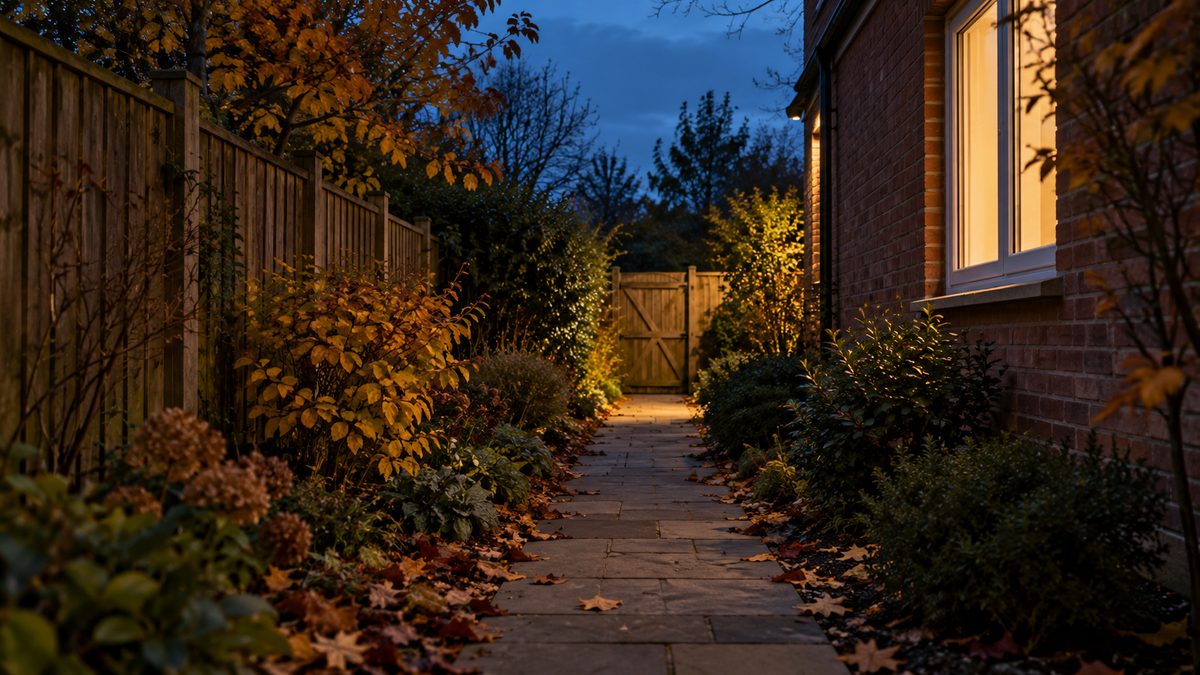
You may notice rats and mice earlier in the evening as darkness arrives sooner, especially when your return home overlaps with their movements. An earlier sighting does not establish that there are more rodents. The location, repeated route and fresh physical signs tell you more than the time on the clock.
UK clocks went back on Sunday 25 October 2026; US daylight saving time ends on Sunday 1 November 2026. India does not make that seasonal clock change. Rodents respond to conditions around them, rather than a household changing its clocks, so separate a change in your routine from a change in animal activity.
The clock shifts suddenly; evening light changes gradually
Many rats and mice are most active during darker, quieter periods, although they can appear in daylight. Shortening autumn days can bring darkness into the hours when you are bringing shopping inside, putting rubbish out or parking beside the garage. You may simply be outside at a different point in their usual activity.
After a clock change, a movement you previously noticed later by the clock may seem to happen earlier. That is not proof that an animal has changed its behaviour. Compare the sighting with dusk, household activity and weather, rather than comparing clock times alone.
In India, the useful seasonal comparison is local sunset and your own routine, without a clock adjustment. In every country, avoid assuming darkness alone explains a new indoor sign. Autumn access gaps, available food and shelter still need checking. Our post on why mice come inside in autumn covers those pressures.
Notice the overlaps around bins, dinner and parking
The period when bins are filled after dinner is worth checking because food residue may be left where animals can reach it. Watch from indoors or a safe distance. Do not leave a lid open to test what comes along, and do not scatter food to make a sighting easier.
Kitchen activity can hide faint noises; after washing up, the room becomes quieter and scratching may be easier to hear. That does not tell you when an animal first entered. Similarly, a rat crossing a driveway as headlights sweep the ground may have been present on previous evenings without being seen.
If a route passes the parked car, remove food from the cabin and check for accessible signs when the vehicle is cold and switched off. Do not reach into an engine bay at night to chase an animal. See how rats find a parked car for the link between nearby food, cover and parking.
Use a short evening observation record
| Record | Why it helps |
|---|---|
| Clock time and whether it was dusk or fully dark | Separates a clock adjustment from a change relative to daylight. |
| The exact place and direction of travel | A repeated route gives you a specific area to inspect in daylight. |
| What the household was doing | Bin use, cooking or opening a garage may explain the opportunity to notice movement. |
| Rain, disturbed storage or recent building work | Changes in shelter or access may explain a new location. |
| Physical evidence found safely afterwards | Gnawing or fresh signs in a cleaned area support further investigation. |
Keep the record brief enough to maintain without spending evenings on watch. Do not delay action to complete it if you find damaged wiring, food contamination or repeated activity inside. Those observations already justify a closer assessment.
A boundary crossing means less than an indoor route
A single animal running along a fence shows that a rodent used that route. It does not prove nesting in your home. Check nearby bins, spilled bird food and sheltered storage, then inspect the building in daylight for gaps beside that route.
Repeated movement into the same opening is more specific. Photograph the opening from a safe position and ask for advice if animals may be inside before sealing it. Never block an air brick, flue or drainage opening simply because it looks like a gap.
Indoors, new droppings after proper cleaning, fresh gnaw marks and repeated sounds in one void deserve attention. Avoid counting animals from separate glimpses: the same one can pass several times. The guide to one rat or an infestation explains why the pattern of evidence matters.
Daylight activity deserves context, too
Seeing a rat during the day does not automatically mean a large infestation. Disturbance, food availability and shelter changes can all affect when animals move. Repeated daytime sightings beside food or an entry point are a reason to inspect that place, rather than a way to estimate numbers.
If movement begins after a shed is cleared or building work starts, note that connection. Keep storage tidy and waste contained, but avoid chasing animals towards a house or neighbouring property. Read why rats may come out during the day before drawing conclusions from timing alone.
Make the daylight follow-up more useful than another night watch
Start at the place you recorded. Check accessible door edges, wall penetrations and damaged covers, then look for nearby food and shelter. Put pet food away after feeding, close bin lids and clear loose packaging. Make repairs appropriate to the opening’s function, with professional advice where needed.
Do not dry sweep or vacuum suspected droppings, and keep children away from contaminated areas. Seek pest-control help for recurring indoor signs or inaccessible activity. If a cable appears chewed, stop using the affected equipment and get an electrician to assess it before further use.
The aim is to connect an observation to a practical check. Earlier darkness gives you a different viewing window; a repeated route gives you somewhere to investigate. Keep both in mind so you respond to evidence without treating every evening shadow as proof of an infestation.