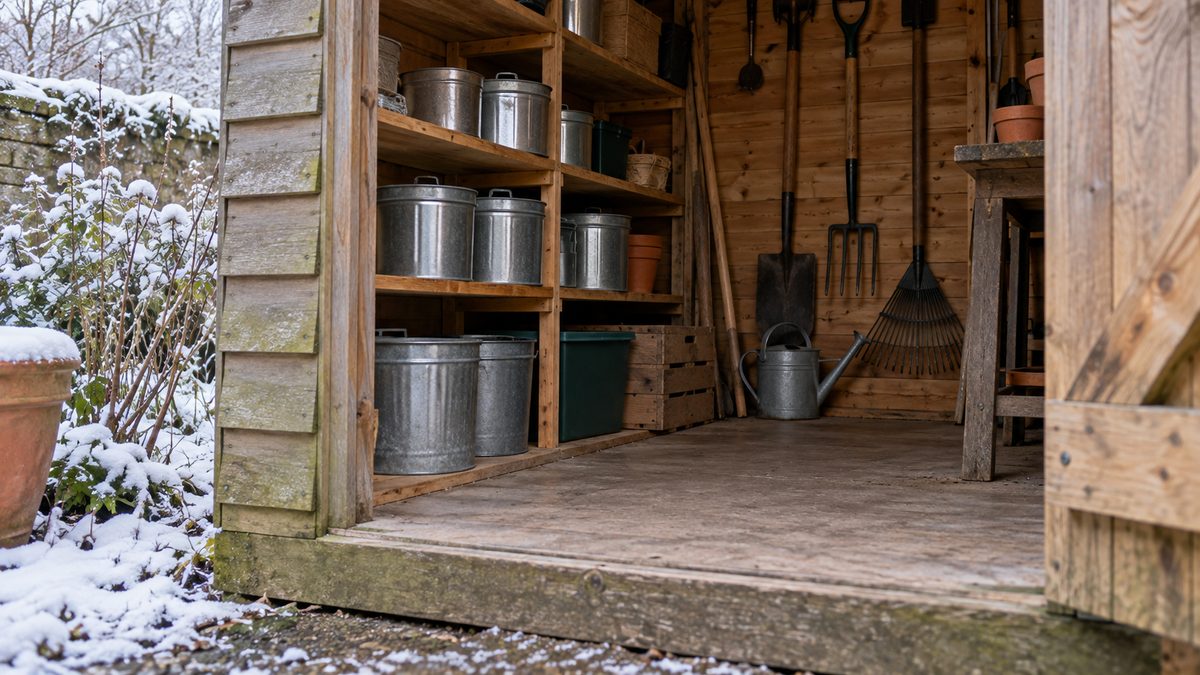
Rats can use a garden shed as winter shelter, particularly when it offers food and undisturbed storage. Check for new droppings, damaged packets and nesting material, then remove food sources and organise repairs around confirmed entry routes. A closed door alone does not make a shed secure.
Cold weather changes how you use the garden, too. A shed opened daily in summer may stay shut for long stretches in winter, giving small changes time to go unnoticed. Start with a careful inspection rather than emptying every shelf into the garden.
Read the shed before moving the boxes
Open the door and allow the space to air before going inside. Keep children and pets away. From the doorway, look along wall edges, beneath shelving and around sacks of seed. A torch helps reveal gnawed corners and gaps hidden behind tools.
Droppings show that rodents have visited, but their appearance alone cannot reliably date the visit or identify the species. Photograph what you find before cleaning. Fresh damage after an area has been cleaned provides stronger evidence of continuing activity than an old stain.
- Look for torn sacks, scattered seed and food carried behind stored objects.
- Check folded fabric, cardboard and insulation for shredded nesting material.
- Inspect the floor edge for gnawing, and the ground outside for burrows.
- Note where damage clusters; this helps narrow down the route into storage.
Do not reach into a nest or lift a heavy stack to chase an animal. For droppings or widespread contamination, follow the precautions in cleaning a shed after mice and seek professional help if you cannot clean safely.
Separate food storage from garden equipment
Bird seed, pet food and grass seed are easy to overlook because they belong outside the kitchen. Move them into sound containers with closely fitting lids, preferably metal where chewing is a concern. Check the container base as well as its lid. A strong lid cannot compensate for an already damaged tub.
Discard food or feed contaminated by rodents rather than tipping it into another container. Do not feed it to animals. Keep clean stock away from affected packaging while you sort the shed, and avoid carrying dirty sacks through the house.
| Stored item | Winter adjustment | Reason |
|---|---|---|
| Seed and animal feed | Use secure, chew-resistant containers | Removes an accessible food supply |
| Cushions and garden textiles | Inspect, clean appropriately and store dry in lidded boxes | Limits access to nesting material |
| Cardboard packaging | Remove surplus boxes | Reduces concealed cavities and shreddable material |
| Tools and cables | Hang or shelve them where damage is visible | Makes checks easier before use |
| Logs | Keep an orderly, inspectable stack | Avoids a hidden shelter behind loose timber |
Inspect doors, cladding and the floor perimeter
Work around the outside in daylight. Look at the threshold, bottom corners of the door, damaged boards and the joins between the shed wall and base. Check around incoming cables without touching exposed electrical parts. Rotting timber needs a sound repair, not another layer of filler over a weak edge.
Choose repairs suitable for the shed construction. Secure metal mesh can protect an opening, but it must not obstruct required airflow. Foam or loose packing alone is vulnerable to chewing. Keep drainage paths open and avoid attaching material where it will collect water against timber.
If animals are still entering, ask a pest professional to plan exclusion and removal together. Sealing a used opening without checking the occupied space can leave animals trapped inside or push them towards another route. Burrows under the base deserve a separate assessment; rats under a shed or decking covers that situation.
Make the outside approach less sheltered
Clear loose rubbish, fallen fruit and spilled feed around the shed. Cut back vegetation enough to see the base and keep a route for inspection. Move loose boards away from the wall instead of leaning them over a suspected opening. Look beyond your own stored items if shared bins or neighbouring storage are close.
A log store beside the shed can conceal movement along the wall. The advice on rats in firewood piles explains storage changes that keep those edges easier to inspect. Clearing cover supports the repairs, but does not establish that every animal has left.
Use each winter visit as a progress check
After safe cleaning, record the places you inspected and the repairs completed. Revisit those same points whenever you collect tools or feed. Look for newly scattered contents, disturbed storage and fresh droppings on previously clean surfaces. If activity continues, inspect the whole building again rather than repeatedly patching the most obvious hole.
Check electrical tools before plugging them in. Damaged insulation, chewed leads or exposed wires need assessment by a qualified repairer. For extensive nesting, repeated activity or a shed you cannot enter safely, arrange pest control assistance.
EchoRepel uses ultrasonic sound that rats and mice want to avoid and is poison-free. It does not replace cleaning, checking stored food or repairing the shed, and it should not be treated as evidence that an occupied space is clear.