Sound repellers are not a dependable way to remove a mouse infestation on their own. An ultrasonic device uses sound that rats and mice want to avoid, but walls and furniture limit where that sound reaches. Proofing, food control and evidence-based follow-up still need to come first.
The useful question is not simply whether a unit makes sound. It is whether the whole control plan stops fresh activity in your home. A light on the device cannot tell you what is happening behind a kitchen unit or inside the wall.
Separate the sound from the outcome you need
Ultrasound means sound above the range people normally hear. Being inaudible to you does not establish that a unit has failed, and hearing a tone does not establish that it controls mice. Sound output, an animal responding briefly and an infestation ending are different observations.
Evidence about rodents getting used to ultrasound is mixed. Avoid promises that a particular setting prevents this or that mice will leave within a fixed time. Mice may continue to use sheltered routes where food and nesting opportunities remain available.
For the wider comparison, see mouse repellent types compared. Choose measures for the problem they address: exclusion repairs entry routes, food storage removes feeding opportunities, and suitable trapping can help deal with animals already inside.
A socket in the hall cannot cover the whole house
Ultrasound does not pass through walls. A unit in one room cannot be assumed to affect mice in an adjoining room, loft or wall cavity. A large open floor area is also different from a kitchen divided by cabinets, appliances and stored boxes.
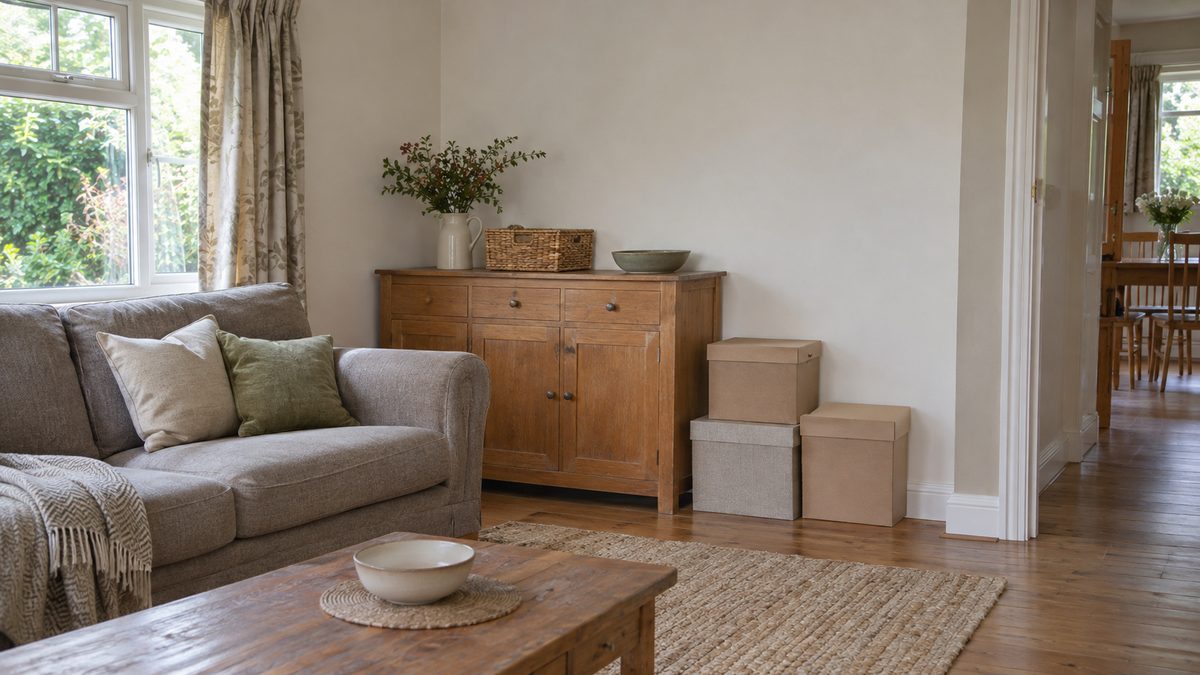
Furniture blocks sound and creates sheltered areas. A sofa, closed cupboard or stack of cartons can separate the unit from the route mice use. Do not infer coverage from the floor area alone, and do not count sound through an open doorway as dependable coverage of another room.
| Location | Coverage problem | Task that still matters |
|---|---|---|
| Behind kitchen cabinets | Panels and appliances obstruct sound | Find pipe gaps and food access |
| Inside a wall | The wall prevents direct coverage | Trace the cavity route and arrange inspection |
| A cluttered garage | Stored items create blocked areas | Reduce clutter and repair door gaps |
| An adjoining loft | The ceiling separates it from the room | Assess loft signs and roof entry points |
Put entry repairs and food storage ahead of placement
Inspect under the sink, beside service pipes and around doors. Look for gnawing and droppings near food rather than moving a unit repeatedly in response to every noise. Keep food and animal feed in sound closed containers and remove spills from beneath accessible appliances.
Repair gaps with materials suited to the surface and preserve ventilation. Coordinate closure of active routes with control so that animals are not confined in inaccessible spaces. The steps in keeping mice out of your house provide a practical order for that work.
Where traps are appropriate, follow their instructions and protect children, pets and non-target animals. Inspect them regularly. A repeated catch or fresh contamination in several rooms is a reason to seek a professional assessment rather than increase the volume of a sound source.
Assess fresh activity without guessing a success date
Before changing anything, note where you found signs and photograph accessible damage. Clean small amounts of contamination using suitable wet disinfection guidance, never dry sweeping or vacuuming. Afterwards, check the same accessible places for new droppings, damage or food disturbance.
Keep a simple record of repairs, cleaning and sightings. If you seal a pipe gap and improve food storage at the same time as installing a unit, any improvement cannot automatically be credited to the sound. A quiet evening is also weak evidence because mice can move without being heard.
A useful record includes the room, date, new sign and action taken. It should help you decide what still needs attention. Read mouse activity signs so your checks include more than squeaking or sightings.
Use an optional deterrent with realistic boundaries
The EchoRepel Ultrasonic Rat Repellent is poison-free and uses ultrasonic sound that rats and mice want to avoid. Treat it as an optional addition to a wider plan. It does not seal a gap, remove contamination or confirm that an enclosed nest is empty.
Follow placement and electrical instructions, keep the device clear of obstructions where directed, and check suitability around household animals before use. Do not assume claims about rats and mice extend to other pests. Avoid treating any repellent as protection against rodent-linked illness.
If fresh signs persist, revisit the route map and the control method. A professional can investigate inaccessible voids and shared building routes. The decision to escalate should follow continuing evidence, not the amount of time a unit has been plugged in.
Keep receipts and the supplied instructions so you can check what the manufacturer specifies. Judge your household plan by fresh activity, rather than treating a coverage claim as a guarantee for your particular room.