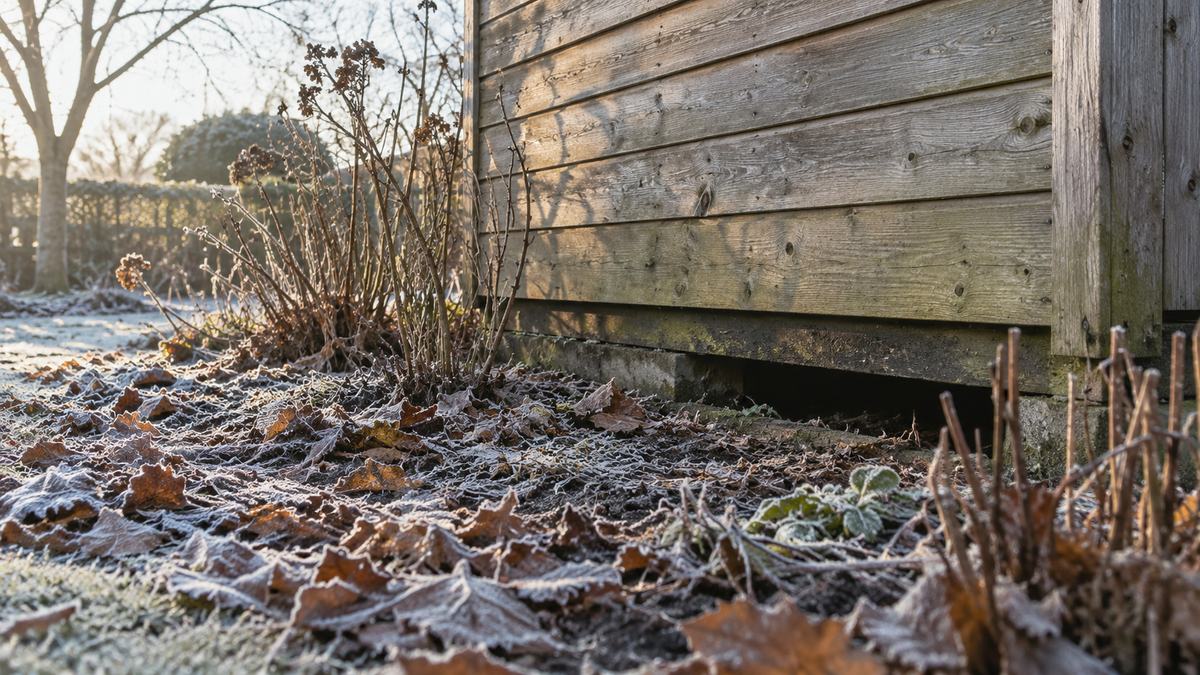
Rats do not hibernate. Neither a frozen lawn nor several days without a sighting means the problem has ended. Rats and mice keep looking for food and shelter throughout winter. Sometimes the main change is where you notice them: fewer movements across an open garden and more scratching behind a wall or above a ceiling.
Fall (autumn) is a useful time to inspect a home, but repairs still matter after the first frost. A secure food container, a sound door seal and a repaired pipe opening keep helping through the season. Waiting for warmer weather gives an existing indoor problem time to continue.
Where rats shelter when it gets cold
Outdoor rats can use burrows, protected ground beneath structures and sheltered routes beside fences or drains. A shed base or decking void reduces exposure to weather. Nearby food, including spilled seed or accessible waste, can make that shelter useful even when the garden looks quiet.
Buildings provide more options when entry is available. Garages, basements, wall voids and lofts contain undisturbed spaces. Food does not have to be in the nest itself. A sheltered route between a hiding place and a kitchen, feed store or garbage area can be enough to keep activity going.
Not every rat comes inside, and winter does not create rodents from nowhere. The important question for a household is whether the property supplies shelter and meals. Our guide to why rats move indoors in winter explains that seasonal pull in more detail.
Why winter sightings can be misleading
You may spend less time in the garden during short, cold days. Rats may also use covered routes that are difficult to observe. Taken together, these changes make sightings a weak measure of whether the site is clear. An empty patio at lunchtime tells you little about a shed edge after dark.
| Winter observation | Possible explanation | Useful response |
|---|---|---|
| No rats visible outside | Movement is hidden or happens when nobody is watching | Inspect accessible routes and food storage |
| Scratching above a bedroom | An animal is moving in a ceiling or loft | Arrange identification and inspection |
| New holes in a seed bag | Stored food is accessible to a chewing animal | Use a hard, tightly closed container |
| Fresh damage around a pipe | A route may be opening into the building | Plan a suitable durable repair |
Look for signs inside the house
Check under the sink, beside stored food and along accessible garage walls. Droppings, gnawed packaging, shredded nesting material and repeated noises all warrant attention. Note where signs appear rather than moving everything at once. A dated photograph can help a professional compare activity between visits.
Rats and mice often move at night, but timing alone cannot identify the animal. A daytime sound could come from a different visitor. Avoid assuming that the largest noise means the largest rodent. Sound travels through ceilings, and a small animal can be surprisingly noticeable in a quiet room.
Use the rats in the loft guide for roof-level checks and questions to ask a pest controller. Observe rooflines from the ground. Do not climb onto an icy roof or walk across unsupported attic surfaces to find an entry point.
Make the food supply harder to reach
Put pantry foods, pet food and birdseed in hard containers with secure lids. Clear crumbs from beneath small appliances and remove food waste regularly. Look beyond the kitchen: a split sack of seed in the garage or scraps beside an outdoor bin can sustain a route back towards the house.
Feed pets at normal meal times and put leftover food away afterwards. Keep drinking water available as your pet needs it, and address leaking pipes or persistent puddles nearby. Check recycling for food residue. A clean counter helps, but the less visible spills behind shelving deserve attention too.
Repair access without closing animals inside
Inspect door bottoms, utility penetrations, vents and damaged exterior panels. Mice can use openings about 1/4 inch (6 mm) wide, so a quick glance at the largest holes is not enough. Match the repair to the opening, using durable metal barriers and suitable sealant while preserving ventilation and drainage.
Where animals are already in an enclosed void, coordinate removal and sealing with a professional. Stuffing the obvious entrance shut before checking occupancy can leave animals inside. Temporary foam alone is a poor substitute for a durable repair. Inspect the full boundary rather than fixing only the opening nearest the latest droppings.
Deal with existing activity and cleanup
Use suitable traps according to their instructions, positioned away from children and pets, and check them daily. Seek professional help for activity in several rooms, inaccessible nests or chewed wiring. Food control and repairs are still needed after trapping; otherwise another rodent can use the same resources.
For droppings, follow the CDC cleanup guidance: ventilate closed spaces for 30 minutes and leave meanwhile, wear rubber or plastic gloves, and wet with disinfectant before wiping. Do not sweep or vacuum dry material. Heavy infestations need professional cleanup. If you feel unwell after rodent exposure, contact a doctor promptly and explain the exposure.
Ultrasonic repellents are supporting measures with variable results. Their sound does not pass through walls, closed doors or furniture, so a hallway device cannot reach every hidden space. Keep attention on food, removal and repairs, and use the autumn mouse guide to review what first drew activity towards the house.