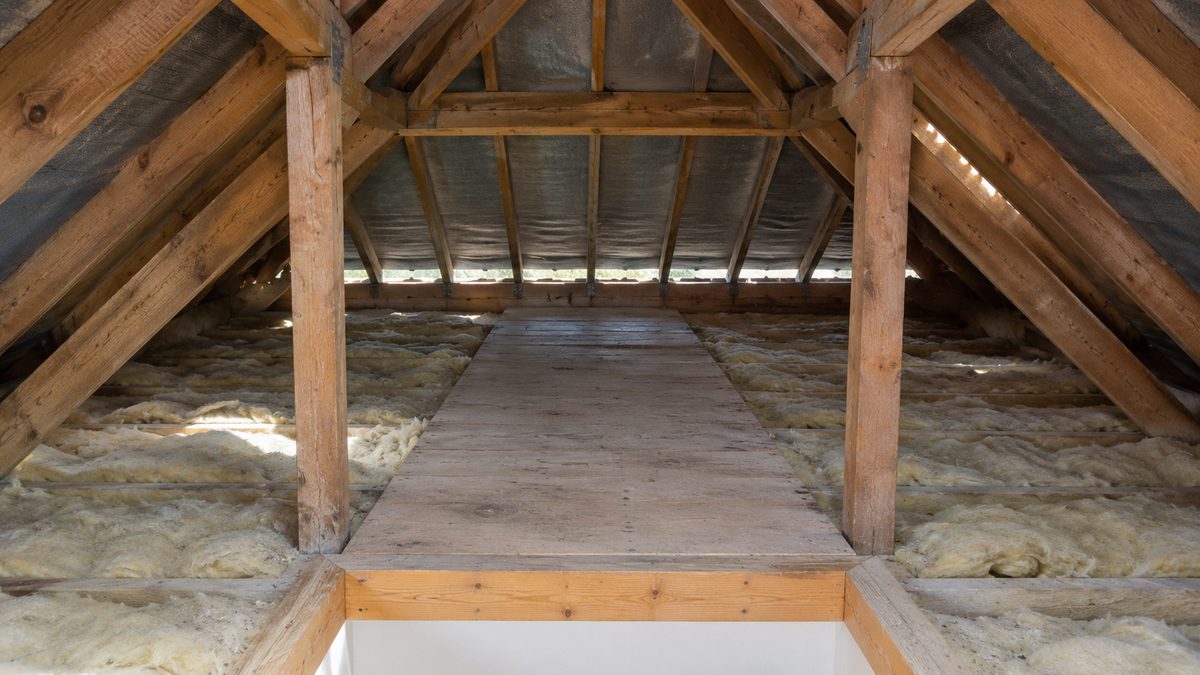
Rats get into lofts through roof gaps, eaves and openings connected to walls or service voids. They may climb rough brickwork, pipes or vegetation, or enter lower down and travel inside the building. Finding the route matters before you seal anything, because closing the wrong opening can leave the animals inside.
The noise may be overhead while the entrance is beside a drain or utility pipe at ground level. Treat the loft as the end of a route and work backwards to the outside.
Follow the climb from ground level to the roof
Rats can climb surfaces that provide grip. Rough masonry, pipe brackets and adjoining structures may offer a route upwards; smooth vertical surfaces are more difficult. Species and the building's condition affect the route, so a high roof is not proof that entry began there.
From the ground, look for branches touching the roof, stored items beside an extension and gaps behind rainwater pipes. Do not climb a ladder to follow a suspected run. Our explanation of how rats climb walls helps you assess the surfaces without assuming every wall is equally accessible.
Check the junction where a lower roof meets the main house. Damaged flashing, displaced roofing and missing trim can conceal openings. A roofer can inspect these safely and distinguish intended roof ventilation from defects needing repair.
A cavity wall can hide the middle of the journey
An opening around a pipe or damaged masonry can admit rodents to a building void. Where that void connects upwards, it may lead towards the roof space. Cavity walls do not all have the same construction, and not every cavity provides an uninterrupted passage.
Boxed pipes, service risers and gaps around later alterations deserve attention too. A kitchen extension or bathroom renovation can leave a concealed connection between spaces. If activity persists without an obvious roof defect, ask the inspector to trace services and lower entrances.
Drain defects are another possible route into a building, but roof noises alone do not prove a drain problem. Persistent activity near drainage may justify a specialist survey. Rats and drain routes explains the distinction.
Record these loft clues before disturbing anything
| Clue | What it may indicate | Next check |
|---|---|---|
| Droppings beside a beam or hatch | A travelled area, not necessarily a nest | Photograph location and arrange identification |
| Shredded insulation or paper | Possible nesting or movement | Look from the hatch without pulling it apart |
| Gnawed cable covering | Electrical damage needing assessment | Keep clear and contact an electrician |
| Dark smears beside a gap | Possible repeated contact along a route | Inspect the connected exterior area |
| Scratching at night | Animal activity, with species still uncertain | Record timing and position for the inspector |
Old droppings can remain long after animals leave. Colour and apparent dryness do not reliably date them. Use several clues together, and compare photographs or professional monitoring rather than declaring an infestation from one mark.
For more on sound locations, see rats in walls or ceilings. Noise can travel along building materials and appear to come from somewhere other than the animal's position.
Start at the hatch, not across the insulation
Use a stable access arrangement and a torch. Do not step onto insulation or the ceiling below it; neither is a safe walking surface. If there is no proper walkway, restrict your view to the hatch and arrange a professional inspection.
Do not sweep, vacuum or shake contaminated insulation. Avoid contact with droppings and follow official public health cleaning advice. Extensive contamination, awkward access or suspected nesting inside insulation calls for specialist help. This is general information; contact a doctor if you become unwell after exposure and describe what happened.
Leave chewed cables alone. An electrician should assess them, and any burning smell or smoke needs an urgent response through the appropriate local emergency service. Pest removal does not establish that damaged wiring is safe.
Which gaps should be sealed first?
- Map suspected entrances outside, including low service holes and roof defects visible from the ground.
- Have the animal identified and agree a control and exclusion sequence with a pest professional.
- Arrange repair of confirmed entry defects, coordinating roof, plumbing and electrical work where necessary.
- Use durable materials and secure edges while preserving ventilation, drainage and fire protection.
- Monitor the loft and adjoining rooms for renewed evidence after the work.
The first sealing job should be a confirmed access defect within that agreed sequence, rather than the most visible hole indoors. Do not fill an active roof opening while animals or dependent young could remain inside. A professional can plan removal and closure around the building's actual layout.
Never cover every air brick or eaves vent to make the building look closed. Roof ventilation manages moisture, and some openings serve essential equipment. Ask the roofer for a suitable rodent-resistant detail instead.
Make the repaired roof space easier to check
Once cleaning and repairs are complete, store belongings in sound lidded containers and keep access routes visible. Reduce outdoor food around bins, bird feeding areas and pet bowls. These changes reduce nearby resources but do not replace closing the entrance.
If signs return, revisit shared voids and concealed routes before repeating the same patch. The EchoRepel Ultrasonic Rat Repellent is poison-free and uses ultrasonic sound that rats and mice want to avoid. Continue structural checks regardless of any deterrent used.