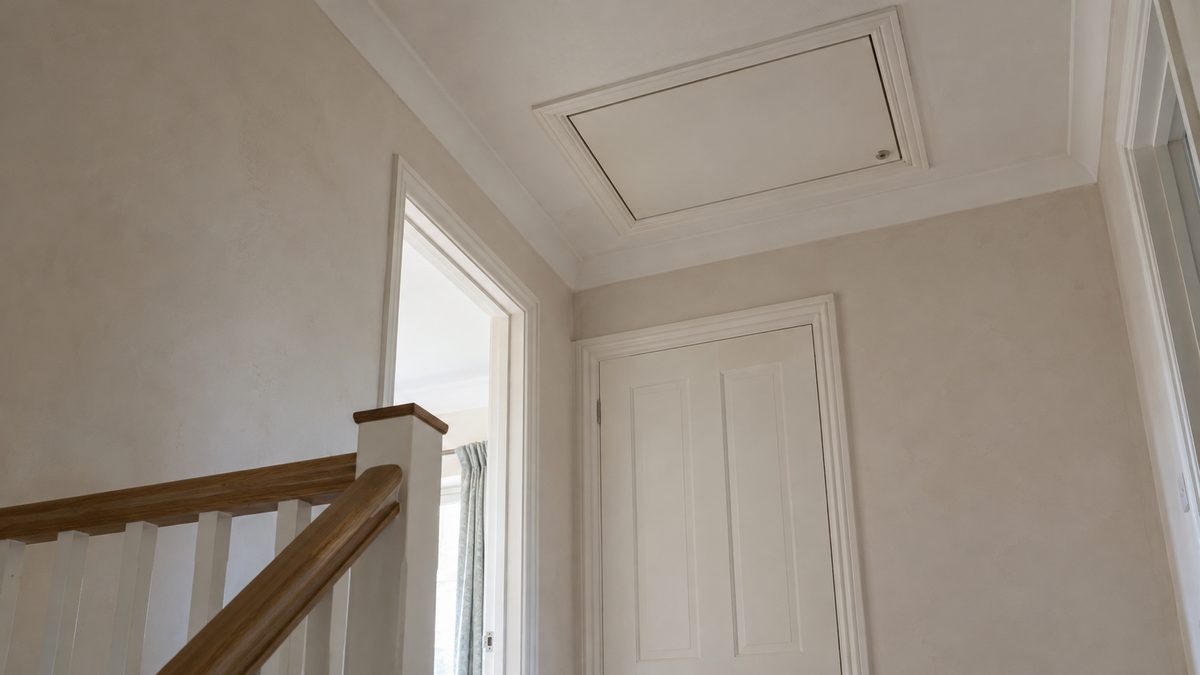
You cannot reliably tell that a rat is in a wall or ceiling from sound alone. Map where the noise is heard, compare it from adjacent rooms and look for accessible physical signs before deciding what to do. Sound travels through building cavities, so the loudest spot may not be the animal's location or even a rodent.
Make a room map before opening anything
Note the room, time, type of sound and whether plumbing, heating or ventilation was running. A brief phone recording can help show a professional what you heard, although it cannot identify the species with certainty.
Mark where you first heard the noise and where it seems to move. Listen from the next room and, if possible, the room above or below. Avoid repeatedly banging the surface, which changes the activity and can frighten animals into another space.
Compare observations over separate occasions. Repeated scraping along one line is a useful clue, but one thump above a light fitting is not a reason to cut open the ceiling there.
Compare the three places where sound seems strongest
| Apparent location | Accessible places to inspect | Reason for caution |
|---|---|---|
| Inside a wall | Skirting edges, service entries and nearby cupboards | A vertical cavity can carry sound between floors |
| Above a ceiling | Safe loft access, roof edges viewed from ground level | Roof movement and other wildlife can sound similar |
| Beneath a floor | Accessible floor edges, cellar or crawl-space entrance | Pipes and joists transmit noise away from its source |
Inspect only where access is safe. Do not enter a confined crawl space or step onto unsupported loft surfaces. Use a torch from an access point rather than reaching blindly behind insulation or pipes.
In a flat or terraced property, the route may involve a shared void. Tell the managing agent or landlord where the sound is heard, including the room above or beside it if known.
Look for signs that strengthen the rodent explanation
Droppings, fresh gnawing, shredded material and repeated sightings carry more weight than sound by itself. Photograph accessible signs without handling them. Size and shape can help an experienced inspector, but damaged or old droppings are easy to misread.
Check nearby food cupboards and accessible service entries for damage. Do not pull fitted units away from live services or remove socket covers to follow a noise. Our comparison of rat and mouse droppings gives context without making noise a diagnosis.
If the signs are overhead, see rats in the loft. For activity around the lower floor, rats under floorboards covers the access questions that differ from a roof space.
Keep building noises and other animals in the picture
Pipes can knock or tick around water use and temperature changes. Roof components and loose materials may move in wind. Birds and other animals can also enter roof spaces. None of these possibilities can be excluded simply because the sound occurs at night.
Compare the noise with ordinary household activity without dismantling anything. Does it start when a tap closes, when heating starts or only during windy weather? These patterns are useful evidence for a plumber or building contractor as well as a pest professional.
If wildlife is suspected, seek appropriate local advice before disturbing or sealing its shelter. Species protection and handling requirements vary, so do not assume a treatment intended for rats is suitable for every animal above a ceiling.
Know when to stop the investigation
A burning smell, smoke, sparking or a damaged electrical fitting takes priority over locating an animal. Move away, avoid touching the affected area and seek the appropriate emergency or electrical help. Do not keep operating a suspect circuit to reproduce the sound.
A wet or sagging ceiling needs building assessment. Do not stand beneath it or push a tool through it to look for a nest. Likewise, drilling a listening hole risks hitting concealed wiring or pipes.
For repeated unexplained scratching with physical signs, arrange a pest inspection. Share your map, recordings and photographs. Ask how the suspected route will be confirmed and how any necessary access will be made safely.
Coordinate removal, cleaning and repairs
Do not close a suspected active entry just to silence the noise. Animals left inside can move into another void, and an inaccessible carcass creates a separate problem. A pest professional can plan control and the timing of proofing.
Once activity is addressed, arrange cleaning where needed and repair damaged materials. Do not vacuum suspected droppings or disturb fouled insulation yourself. Seek medical advice if illness follows exposure; these inspection steps are general information.
Keep the original notes for follow-up. A quieter night is encouraging but does not prove the route is closed. Check the repaired access points and accessible surfaces for new evidence before deciding the job is finished. Give anyone carrying out repairs the same location notes so pest work and building access are planned together.