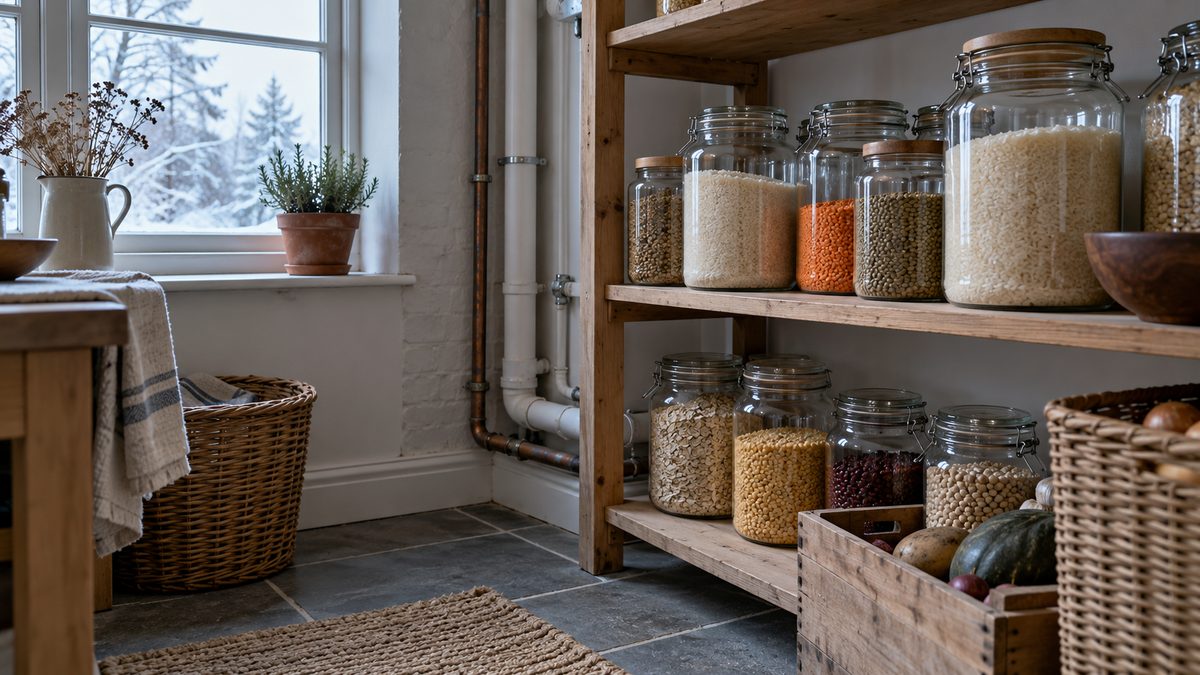
Mice may enter a pantry in winter because it offers accessible food and shelter from cold or wet weather. Protect food first, then look for the route into the room. A weekly inspection helps you notice fresh damage before an opened packet becomes a hidden feeding place.
Winter means different conditions across India, the US and the UK. A cool, damp store room can still shelter mice without freezing weather outside. Treat a seasonal increase as a reason to inspect the building, rather than proof that every scratching sound comes from a mouse.
Why the pantry becomes useful when outdoor cover changes
Harvested gardens, cleared vegetation and changing weather can alter outdoor food and shelter. Indoors, flour spilled behind a sack or cereal left in a folded packet remains available regardless of the forecast. Mice do not need the main cupboard door to be open if gaps connect the pantry to a wall void or adjoining room.
Food packaging also provides clues. Look for small gnawed openings, scattered grain and shredded paper gathered in a quiet corner. Droppings alone do not tell you when an animal arrived. For more on damaged packets, read mice in pantry food packets before deciding what to retain.
Empty the affected shelf before reorganising the whole room
If you find suspect contamination, stop using that shelf for food preparation. Keep children and pets away, photograph the location and separate affected supplies without shaking them. Do not brush dry droppings into a dustpan or vacuum them. Both actions can put contaminated particles into the air.
Wear gloves and follow current public-health guidance for wet cleaning with an appropriate disinfectant, including its contact time. Do not mix cleaning chemicals. Porous food packaging with urine, droppings or chewing should be discarded. Our mouse-dropping cleaning guide covers the process; widespread contamination calls for professional help rather than an ordinary cupboard tidy.
A weekly pantry circuit, from doorway to back shelf
- Check the threshold. Look beneath the door and around the frame for daylight, gnawing or disturbed dust. Note gaps for repair rather than pushing loose cloth into them.
- Read the packaging. Inspect the bottom and back of sacks, cereal boxes and pet-food bags. A packet facing forwards can hide damage against the wall.
- Inspect shelf edges. Use a torch along brackets, corners and the space behind freestanding units. Avoid moving anything that could release contaminated dust.
- Count opened supplies. Transfer suitable dry foods to sound containers with close-fitting lids. Wipe spillages beneath containers before putting them back.
- Check water and waste. Look for leaking pipes, damp cardboard and a bin lid held open by an overfilled liner. Remove rubbish before it accumulates.
- Record what changed. After safe cleaning, note new gnawing or droppings and the exact shelf. Repeated signs in one place help direct an inspection.
Choose a routine linked to something you already do, such as unpacking groceries. Keep the torch and a short inspection note outside the food cupboard. The purpose is to compare the same places each week, not to empty every jar or disturb every box repeatedly.
Store winter supplies so the floor stays visible
Bulk buying creates problems when spare bags disappear behind the main stock. Keep dry goods in manageable quantities, label containers for your own rotation and use older supplies first. A closed cardboard box is a storage aid, but it is not a barrier to gnawing. Check container corners and lids for damage.
Leave enough space around shelving to see the floor and clean spills. Do not pack unused cloth bags, newspapers and empty cartons into the gap beside a warm appliance. Store animal feed separately from household food where practical, and remove leftovers from feeding areas. The advice on pet food attracting rodents also applies to supplies kept outside the kitchen.
Follow the pantry route beyond the cupboard
Look at pipe penetrations beneath the sink, the junction between floor and wall, and service openings behind appliances. Check the outside of the same wall where safely accessible. A route may begin in a utility cupboard or shared corridor, so sealing the pantry door alone may leave the main opening untouched.
Use durable repairs suitable for the building and preserve required ventilation, drainage and fire protection. Do not fill an air brick or interfere with a gas appliance opening. In a rented flat, send the owner or manager photographs and request an inspection of connected service spaces. How mice get into a house explains common routes.
When fresh signs need more than a weekly check
New contamination after cleaning, repeated food losses or signs in several rooms justify a pest professional. Ask them to identify entry routes and explain how activity will be monitored after repairs. Avoid scattering poison near food or placing unprotected traps where children and animals can reach them. Trapping and exclusion need to be planned together.
If someone becomes unwell after possible rodent exposure, speak to a doctor and describe what happened. For prevention, judge progress through clean shelves, intact packaging and the absence of new signs over repeated checks. A cupboard that looks tidy once is less informative than a record showing that the same vulnerable corners remain clear.