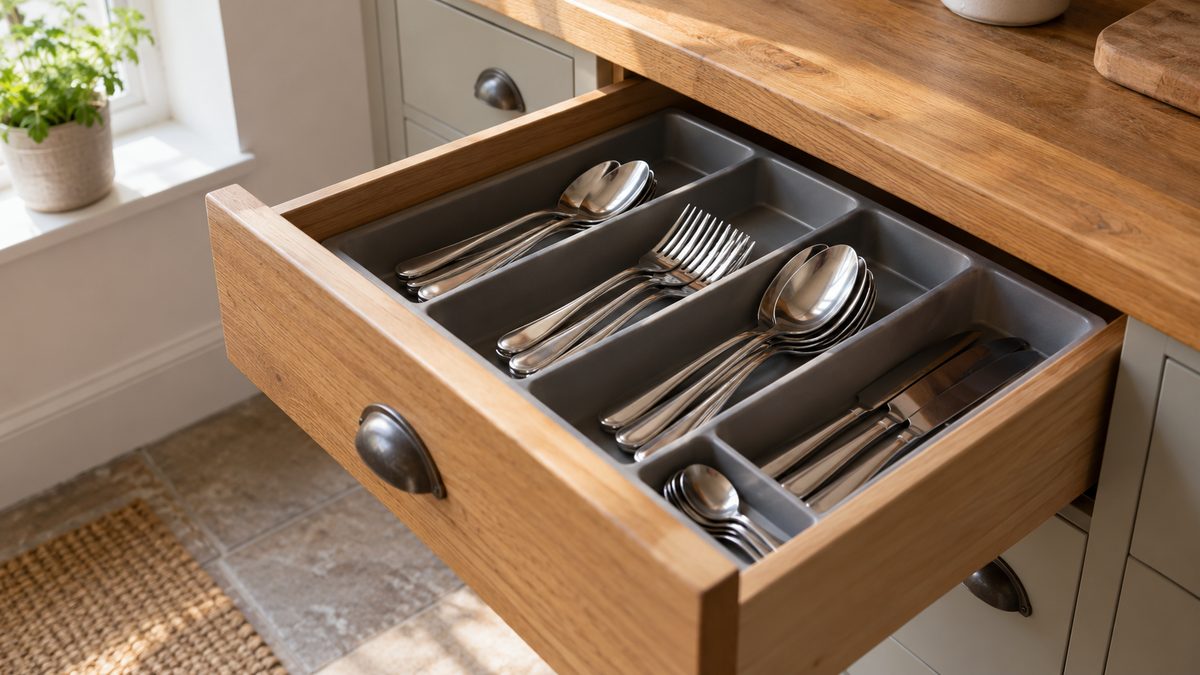
If you find mouse droppings in a kitchen drawer, stop using its contents until you have cleaned and assessed them. Wash washable cutlery and utensils after dealing with contamination safely, and discard contaminated food and items that cannot be adequately cleaned. Then inspect the cabinet voids behind the drawer, where mice may be travelling.
A drawer front can fit neatly while the back of the cabinet remains open. Cleaning the cutlery without checking that hidden space leaves the access problem unresolved.
Close the drawer and prepare a clean sorting space
Keep food preparation away from the affected cabinet. Keep children and pets out of the work area, ventilate the room and gather gloves, disposable towels and an appropriate disinfectant. Read its label for compatible surfaces, contact time and any rinsing requirements. Never mix cleaning chemicals.
Do not shake a tray over the bin or sweep dry droppings out of the drawer. Avoid vacuuming them, because disturbing dry material can put contaminated dust into the air. Follow local public health cleaning guidance; cleaning mouse droppings explains the basic approach.
If contamination is extensive, extends into insulation or cannot be reached without dismantling the kitchen, bring in a pest professional. A small visible patch does not show how far contamination goes behind a fitted unit.
Sort contents by material and exposure
| Drawer contents | Practical decision |
|---|---|
| Stainless steel cutlery and sound washable utensils | Remove contamination safely, then wash thoroughly using a method suitable for the item |
| Contaminated food or damaged food packets | Discard rather than trimming or transferring the contents |
| Paper liners, napkins and disposable wooden items | Discard when contaminated |
| Cracked utensils and damaged porous organisers | Replace if their surfaces cannot be cleaned adequately |
| Sound, non-porous drawer trays | Clean and disinfect as the material allows, then rinse if required |
Place clean items on a separate clean surface, not on the counter beside the dirty tray. Do not assume every wooden utensil must be thrown away merely because it was nearby. Consider direct contamination, cracks and the maker's care instructions. If you cannot confidently clean a food-contact item, replace it.
A dishwasher can be useful for items intended for it, but it is not a substitute for safe handling of droppings. Do not put loose contaminated liners, nesting material or a tray containing droppings straight into the machine.
Clean the empty drawer without spreading residue
Wet contaminated material with a suitable disinfectant and allow the label's contact time before wiping it up. Bag the waste according to local guidance. Clean the drawer, runners and organiser with products suitable for their finishes. Avoid soaking exposed chipboard or directing liquid into electrical fittings.
Pay attention to corners beneath removable tray inserts. Let the drawer dry before refitting a clean liner, if you use one. Remove gloves safely and wash your hands after handling waste and before touching clean utensils. Any disinfectant used on a food-contact surface must be suitable for that use, with rinsing completed when its instructions require it.
This is general hygiene information. If someone develops illness after possible rodent exposure, contact a doctor and explain the exposure. Symptoms alone cannot establish their cause; avoid diagnosing an infection from a drawer discovery.
Trace the route from the plinth to the drawer back
Once the surface contamination is managed, inspect only parts of the kitchen you can safely access. Many drawer units have gaps behind or beneath them. Mice can move through service voids, climb within cabinets and enter from the rear rather than pushing through the drawer front.
- Use a torch to inspect behind the emptied drawer, following its removal instructions if available.
- Look for gaps around water pipes, waste pipes and cable entries.
- Check accessible plinth edges and cabinet backs for damage or missing panels.
- Inspect neighbouring cupboards for crumbs, food packets and additional droppings.
- Record openings before planning repairs, particularly where services pass through walls.
Do not move a cooker or disconnect gas, water or electricity to follow a trail. Ask the appropriate qualified tradesperson to handle restricted access. How mice enter a house helps distinguish a route within the kitchen from an opening through the building itself.
Return cutlery only when the storage is ready
Keep clean utensils in a secure, clean container while access repairs and rodent control are arranged. Leaving the drawer empty temporarily makes new contamination easier to see. Photograph and date any fresh signs rather than relying on memory.
Move nearby food into suitable lidded containers, clean crumbs from cupboard corners and check pet feeding areas. See mice in pantry food packets for decisions about affected stored food. Avoid leaving an open waste bag in the kitchen overnight.
Repeated droppings after cleaning call for a wider inspection, including neighbouring units and shared service routes in flats. Seal identified entry points with durable, suitable materials as part of a removal plan. Do not obstruct ventilation or pack material around services without checking what is safe.
The EchoRepel home device is poison-free and uses ultrasonic sound that rats and mice want to avoid. Its presence does not make contaminated utensils ready for use or confirm that mice have stopped entering the cabinets.