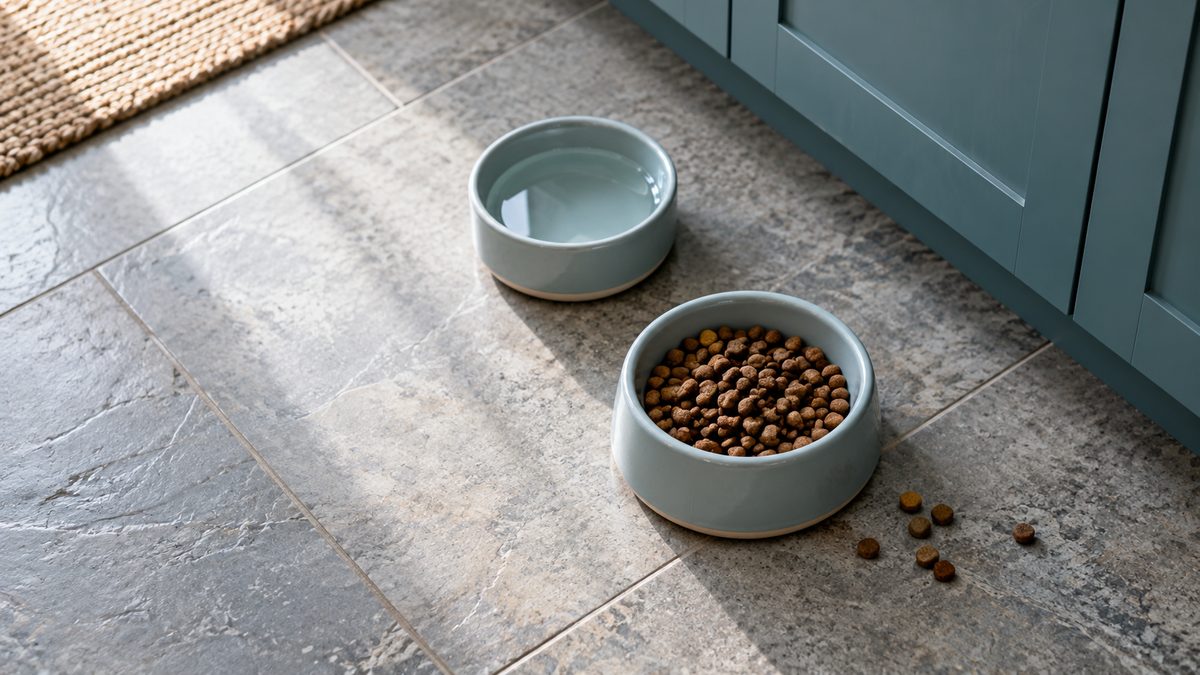
Dry pet food is small, high in energy and easy to carry, which makes it one of the easiest meals a rat or mouse can find. A bowl left on the kitchen floor overnight, a sack open in the garage, or kibble scattered on a patio can all keep rodents coming back. The answer is not to change what your pet eats but how you store and serve it.
How pet food draws rodents in
- Bowls left out overnight, when rodents are most active and pets are asleep.
- Open bags and sacks in garages, utility rooms and cupboards.
- Spilled kibble under feeders and in corners.
- Outdoor feeding on patios, balconies or for community animals.
- Bird seed and small-pet food stored with pet food.
Eight habits that stop it
- Store food in a hard, airtight container with a tight lid. Rodents chew through bags.
- Keep the container off the floor on a shelf or worktop.
- Feed at set times and lift the bowl after meals, especially at night.
- Clean up spills right away, including under the bowl mat.
- Feed indoors rather than on patios or balconies where possible.
- Wash bowls daily so leftover food and smells do not linger.
- Buy smaller bags if a large sack sits open for weeks.
- Store bird seed and hay the same way, in sealed containers.
Storage options compared
| Storage | Rodent resistance | Notes |
|---|---|---|
| Original paper or plastic sack | Low | Easily chewed; clips do not stop gnawing |
| Thin plastic tub | Medium | Better than a bag; can be chewed at the corners over time |
| Hard plastic container with sealed lid | Good | Keep it off the floor and check for gnaw marks |
| Metal bin with tight lid | Very good | Good choice for garages and sheds |
Signs rodents have found the pet food
- Droppings near the bowl, the bag or the cupboard where food is kept.
- Holes chewed in bags or the corners of containers.
- Food disappearing overnight faster than your pet eats.
- Kibble found in odd places, such as behind appliances or in shoes, where rodents stash it.
- Your pet staring at, or scratching at, a cupboard or wall.
If you find droppings, throw away any food that may have been touched, wash the bowls and container, and clean up safely. Our guide to cleaning mouse droppings explains how, and whether droppings can make you sick covers the health side.
What about the pet itself?
Many people assume a cat or dog will keep rats away. Some pets do chase rodents, but rodents quickly learn the household routine and visit when pets are asleep or shut in. Our article on whether cats keep rats away looks at this. Never use rodent poison where pets can reach it, and if you think your pet has eaten poison or a poisoned rodent, contact a vet straight away. Read why poison is a poor choice.
Look beyond the bowl
If rodents have been feeding on pet food, they are getting in somewhere. Check for gaps around pipes, under doors and around vents near where the food is kept. Our guide to rat-proofing your house goes room by room.
Feeding community animals and birds
Many people feed street dogs, cats or birds near their homes. That kindness does not have to attract rats if the food is managed well. Put out only what the animals will finish in one sitting, at a set time each day, and collect the bowls and leftovers afterwards rather than leaving food out overnight. Feed on a hard surface you can sweep or wash, away from building walls, drains and parking areas.
For birds, use a feeder with a tray that catches spilled seed, and clear the ground beneath it regularly. Our guide to rat-proof bird feeders explains which designs help. If you notice rats at a feeding spot, pause feeding for a couple of weeks and clean the area thoroughly before starting again with smaller amounts.
In short
Store pet food in a hard, sealed container off the floor, feed at set times, lift bowls overnight and clean up spills. Check for droppings near feeding areas and seal the gaps rodents are using.
For kitchens, utility rooms and garages, the EchoRepel Ultrasonic Rat Repellent adds a poison-free layer, using ultrasonic sound that rats and mice want to avoid.