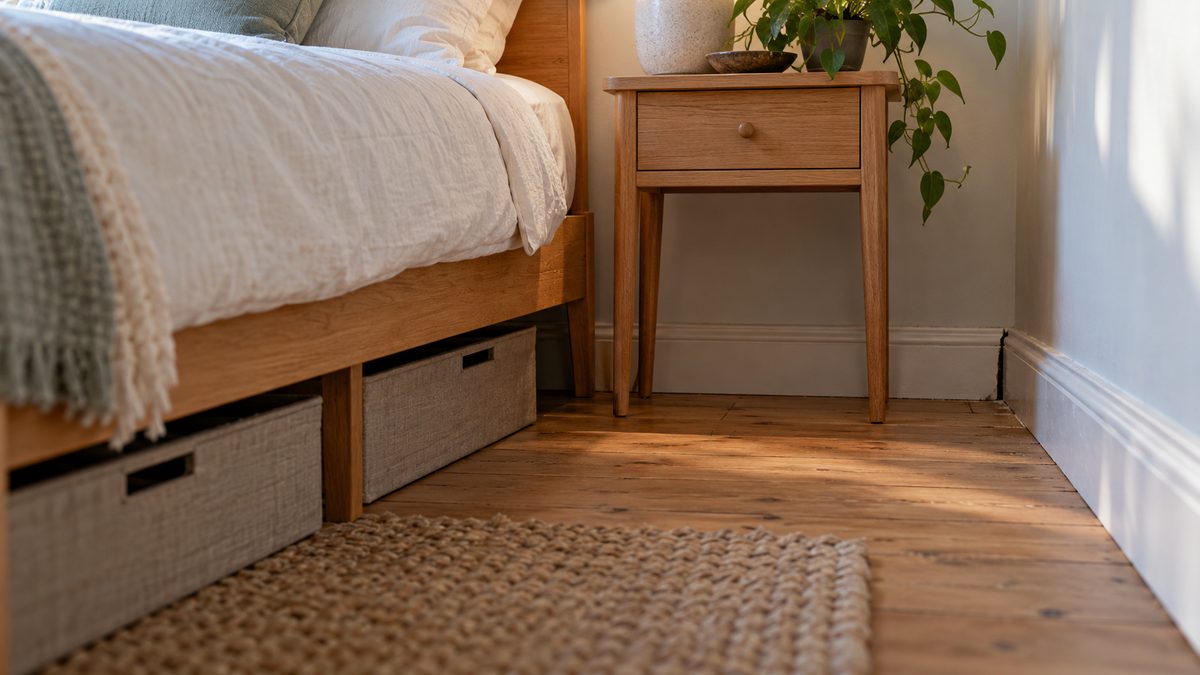
Mice enter bedrooms for shelter, quiet hiding places and access to nesting material, particularly as nights become colder. Remove accessible food, check the bed and surrounding furniture for contamination, then trace gaps around pipes, skirting and doors. If bedding has droppings or urine on it, handle it carefully and clean it before use.
A sighting can make a room feel difficult to use, but you do not need to empty every drawer immediately. Start with the sleeping area and work outwards. That order limits the handling of contaminated items and gives you a clearer picture of where the mouse has been.
Why a quiet sleeping room becomes shelter
A rarely moved bed, fabric storage boxes and the space behind a wardrobe provide cover. Mice can use paper, fabric and other soft material for nests. Snacks, crumbs and pet food add a reason to stay, but a bedroom without food can still sit on a route between a hiding place and the kitchen.
Cold weather can encourage movement indoors, though homes in warmer regions can have activity throughout the year. An open route into the building matters more than the calendar. The explanation of why mice move inside as temperatures fall gives context for seasonal sightings.
Do not assume a clean bedroom rules mice out. A pipe opening behind furniture or a gap beneath an adjoining door can be enough to bring activity into a room that has no obvious clutter. Checking those routes is more useful than repeatedly adding scent to the room.
Inspect the bed before moving storage
Keep children and pets out while you inspect in good light. Look at the top of the bedding first, then the bed frame, accessible floor edges and nearby drawers. Use a torch rather than putting your hand behind furniture. Avoid moving the bed across droppings or dragging dusty storage bags through the room.
- Look for droppings along the skirting and beneath the bedside unit.
- Check for gnawed snack packets, tissues or shredded fabric.
- Examine visible mattress seams and the underside of the frame without tearing coverings open.
- Inspect stored blankets and shoes before handling their contents.
- Note pipe entries, damaged skirting and gaps at fitted furniture.
- Leave suspect electrical leads alone and arrange an electrical check if they are chewed.
Photograph signs in place if you can do so safely. Droppings help direct the search, but their appearance alone is not a reliable way to date activity. For a likely nest hidden in furniture or a wall, use the advice on finding a rodent nest at home before disturbing it.
Handle sheets, pillows and mattresses differently
Do not shake sheets over the floor or use a vacuum to pick droppings off a duvet. Dry disturbance can put contaminated dust into the air. Ventilate the room before cleaning, keep other people away from the work area and wear gloves. Follow local public-health clean-up guidance, including CDC guidance in the US, for handling visible contamination before laundering.
Lift affected washable items carefully without pressing them against your clothes. If they must travel through the home, contain them in a bag or washable container and take them directly to the washing area. Avoid leaving them in a shared laundry basket with clean clothing.
Wash washable bedding with detergent using a hot programme suitable for the fabric, then dry it thoroughly according to its care label. Check whether pillows, duvets and mattress covers can be machine washed; their labels may differ from those on sheets. Do not spray bedding with an unsuitable surface disinfectant or mix cleaning chemicals.
A mattress is a different decision. If rodents have nested inside it, gnawed into the filling or heavily soiled it, surface wiping cannot reach the affected material. Seek professional cleaning advice or arrange disposal as appropriate. Do not donate affected bedding or furniture. For small signs on a removable cover, assess the cover and the mattress separately before deciding what can be kept.
Clean suitable hard surfaces using a labelled disinfectant and its stated contact time. Wet droppings before lifting them with disposable towels; do not sweep them dry. Read how to clean mouse droppings for the wider process. Extensive contamination is a professional clean-up job. If you become unwell after rodent exposure, contact a doctor and mention that exposure.
Follow the mouse route beyond the wardrobe
Check where heating or water pipes cross the wall, where skirting has separated and where cables enter fitted units. Do not dismantle sockets or put metal filler against wiring. A gap that disappears behind a built-in wardrobe may need a tradesperson to inspect it safely.
Then inspect the adjoining landing, cupboard or kitchen. Closing a bedroom door may limit movement, but it does not address an outside entry hole or shared wall void. The guide to how mice get into houses helps connect the room-level signs to the building exterior.
Agree repairs once you understand active routes. Use durable materials appropriate to the opening, preserve ventilation and avoid closing animals into inaccessible cavities. In a flat, report signs near shared pipe risers to building management so the investigation extends beyond your room.
Make the room usable while control work continues
Return only clean, dry bedding to a checked bed. Keep spare linen in closed containers, remove bedside snacks and clear a visible strip around storage furniture. This makes fresh signs easier to notice without a daily furniture move. Check behind the headboard before pushing it back into place.
If traps are part of the control plan, keep them away from the bed and out of reach of children and pets, following their instructions. Do not scatter loose bait in drawers or amongst clothing. Persistent sightings, nests or signs in several rooms justify a pest-controller visit.
The EchoRepel Ultrasonic Rat Repellent is a poison-free device using ultrasonic sound that rats and mice want to avoid. It does not replace laundering, entry repairs or an assessment of continuing activity, and results cannot be promised.