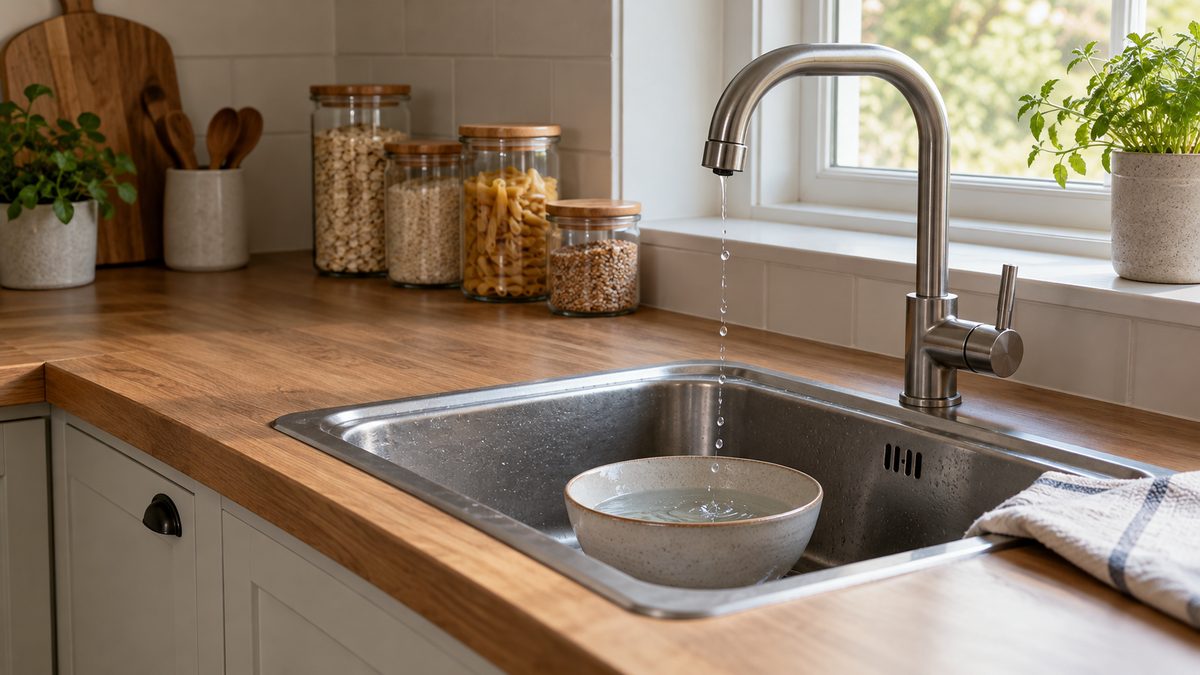
Kitchens attract rats by combining food, water, shelter and protected access around appliances and pipes. Cleaning counters helps, but a lasting response also needs leak repairs, secure storage and a check of hidden service gaps.
1. Food, the obvious one
Crumbs, open packets, fruit bowls, pet food and unsealed bins. Important, yes, but rarely the whole story.
2. Warmth, the one people forget
The back of a fridge, the gap beside an oven, the warm cavity under counters, kitchens are the warmest room in many homes, and warmth is exactly what a rat seeks, especially at night and in cooler months.
3. Water
Rats need water daily. A dripping tap, a leaking pipe under the sink, condensation, or a pet's water bowl left out overnight is enough. Fix the leaks and you remove a major draw.
4. Hiding spots
Cluttered cabinets, gaps behind appliances, and holes where pipes enter the wall give rats safe routes and nesting spots. If a gap is wider than about 2 cm, a rat can use it.
Hotspots in a typical Indian kitchen
- The gas cylinder cabinet: the gas pipe and cylinder hose often pass through a gap in the wall or cabinet back.
- The chimney or exhaust duct: the hole cut for the duct is frequently larger than the pipe, leaving an open gap to the outside.
- Grain and flour storage: rice, atta and dal in sacks or thin plastic tins are easy to chew into.
- Under the sink: warmth, a waste bin, a damp floor and pipe holes all in one cabinet.
- The space under the mixer platform or modular base: a dark, enclosed void that's almost never cleaned.
- Fruit and vegetable baskets left out overnight.
A quick kitchen rat-proofing checklist
| Need | What to do |
|---|---|
| Food | Store grains in steel or thick glass containers with tight lids; no sacks on the floor |
| Warmth | Pull the fridge out once a month and clean behind it |
| Water | Fix sink leaks, wipe the platform dry at night, cover the floor drain |
| Hiding spots | Seal gaps around the gas pipe, chimney duct and sink pipes with metal mesh and cement |
A simple night routine
- Wipe the counter and stove, no crumbs or oil spills.
- Put fruit, bread and leftovers in the fridge or in sealed boxes.
- Close and cover the dustbin, or take it out.
- Lift pet bowls and empty standing water.
- Close cabinet doors, open cabinets are open shelters.
It takes five minutes, and it removes most of what draws a rat into the kitchen at night, which is when they come.
Remove all four, not just one
For real reason rats love kitchens, the EchoRepel Home Rat Repellent is a supporting option using ultrasonic sound that rats and mice want to avoid. It is poison-free. For real reason rats love kitchens, use the device only as instructed and assess new signs rather than assuming protection.
Inspect below the clean worktop
Open the under-sink cupboard and look for damp patches, chewed packaging and gaps around pipes. Use a torch along the floor edge and accessible cabinet bases. Do not remove a gas appliance or reach behind live electrical equipment to complete the inspection.
In a modular kitchen, removable plinth panels may conceal a continuous void. Ask the installer or maintenance team how to inspect it safely, particularly if wiring or gas services run behind it. A closed cupboard door does not seal that void from the rest of the building.
Treat food storage as a whole-room task
Check grain, flour, pet food and rarely used ingredients at the back of shelves. Keep clean stock apart from damaged or contaminated packets while you assess disposal. Do not simply pour food from a gnawed bag into a new container and assume it is safe to eat.
Clean accessible spills beneath storage containers and keep enough space to see the back edge of shelves. Rotate stored supplies so a forgotten packet does not remain undisturbed for months. Choose containers that close properly and inspect lids as well as sides for damage.
Repair openings without compromising services
A gap beside a gas hose needs suitable work that preserves the hose and service access. Do not pack abrasive material against it or apply sealant over fittings. Ask a qualified person to assess any damaged gas line or uncertain pipe arrangement.
Similarly, a drain cover must still permit drainage and cleaning, and a ventilation opening must keep working. Coordinate repairs with pest removal so animals are not trapped in cabinets or a ceiling. If fresh signs persist after safe cleaning, record exactly where they return. That evidence helps distinguish a missed opening from food left accessible. For contaminated surfaces and droppings, consult official guidance rather than dry sweeping, and seek medical advice for bites or illness after contact.
For real reason rats love kitchens, related questions include get rid of rats in kitchen naturally, how to rat proof your house, how to clean mouse droppings.
Frequently asked questions
Are closed cabinet doors enough to block rats?
Not if the cabinet connects to an open plinth void or pipe gap. Inspect accessible routes behind and below storage, with suitable help around appliances and services.
Can I save food from a gnawed packet?
Do not assume transferring it into a new container makes it safe. Keep it separate from clean stock and follow official food-safety advice for rodent contamination.
Who should seal a gap beside a gas hose?
Ask an appropriately qualified person to assess it. Do not pack abrasive material against a hose, cover fittings or disturb a gas appliance during pest-proofing.
Should I remove my pet’s drinking water overnight?
Do not compromise a pet’s care. Ask your vet about suitable arrangements, keep the feeding area clean and address leaks and open entry routes instead of withholding necessary water.