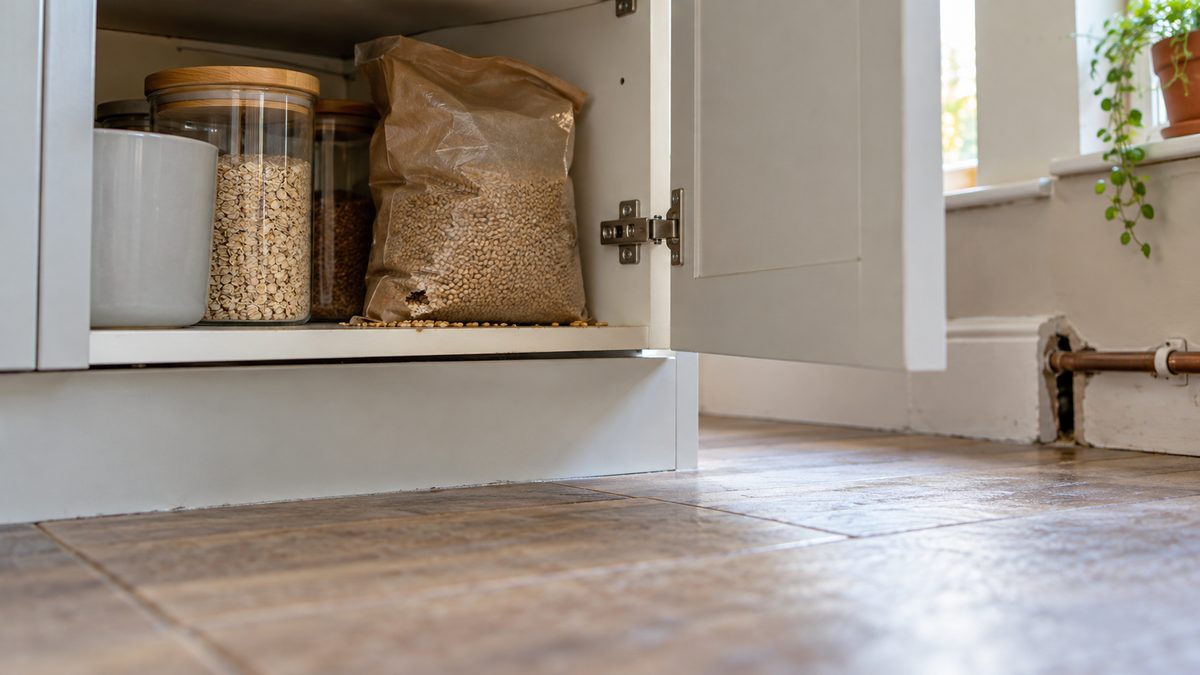
The most useful signs of mice in the house are a clear sighting or recording, new droppings after safe cleaning, and fresh damage that appears between checks. Scratching, smells and a single old dropping are less conclusive. Establish where activity is happening before moving stored goods or cleaning.
Start with the place that prompted your concern. A chewed packet in a pantry calls for a different inspection from a noise above the bedroom. Keep a short record of what you find, where you find it and when, so each later check answers a useful question.
Rank the clues by what they can establish
No household sign tells you the exact number of mice. Some signs confirm a recent visit; others merely suggest that something happened at an unknown time. Use the evidence in combination, and remember that a quick glimpse may not distinguish a mouse from a young rat.
| Clue | How much to rely on it | What to check next |
|---|---|---|
| Clear sighting or camera recording | Strong evidence of a rodent present at that time; species still needs a clear view. | Record its route without chasing it. |
| Droppings returning to a safely cleaned area | Strong evidence of activity since cleaning. | Inspect the nearest food source and wall edge. |
| New holes in previously intact food packets | Useful evidence of recent feeding when combined with rodent clues. | Inspect adjoining packets without tasting their contents. |
| Shredded paper or fabric in a sheltered space | Possible nesting evidence, but its age may be unclear. | Stop disturbing the material and arrange an assessment. |
| Scratching, odour or greasy marks alone | Supporting clues with other possible causes. | Look for physical evidence in accessible areas. |
For a closer comparison of waste, read rat droppings versus mouse droppings. Shape and size help, but neither should be used alone to identify an animal or date a visit.
Fresh activity is easier to establish than fresh-looking droppings
Droppings can change appearance with humidity, temperature and the surface beneath them. Dark or shiny material is not a dependable clock. Do not squeeze, crumble or pick up a dropping to judge its age, and do not sniff a suspect cupboard closely.
A safer comparison starts with photographs of the undisturbed area. After appropriate cleaning, note the cleared location and check it again regularly. Droppings that appear there afterwards establish returning activity more clearly than guesses about colour. If the surface cannot be cleaned safely, let a professional establish the monitoring plan.
Do the same with packaging damage. Photograph an affected shelf, dispose of contaminated food and store sound supplies in closed, gnaw-resistant containers. Damage to an intact item between checks is more informative than an old hole in a forgotten bag.
Inspect cupboard backs before pulling appliances forward
Use a torch to inspect accessible wall edges, the cupboard under the sink, pantry corners and spaces around pipe penetrations. Mice can move through connected gaps, so a dropping near the dishwasher may relate to a route behind several cupboards rather than a nest inside that appliance.
Look at the lowest shelf and the back of drawers before emptying an entire room. Check pet-food storage and bags kept in a utility area. Our guide to mice in pantry food packets covers the food-storage checks in more detail.
Leave gas appliances, heavy fitted units and electrical covers alone. Do not put your hands into a hidden cavity. Suspected cable damage, a burning smell or an appliance fault requires a qualified technician; pest inspection does not replace electrical or gas safety work.
Make the first response safe and useful
- Keep children and pets out of affected cupboards or rooms.
- Photograph evidence without touching it and write down the locations.
- Remove accessible food sources and discard food or packaging contaminated by rodents.
- Do not vacuum or dry-sweep droppings. Follow official public-health instructions for wet disinfection and waste handling.
- Check accessible entry gaps, but coordinate repairs with control work if animals or a nest may remain inside.
- Review the same places after cleaning and record anything new.
Consult how to clean mouse droppings before starting. Use the disinfectant according to its label and do not mix cleaning chemicals. Heavy contamination, soiled insulation or inaccessible voids should be assessed professionally rather than opened up for a household clean.
Know when household monitoring has reached its limit
Returning droppings, activity in several rooms, a suspected nest or contaminated food preparation areas justify prompt pest-control advice. In a flat, report evidence around shared service ducts and communal bins to the building manager; treating one cupboard may leave a connected route untouched.
Silence for a night does not prove the problem has ended. Continue checking cleaned areas and food storage while entry repairs and control are carried out. The guide to when to call an exterminator for mice can help you describe the evidence when booking an inspection.
This is general household information. Contact a doctor after a bite or if you develop symptoms following suspected exposure, explaining that rodents may have been present. Keep exposure details separate from guesses about species.
A home device can be considered alongside food control, inspection and repairs. It uses ultrasonic sound that rats and mice want to avoid and is poison-free; continuing signs still need investigation.