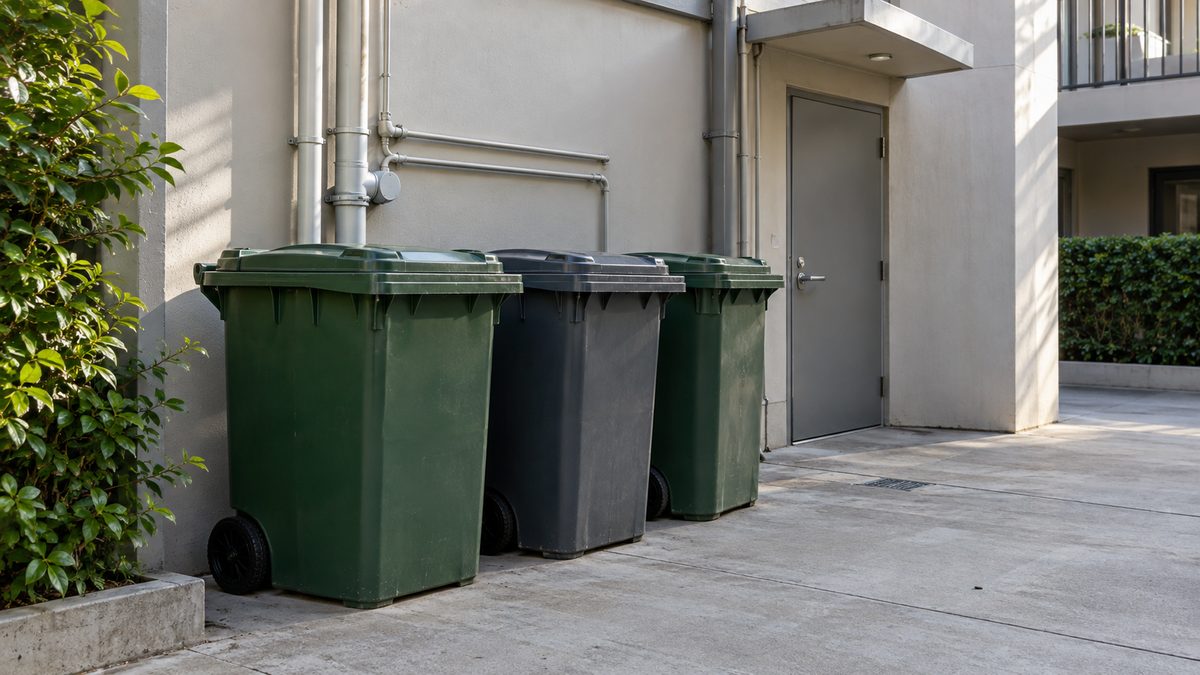
Rodents in flats and apartment buildings usually need a coordinated response because bins, service ducts and structural gaps can connect several homes. Residents can secure food and report evidence, while management should arrange inspection, shared-area cleaning and suitable repairs across the affected routes.
Treat the first sighting as a location to investigate, not proof that one neighbour is responsible. A clean flat can still receive animals travelling through a service void. Equally, closing one kitchen gap may have little effect if a shared bin room continues to provide food and shelter.
Trace the building route, not just the flat number
Look for evidence around accessible pipe entries, under kitchen units and beside utility cupboards. Do not open locked risers, remove panels or disturb wiring to follow a noise. These spaces may contain electrical, fire or plumbing services that require authorised access.
Management should consider connected areas such as refuse stores, basement parking, ground-floor service rooms and roof spaces. The inspection needs to distinguish a route into a building from routes between individual flats. A pest professional and maintenance team may need to work together rather than treating sightings as separate household jobs.
Keep observations specific: droppings behind a bin, gnawing around a pipe sleeve, scratching at a particular wall and the time each was noticed. Photographs can help when they can be taken safely. Our guide to scratching in walls at night explains why sound alone cannot identify the animal or the exact entry point.
Give management a report they can act on
Send a concise record through the building's usual maintenance channel. Identify your flat and the affected area, describe visible evidence and mention any damaged wiring or contaminated food. Ask who is coordinating the response and how residents should report further signs.
- Record the date, location and type of evidence without guessing the animal count.
- Include safe photographs of gaps or deposits, rather than handling waste for a sample.
- Note whether activity is inside a flat, in a shared passage or in the bin store.
- Report broken bin lids, overflow and missed collections separately as maintenance issues.
- Ask for an inspection of linked service routes and a plan for permanent repairs.
- Arrange access through the proper process and keep pets away during visits.
- Keep copies of reports and completed work so repeated findings can be compared.
If several residents have noticed signs, management can combine the reports into a map. Sharing a factual pattern is more useful than passing around accusations. Residents with limited mobility may need assistance preparing for inspection, and the plan should make that practical rather than relying on everyone moving heavy furniture alone.
Make the shared bin store easier to keep clean
Food waste should go inside the correct containers with lids able to close. Bags left beside a full bin remain accessible, so capacity and collection arrangements matter as much as individual behaviour. Report overflow promptly and use the authorised alternative disposal arrangement if one exists.
Management should repair damaged containers, clear spills and remove unnecessary cardboard or abandoned items around the store. Cleaning staff need a safe method for rodent contamination; ordinary dry sweeping is unsuitable for droppings. Keep the approach clear enough for inspection and collection crews.
Doors, drains and gaps around services need assessment, but ventilation and drainage must remain functional. Residents should not improvise drain covers or block a shared opening. Where the bin store adjoins parking, the guide to rats in society basement parking links waste management with vehicle checks.
Seal service gaps without compromising fire safety
Openings around pipes can be both pest routes and part of a building's fire compartmentation. Ask management to use suitable approved repair methods rather than stuffing a riser with loose material or foam. Work on shared fire doors, ductwork and service penetrations should go through qualified maintenance staff.
Do not wedge a bin room fire door open to improve access or remove a ventilation grille because it looks like a route. The building needs to control pests while retaining fire protection and airflow. Identify the feature and request a repair that serves both purposes.
Within your flat, close food containers, clean spills beneath accessible appliances and remove nesting clutter. Avoid moving a suspected nest through shared halls. The article on how mice enter a house gives useful context for small service openings, but a communal building needs its own coordinated repair plan.
Keep control and clean-up consistent across homes
Ask the pest professional how occupied routes will be treated before they are sealed. Separate uncoordinated treatments can leave shared entrances untouched and make it harder to understand new evidence. Any traps or bait must be managed with residents, children, pets and communal access in mind.
For a small accessible deposit on a suitable surface, follow local public-health wet-cleaning guidance and the disinfectant label. Do not vacuum or dry sweep droppings. Extensive waste, contaminated insulation or nests inside ducts require specialist assessment. See a doctor for a bite or illness following exposure and mention the circumstances.
Request a follow-up that checks for new signs and completed repairs, rather than judging success only by the absence of a sighting. If the response stalls, use the landlord's or building's complaints route and consult the relevant local housing or public-health authority about responsibilities. The EchoRepel Ultrasonic Rat Repellent is a device that uses ultrasonic sound that rats and mice want to avoid, and it is poison-free. It cannot promise results or substitute for a building-wide response.