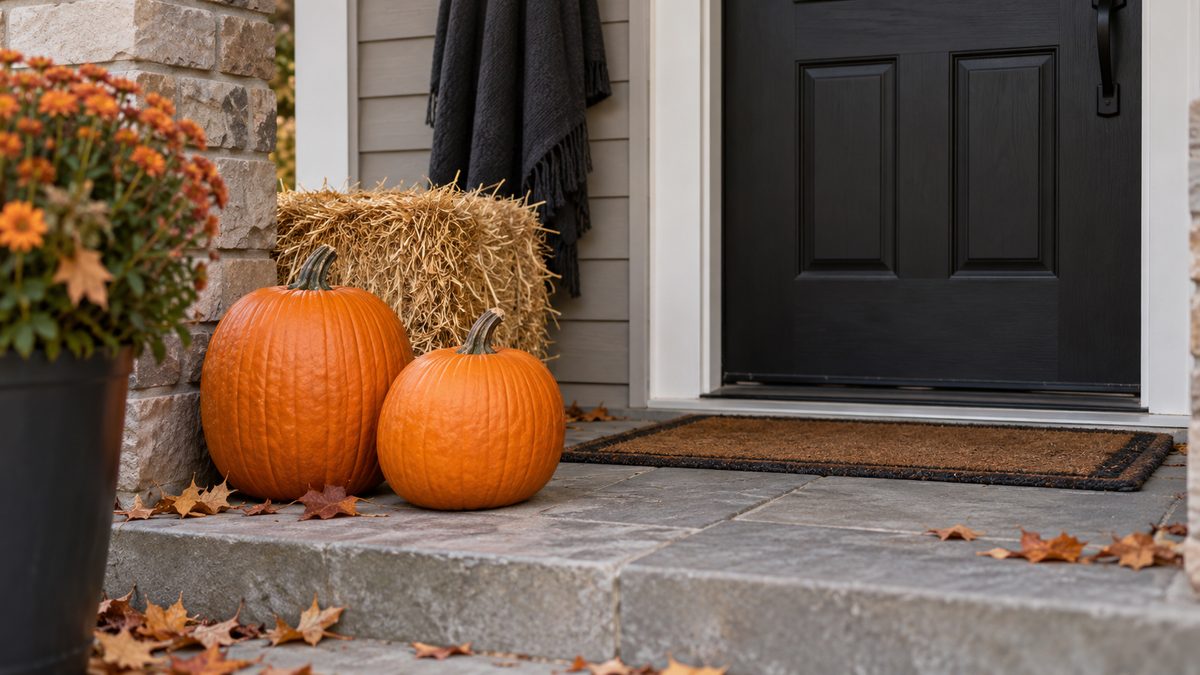
Outdoor Halloween displays can give rats food and shelter when pumpkins deteriorate, loose grain remains in bales or decorations hide the base of a wall. Keep the display easy to inspect, remove spoiled produce and clear the porch promptly afterwards. Decorations alone do not prove that rats are present.
The useful question is what the arrangement provides overnight. A small display on a clear step differs from a deep stack of bales, fabric and food tucked beside a doorway. Plan for inspection and removal when you set it up.
Look at the display from ground level
Stand back and check whether you can see the wall, threshold and floor behind the decorations. Fabric pooled on the ground, stacked boxes and bales pushed against the house can conceal movement. They can also hide an existing gap that needs repair.
Keep exits and walking routes clear. Position decorations so they can be lifted individually without dismantling the whole arrangement. Avoid stretching fabric across air bricks or vents. Rodent prevention should not create a ventilation or trip problem.
If droppings or gnawing appear, photograph them and inspect nearby bins, drains and planting. A porch sighting may be part of wider garden activity; the guide to rats in the garden helps widen that inspection.
Pumpkins become a food-management task
Rats can eat pumpkin flesh and seeds. Carving exposes the inside and leaves scraps that can be carried beneath a step or into planting. Collect the seeds and offcuts as you work, and keep them in a closed waste container rather than an open bag by the door.
Check displayed pumpkins for softness, collapse, leaking liquid and gnawed areas. Remove deteriorating ones instead of rotating the damaged side towards the wall. There is no fixed display life that suits every climate, porch or pumpkin, so judge condition during regular checks.
Do not rely on spraying household chemicals onto a pumpkin to make it rodent-proof. Such treatments do not remove the food source and may complicate safe disposal. Can rats eat pumpkin? covers why the produce deserves attention within a larger display.
Hay and straw offer more than a seasonal look
Hay and straw are different materials, but either can create covered gaps when arranged in bales. Loose seeds or grain residues can add food. Keep bales away from doors and building openings, and leave enough room to check around and behind them.
Do not assume a bale is contaminated simply because it is outdoors. Look for specific signs, including droppings, burrows nearby, gnawing on adjacent objects or concentrated shredded material. Avoid pulling an occupied-looking bale apart by hand. A pest professional can assess suspected nesting without spreading material around the porch.
| Display element | What to check | Adjustment |
|---|---|---|
| Carved pumpkins | Soft flesh, leaks, scraps and missing pieces | Remove deteriorating produce and collect cuttings |
| Bales | Hidden cavities and spilled seed | Keep clear of the wall and inspect the base |
| Fabric and artificial webs | Material trailing into vegetation or vents | Secure loose ends and preserve clear access |
| Cardboard props | Damp layers and concealed debris | Replace damaged packaging and avoid deep stacks |
| Treats and party leftovers | Open bowls, wrappers and spills | Bring food indoors and secure waste afterwards |
Check the porch after visitors leave
Pick up dropped sweets, crumbs and wrappers before closing up. Empty outdoor serving bowls, and secure household waste with a fitting lid. If a bin is full, arrange the next suitable collection or storage option instead of balancing an open sack alongside it.
Look beneath furniture and between display pieces, where food can be kicked out of sight. Keep pet food indoors after feeding, and check bird seed spills nearby. These sources may matter more than a clean artificial decoration. Read festive food waste and rats for the broader tidy-up.
Use sensible lighting and a torch for checking dark corners. Do not reach blindly beneath bales or use a garden blower to scatter material suspected of contamination. Leave an animal an escape route and keep pets away while arranging help if needed.
Pack decorations without bringing the porch indoors
- Prepare clean, dry storage containers before taking down the display.
- Inspect each object outdoors, including hollow backs and folded fabric.
- Separate items with droppings or suspected nesting material from clean decorations.
- Clean washable surfaces appropriately and let them dry fully before packing.
- Dispose of spoiled produce and unwanted bales through locally suitable waste routes.
- Check the cleared wall and doorstep for damage that the display concealed.
For rodent contamination, avoid dry sweeping or vacuuming and consult official public health cleaning instructions. Porous items that cannot be cleaned adequately may need discarding. Heavy contamination is a reason to use professional cleaning or pest assistance rather than carrying the whole display into a shed.
Keep packed decorations off damp floors in lidded containers and make their storage area easy to inspect. The next seasonal display should start with a check, not an assumption that last year's boxes stayed untouched.
The poison-free EchoRepel device uses ultrasonic sound that rats and mice want to avoid. It cannot replace removing edible display waste, inspecting bales or closing building entry routes.