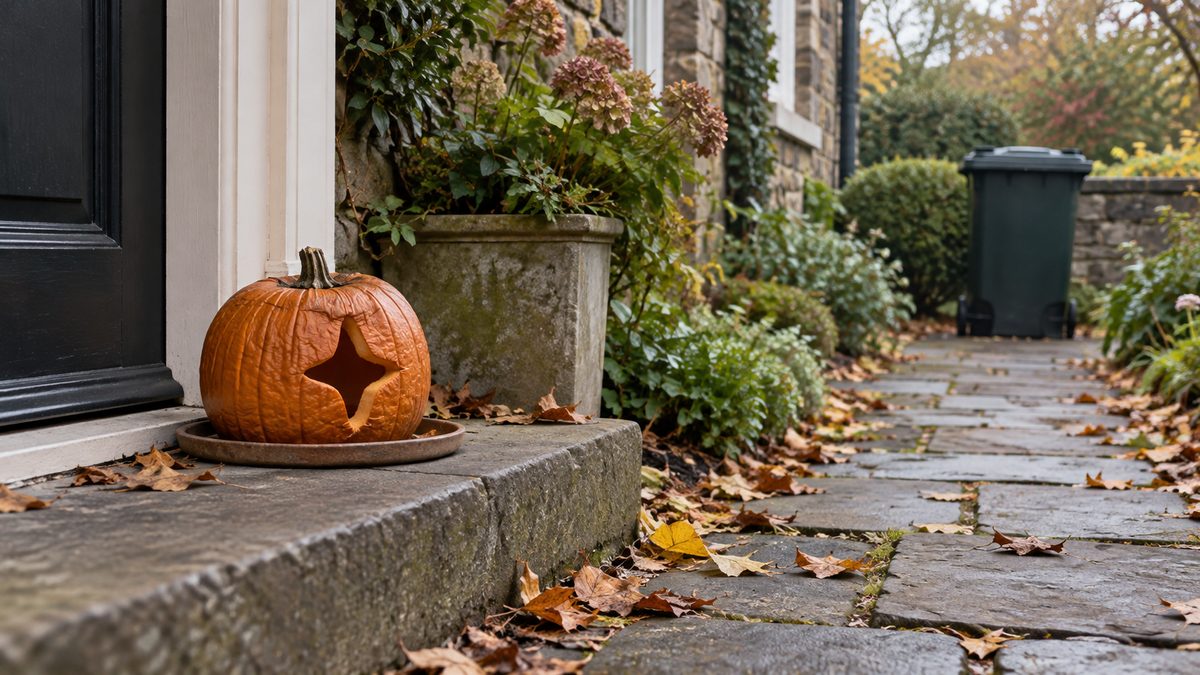
Yes, pumpkins can attract rats, particularly after carving or as they begin to rot. Their sweet, strong-smelling flesh provides food, so an outdoor display can become a feeding place. Remove pumpkins soon after Halloween and keep the leftovers inaccessible while you arrange disposal.
A pumpkin on the step does not prove that rats are living nearby. It does give visiting rodents something worth investigating, especially beside a hedge, bin store or sheltered wall. Focus on removing that food rather than trying to mask its smell.
What changes when a pumpkin is carved or softens
Carving opens the skin and leaves flesh, seeds and moist cut edges exposed. As the pumpkin deteriorates, its smell becomes more noticeable and pieces may collapse onto the ground. Rodents can feed on those scraps without needing to climb into the display.
An intact pumpkin is less exposed, but it is still food. Inspect the underside as well as the visible face: contact with damp paving or soil can hide soft patches. Tooth marks, missing flesh or nearby droppings deserve attention even when the front looks presentable.
Pest experts have warned about rodents feeding on carved and rotting pumpkins. Health officials in Watertown, Massachusetts, have asked residents not to leave pumpkins outside overnight. That example supports a practical habit: bring displays into secure storage overnight, then remove them promptly after the celebration.
Decide where the pumpkin should go before lifting it
Check your local council or municipal waste service for accepted materials and collection instructions. Food-waste collections, garden-waste services and home composting are different routes; acceptance of pumpkins or liners can vary. Do not leave a pile beside a collection bin while waiting to find out.
| What you find | Practical next step |
|---|---|
| Firm pumpkin with no signs of rodent contact | Remove decorations and use the locally accepted food-waste or enclosed compost route. |
| Soft, leaking pumpkin on a doorstep | Support it in a tray or container so pieces do not spill during removal. |
| Droppings or clear gnawing around the display | Keep people and pets away and follow public-health guidance for contaminated material. |
| Paint, glitter, wire or candle remains | Separate what you can safely and check disposal rules before composting. |
| Artificial pumpkin | Clean and store it appropriately; it is not food, but check for edible material left nearby. |
For the collection and storage decisions in more detail, see pumpkin disposal after Halloween. The aim is to finish the clear-up without creating another exposed food source behind the house.
Clear the step without spreading contaminated dust
- Keep children and pets away while you inspect the display and surrounding paving.
- Put on gloves. Remove candles, lights and other fittings before handling the flesh.
- Lift the pumpkin into a supporting container rather than carrying a collapsing shell across the garden.
- Collect loose seeds and flesh. If droppings are present, do not dry-sweep, brush or vacuum them.
- Follow official local public-health advice for wet disinfection and disposal of rodent contamination, including the disinfectant label contact time.
- Clean reusable tools appropriately, remove gloves and wash your hands before handling food.
Do not use a pressure washer on suspected droppings. It can disperse contaminated material. Extensive fouling, a hidden nest or contamination that you cannot safely reach calls for professional help. This is general hygiene information; contact a doctor if you become unwell after suspected rodent exposure and explain what happened.
Composting should not mean an open feeding pile
Throwing pumpkin chunks behind the shed only moves the attraction. An open heap with exposed food can offer a sheltered feeding spot. Where local guidance allows home composting, use a maintained, enclosed system with a secure lid and check the base and sides for damage or entry routes.
For a clean pumpkin, smaller pieces can make it easier to mix material into an appropriate compost system. Do not scatter chunks over the top and assume a thin covering will keep rats out. If rodents are already visiting, choose an accepted secure collection route while you address the compost enclosure.
Avoid chopping or composting material contaminated with rodent waste. Refer to your local public-health and waste services for that situation. Our article on rats in compost bins explains what to inspect around a bin before adding more food.
Check the route between the display and the house
After removal, examine the edges of steps, nearby door thresholds and the bin area. Look for more gnawed food, droppings or repeated disturbance. Photograph suspicious signs without touching them and note the location so you can compare later checks.
Secure bin lids, remove pet-food leftovers and clear packaging or foliage that hides the base of the wall. A pumpkin may be the most visible food source while a leaking food-waste bag provides a continuing meal. Shared bin stores need a coordinated clear-up with the building manager.
Read can rats eat pumpkin for the feeding question, and festive food waste and rats for other leftovers to check. Artificial displays avoid leaving edible pumpkin outside, but they do not replace ordinary waste control and building repairs.
If you consider a device alongside those measures, the home device uses ultrasonic sound that rats and mice want to avoid and is poison-free. Do not treat it as a reason to leave food exposed or delay help with continuing activity.